
Review · DIJON
Pinot Noir Masterclass – Wine tasting in Dijon
Dijon’s Pinot Noir Masterclass gives you a quick way to understand Burgundy’s famously complicated wine system. In 45 minutes, you taste four wines that move from Village appellation to Grand Cru, while a local wine professional explains what changes as the rank rises.
I like the clear side-by-side format, and I like the small group size, capped at six. Guides including Mattéo, Emily, Adrien, Pierre, and Valentin focus on practical lessons about Pinot Noir, terroir, geography, and appellations. The main drawback is the setting: this takes place in the back of a working wine shop, not a quiet tasting room, and seating may be limited.
Key points to know before booking
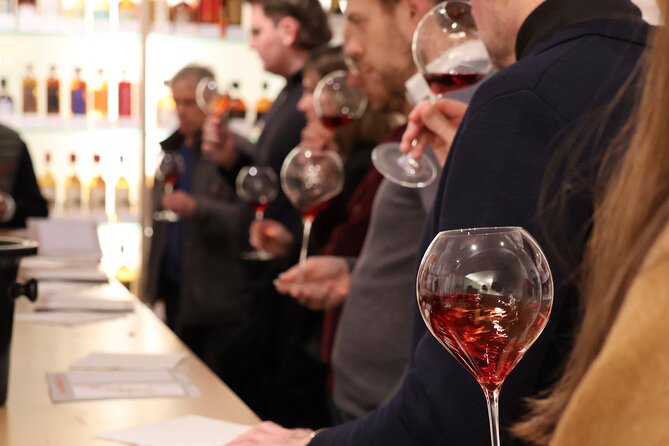
- Four wines, four Burgundy levels: Taste a progression from Village wine to Grand Cru in one sitting.
- A useful Dijon starting point: The class helps you understand Burgundy before visiting vineyards in the Côte d’Or.
- Small group format: A maximum of six people makes it easier to ask questions.
- Five o’clock start: The tasting begins at 5:00 pm and lasts about 45 minutes.
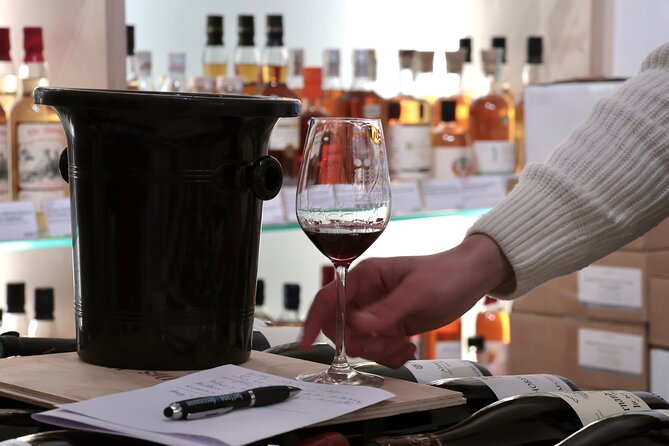
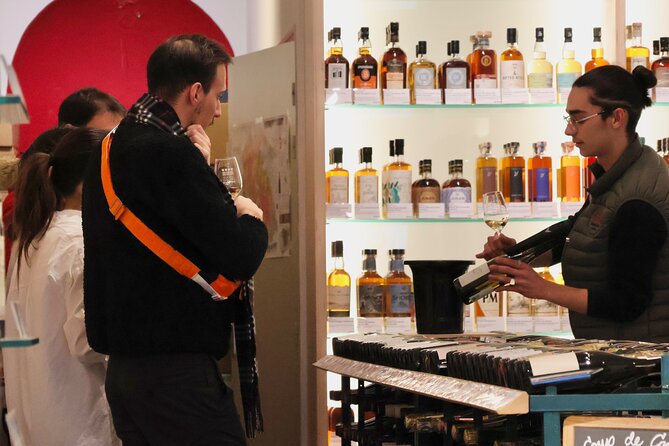
- Wine shop atmosphere: Expect an active retail setting, with bottles and shop customers nearby.
- No food included: This is a wine lesson and tasting, not a wine-and-cheese pairing.
A fast introduction to Burgundy’s four appellations
The real strength of this experience is its structure. Burgundy wine labels can feel like a puzzle, especially when you are trying to understand the difference between a Village wine and a Premier Cru or Grand Cru. Here, you taste four wines in sequence, from the broader Village category up to Grand Cru.
That progression gives the lesson a clear purpose. You are not simply sampling four unrelated reds. You are comparing how Burgundy classifies wines and how place affects what ends up in your glass.
The session centers on Pinot Noir, the grape behind the great majority of Burgundy’s red wines. You learn to pay attention to the wine itself, but also to the ideas behind it: vineyard location, soil, geography, appellation, and the famous Burgundy concept of Climats.
I find this much more useful than a general tasting that presents several bottles without a guiding thread. The four-wine sequence gives you a framework you can use later, when you see Burgundy bottles in a shop, restaurant, or vineyard cellar.
The class is introductory, but it is not empty of detail. Several guides are praised for explaining local Pinot Noir, regional geography, wine history, and the way terroir affects taste. Pierre is especially associated with patient answers and a good sense of humor, while Mattéo is described as enthusiastic about teaching.
More Wine Tastings in France
- Bordeaux: Cité du Vin Entry Ticket and Wine Tasting
★ 4.6 · 3,885 reviews - Montmartre Hill French Gourmet Food and Wine Tasting Walking Tour
★ 5.0 · 2,588 reviews - From Paris: Loire Valley Castles Day Trip With Wine Tasting
★ 4.6 · 1,727 reviews
Inside the wine shop at 1 Bis Rue Musette
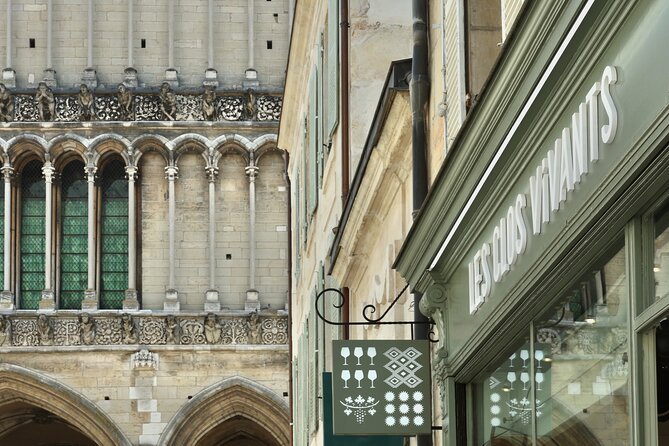
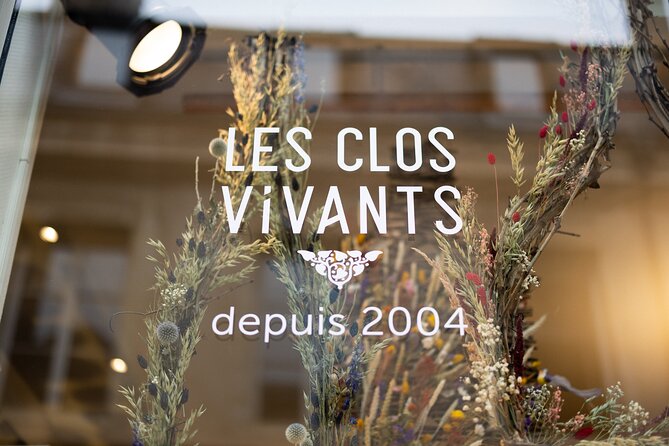
You meet at 1 Bis Rue Musette in central Dijon, and the activity ends at the same place. The address is a wine shop, so you are not heading into a formal cellar or a dedicated wine school.
That is part of the charm. You are surrounded by actual bottles for sale, and the shop gives you immediate contact with Burgundy’s wine culture. If a particular bottle catches your eye, you can ask about it while the lesson is still fresh in your mind. Some people buy bottles afterward for family or for their own cellar.
The trade-off is comfort. The tasting area is at the back of the shop and can feel cramped. Customers may pass through, and you may stand close to the shop’s bottle stock. One account describes the experience as less like a relaxed hour in a lounge and more like an active lesson in a working store.
The provider says chairs are available, but seating may not always be obvious or plentiful. If standing for much of the 45 minutes would be difficult, ask for a chair at the beginning. This is a small point, but it can make a real difference.
The atmosphere also depends on the day. With a maximum of six people, the class itself is intimate. Still, the shop continues its normal business around you, so do not expect silence or a private room.
What the 45-minute tasting is like
The scheduled start is 5:00 pm. The session lasts about 45 minutes, which is long enough for a focused introduction but too short for a slow, elaborate tasting menu.
You begin with an explanation of Burgundy and Pinot Noir, then work through four wines. The teaching follows the four broad quality levels, moving from Village to Grand Cru. The exact bottles are not listed in advance, so you should think of the tasting as a lesson in classification rather than a guaranteed chance to sample famous producers.
The guide explains how to taste, then helps connect what is in the glass to the region where the wine was made. The most useful part is the comparison. Instead of tasting one bottle and trying to remember it later, you can compare the wines one after another.
You may hear about the Côte d’Or, Burgundy’s vineyards, and the Climats, the named vineyard parcels that form an important part of the region’s identity. The class is intended to give you the vocabulary and basic context to continue exploring Burgundy on your own.
The teaching style varies slightly by guide. Mattéo, Emily, Adrien, Pierre, and Valentin are named as members of the team who lead or contribute to this kind of experience. The strongest descriptions focus on clear explanations, patience, humor, and a willingness to answer questions.
The short format also keeps the lesson from becoming tiring for most people. At the same time, the amount of information can be dense. One guide was praised for packing a great deal into a brief session, so it helps to listen for the main ideas rather than trying to memorize every appellation and vineyard name.
Why the Village to Grand Cru comparison matters
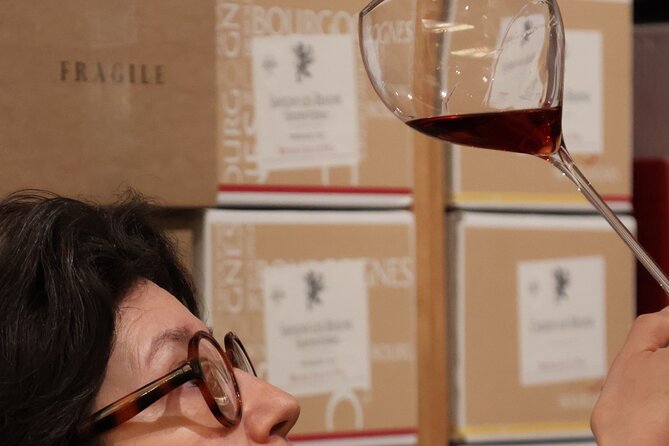
Burgundy’s classification system is one of the reasons the region can be both fascinating and confusing. A label may tell you the regional origin, village, vineyard level, and producer, but those categories do not mean exactly the same thing as a simple quality scale in every practical sense.
This tasting gives you a first map. You can compare a Village wine with a higher-ranked wine and begin to see how appellation affects price, reputation, and style. The Grand Cru sample is likely to be the most anticipated part of the tasting, but the less prestigious wines are just as important for understanding Burgundy.
A Village wine can be a useful expression of a wider area, while a higher appellation reflects a more specific and prestigious vineyard classification. The class helps you hear those distinctions in a glass rather than only reading them on a label.
That is especially helpful if you are planning a week of winery visits. Several people use this kind of session as preparation for a longer Burgundy trip. It gives you questions to ask later and helps you notice differences that might otherwise pass you by.
If your interest is only in drinking expensive wine, this may feel too instructional. If you want to understand why Burgundy bottles carry different names and prices, the format makes good sense.
Same vines, another glass to try:
- Authentic Parisian Gourmet Food Tour with 10 Local Dishes & Wines
★ 5.0 · 4,754 reviews - Loire Valley Castles Day Trip from Paris with Complementary Wine
★ 4.5 · 3,907 reviews - Bordeaux: River Garonne Cruise with Glass of Wine and Canelé
★ 4.5 · 3,630 reviews - Paris: Montmartre Cheese, Wine & Pastry Guided Walking Tour
★ 4.8 · 2,255 reviews
The guides and the teaching style
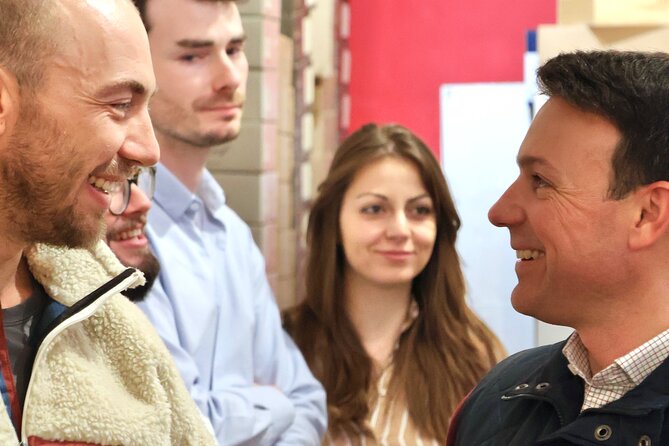
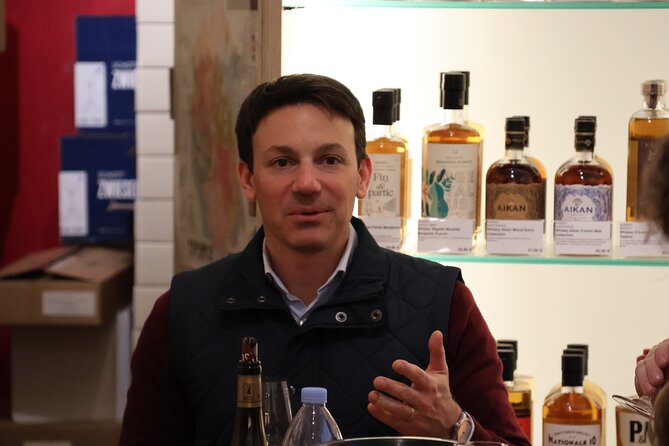
The team is a major part of the experience. Adrien Tirelli is identified as a wine merchant and an ambassador for the Climats of the Burgundy Vineyard, a UNESCO World Heritage site. His role gives the presentation a strong local and regional focus.
Pierre is praised for being patient, professional, funny, and willing to answer questions. Mattéo receives strong marks for his enthusiasm and command of the wines. Emily is also named as a host, and Valentin is noted for explaining the region and suggesting useful places to visit.
The names matter because this is not an audio guide or a scripted museum stop. You are learning from a person who works with wine and can respond to your questions. Ask about a term you do not understand. Ask why one appellation costs more than another. Ask what to look for when you visit a producer in Burgundy.
The English presentation is available, though one account found switching between French and English tiring. That may depend on the group and guide, but it is worth knowing if you prefer a very streamlined English-only lesson.
The overall teaching approach is friendly and educational rather than formal. You should expect a lesson with conversation, not a lecture delivered from a stage.
What is included, and what is not
The booking includes four Burgundy wines. That is the core of the experience, and the four samples are selected to show the progression through the appellation categories.
Food is not included. Do not arrive expecting cheese, bread, charcuterie, or a meal. If you need something to eat before or after the tasting, plan separately in Dijon.
The absence of food has one advantage: the focus stays on the wine. You can pay attention to aroma, texture, acidity, and finish without turning the class into a general aperitif. But wine on an empty stomach is not ideal, especially if you are continuing into the evening, so eat beforehand if needed.
A cassis liqueur has sometimes been used as a pleasant regional finish, and it is associated with Maison Briottet and Dijon. It is not listed as one of the four included Burgundy wines, so do not book this expecting a guaranteed cassis tasting. If it appears during your session, consider it an extra local touch rather than part of the promised lineup.
Is $42.34 good value for 45 minutes?
At $42.34 per person, this is not the cheapest way to drink four glasses of wine. The value comes from the explanation and the comparison, not from the volume of wine.
You are paying for four Burgundy samples, a guide, a lesson about appellations, and a small group limited to six people. A single bottle of well-known Burgundy can cost far more than the class, so tasting across four categories without buying full bottles can be a sensible introduction.
The price makes the most sense if you are new to Burgundy, short on time, or planning to visit the vineyards later. It can save you from walking into a wine shop with no idea what the labels mean. It also gives you a basis for deciding which styles and appellation levels interest you.
The value is weaker if you already know Burgundy well or want a long, leisurely tasting with substantial food. The 45-minute format is compact, and the shop setting is functional rather than luxurious.
The high overall rating, 4.9 out of 5 from 147 ratings, and 98 percent recommendation rate suggest that the educational format works very well for most people. Still, those numbers should not make you ignore the physical setting. A popular class can be informative and still feel cramped.
Who should book this Dijon wine tasting?
I would recommend it most strongly to first-time Burgundy visitors. If you have heard of Village, Premier Cru, Grand Cru, and Climats but cannot explain the difference, this is a useful place to begin.
It also suits people with only a short stay in Dijon. You do not need to travel into the vineyards to get a basic understanding of Burgundy Pinot Noir. The central meeting point and short duration leave the rest of your day open.
It is a good choice before a self-guided wine trip. After the class, you will have a better sense of what questions to ask and what to notice in later tastings. It also suits couples, solo visitors, and small groups who prefer conversation to a large tour.
You may want to choose another activity if you are looking for:
- A full meal with wine pairings
- A quiet private tasting room
- A vineyard visit outside Dijon
- A long session with many producers
- A seated luxury tasting
The group limit of six is a real advantage, but the shop remains a shop. Go for the instruction and the wines, not for a polished, spacious setting.
Practical details for planning your visit
The meeting point is 1 Bis Rue Musette, 21000 Dijon, France. The activity begins at 5:00 pm and returns to the same location. It is near public transportation, and a mobile ticket is accepted.
Confirmation is provided when you book. Service animals are allowed. The experience is offered in English, although the exact guide may be Mattéo, Emily, Adrien, Pierre, Valentin, or another member of the team.
The experience is often reserved about 22 days ahead, so do not leave it until the last minute if the 5:00 pm time is important to your plans. Free cancellation is available if you cancel at least 24 hours before the start time. Cancellations or changes made inside that window are not refunded or accepted.
Should you book the Pinot Noir Masterclass?
Book it if you want a clear, compact introduction to Burgundy wine before exploring Dijon or the Côte d’Or. The four-level tasting, small group, and enthusiastic local guides give you useful background in a short time.
Skip it if you expect a spacious lounge, food, or a full vineyard outing. The working wine shop can be cramped, and the session may involve standing. For a first look at Burgundy’s Pinot Noir, however, $42.34 is a fair price for a focused lesson that can make the rest of your wine trip easier to understand.
FAQ
Where does the Pinot Noir Masterclass take place?
It starts at 1 Bis Rue Musette, 21000 Dijon, France, and ends back at the same meeting point.
What time does the tasting start?
The scheduled start time is 5:00 pm.
How long does the experience last?
The tasting lasts approximately 45 minutes.
How many wines are included?
Four Burgundy wines are included in the experience.
What wine levels are covered?
The tasting moves from the Village appellation to the Grand Cru level.
Is food included?
No. Food is not included in the price.
Is the tasting offered in English?
Yes. The experience is offered in English.
How large is the group?
The activity has a maximum of six participants.
Can I cancel for a full refund?
Yes, if you cancel at least 24 hours before the scheduled start time. Cancellations made less than 24 hours in advance are not refunded.
Freshly poured around France
- Private Tasting in Beaune : The Best of Burgundy Wines★ 4.9 · 66 reviews
- Semi Private Solar Boat Cruise in Champagne★ 4.9 · 32 reviews
- Private tour of Paris by Night with Champagne★ 4.7 · 323 reviews
- Montpellier: Pic Saint-Loup Wine Tour★ 4.9 · 290 reviews
- Passy-Grigny: Chocolate and Champagne Tasting Tour★ 4.8 · 284 reviews
- Paris: Wine Tasting Experience with 6 Wines and Cheese Board★ 4.9 · 80 reviews
- Paris: Wine and Cheese Tasting with a Chef Sommelier★ 4.7 · 277 reviews
- Paris: Wine and Cheese Tasting★ 4.6 · 91 reviews
Dijon Wine Tours, side by side.
Dijon: La Cave du Palais Burgundy Wine Tasting Experience
Read our review →Burgundy wine tasting tour Half-Day Beaune from Dijon
Read our review →
Burgundy Wines Full-Day Tasting Tour from Dijon
Read our review →
Dijon: Cheese and Burgundy Wine Tasting Workshop
Read our review →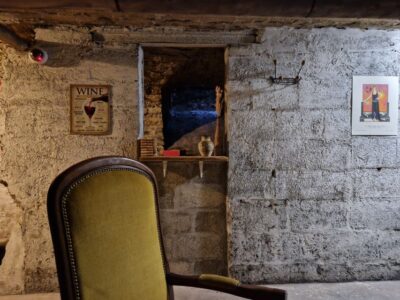
Historic Center of Dijon : Discovery Tasting Wine Burgundy
Read our review →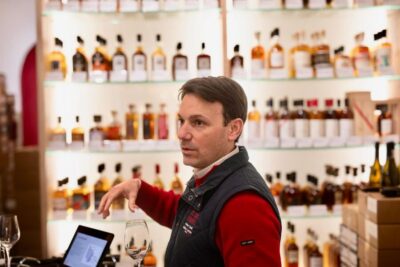
🍷 Masterclass Pinot Noir – Wine tasting in Dijon 🇫🇷
Read our review →
Lists this tasting sits in