
Review · BUDAPEST
Budapest: Wine, Cheese, and Charcuterie Tasting
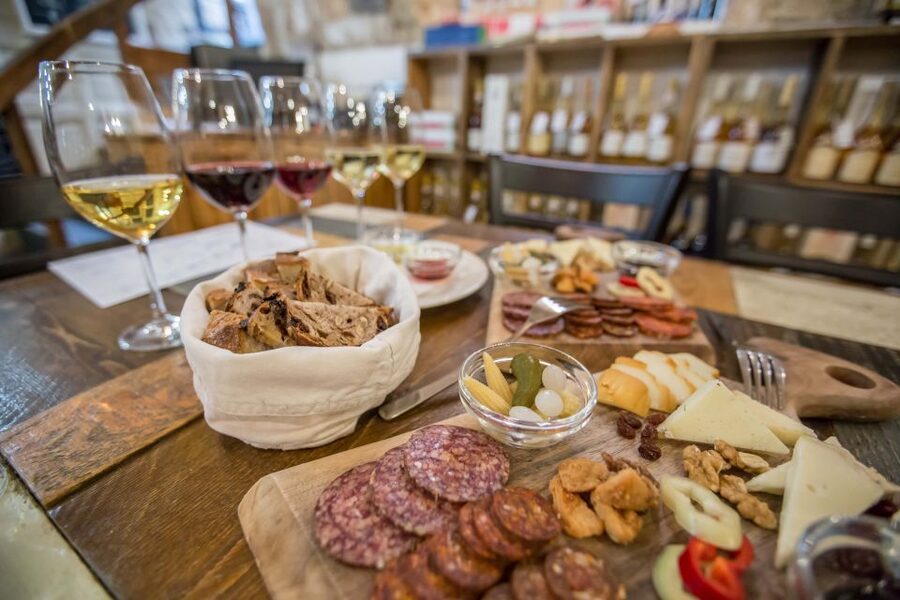
Hungary’s wine story comes alive over five glasses, not a rushed sip at a crowded bar. This 90-minute tasting moves from dry Hungarian whites and reds to a sweet Tokaj wine, with cheese, Mangalica pork sausage, buffalo salami, smoked duck, and other local foods alongside.
I like the clear regional introduction and the way the food is matched to each wine. I also like the cozy old cellar near the National Museum, where hosts such as Thomas, John, Sam, Bence, and Jon have made the session relaxed and easy to follow. The main consideration is simple: five glasses can be a generous amount, so this is better suited to an afternoon when you do not have a long list of other plans.
Key points at a glance
- Five Hungarian wines: Expect a broad sample of whites, reds, and a sweet Tokaj wine.
- Local food pairings: Try artisan cheese, Mangalica pork sausage, water buffalo salami, smoked duck breast, grey beef sausage, bread, and oils.
- A useful wine lesson: Your sommelier explains Hungary’s main regions, grape varieties, wine styles, and changing wine scene.
- Central Budapest setting: The tasting room is 150 meters from the National Museum and about five minutes from Astoria or Kálvin tér.
- Friendly English guidance: Hosts including Thomas, John, Sam, Bence, and Jon have been praised for making the information fun rather than stiff.
- Good choice for beginners: You do not need a trained palate. The relaxed format works well even if wine is not usually your main interest.
Five glasses that tell Hungary’s wine story
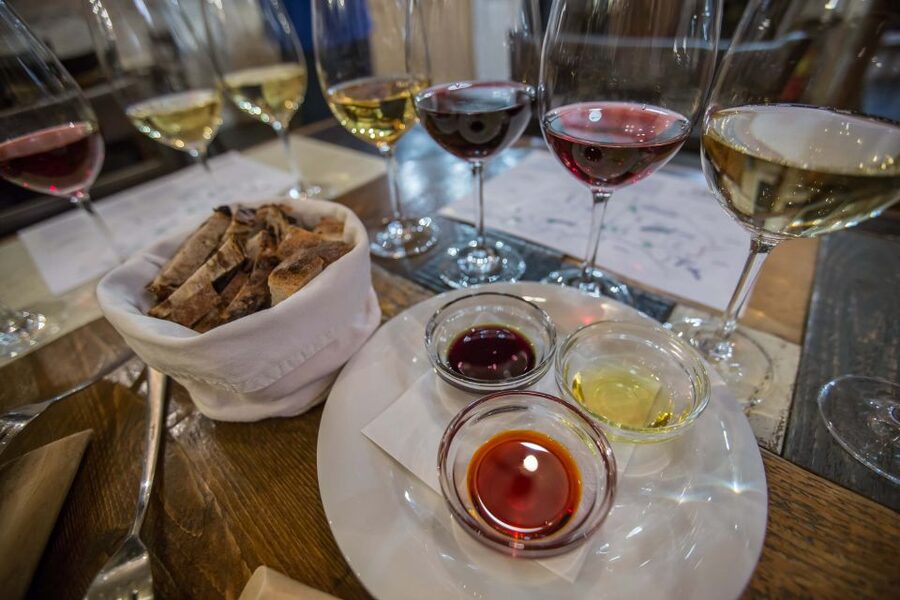
Hungarian wine can be hard to understand from a restaurant list alone. The names may be unfamiliar, the grape varieties may not match what you usually order, and the country’s regions are spread across a surprisingly varied patch of Central Europe.
This tasting gives you a useful first map. The sommelier explains the major wine areas, important grapes, traditional styles, and newer directions in Hungarian winemaking. You are not simply handed five glasses and left to guess what makes them different.
The selection focuses on local grapes and styles. That matters because you may taste wines you are unlikely to find at home. For a visitor who normally drinks French, Italian, Spanish, Australian, or American wine, Hungary offers a chance to try something genuinely new without committing to a full bottle.
The exact wines can change, but the intended progression gives you a broad look at the country. The selection includes dry wines, red wines, and a dessert wine from Tokaj. One tasting description identifies the lineup as two whites, two reds, and one sweet wine, which is a useful guide to the balance you can expect.
More Wine and Cheese Tastings in Budapest:
- Amsterdam: Classic Saloon Boat Cruise with Cheese & Wine
★ 4.6 · 27,035 reviews - Amsterdam: Evening Candle Light Cruise With Wine & Cheese
★ 4.6 · 1,774 reviews - Amsterdam: Cozy Cheese & Wine Cruise Tasting Experience
★ 4.5 · 1,156 reviews
Starting at The Tasting Table Budapest
The meeting point is The Tasting Table Budapest at Bródy Sándor utca 9 in District VIII. It is only 150 meters from the National Museum, so it fits neatly into a day of exploring the Hungarian National Museum and the surrounding streets.
You can reach it in roughly five minutes from Astoria on metro line M2 or Kálvin tér on M3. Trams 47 and 49 also stop at those two transport points. This is useful if you are staying on either side of central Pest and do not want to spend half an afternoon getting to a vineyard outside the city.
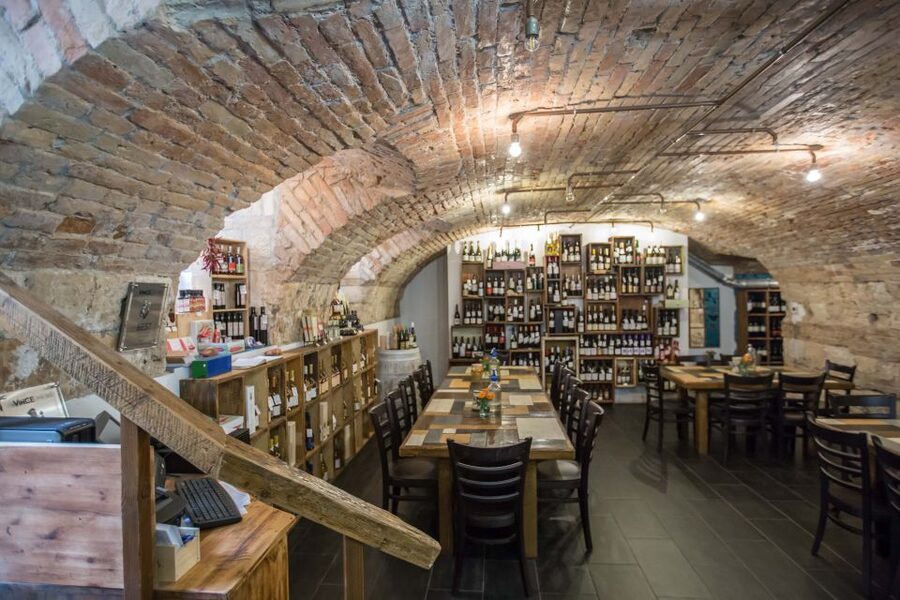
The venue is described as an old cellar with brick arches. That setting gives the tasting a sense of place without requiring a trip beyond Budapest. It is intimate and cozy, but you should not expect a grand wine estate or a formal dining room. The appeal is the simple setup: a shared table, glasses, regional food, and an English-speaking host.
The atmosphere is relaxed rather than ceremonial. Hosts such as Thomas, John, Sam, Bence, and Jon have been singled out for being funny, friendly, and easy to talk with. The individual sommelier may vary, but the format is designed around conversation and questions.
The wine lesson, glass by glass
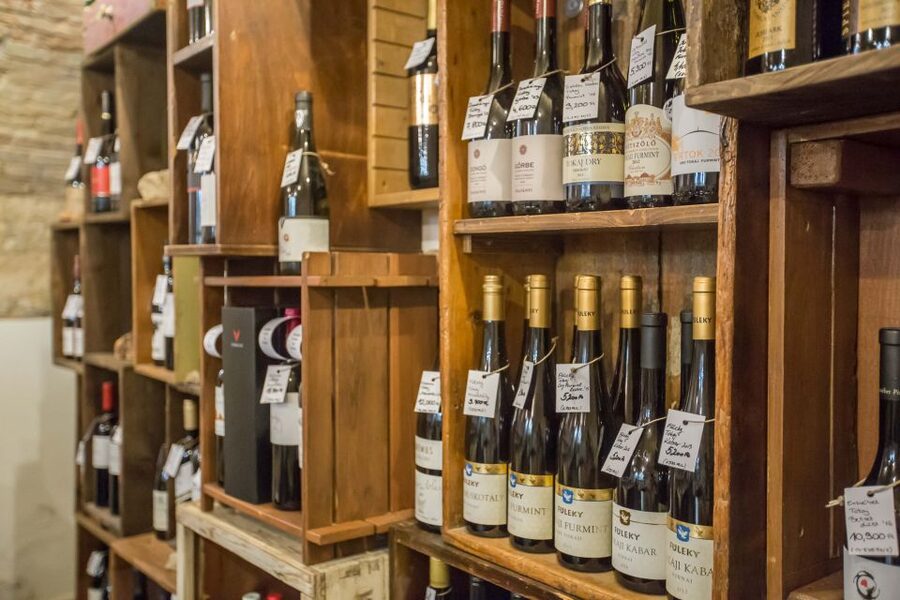
The first part of the session introduces Hungarian wine and sets up the tasting. Your sommelier explains where the wines come from and what makes local varieties and methods different.
The value here is context. A wine can taste merely unusual when you do not know what you are drinking. Once you understand the region, grape, and style, you have a better chance of noticing why it was selected.
The dry wines give you a starting point before the reds arrive. You will taste differences in body, acidity, fruit, and texture, with the food helping you compare the wines rather than treating each one as an isolated sample.
The red wines provide another view of Hungary. The host discusses the regions and grapes as you taste, so you can connect what is in the glass with the wider country. This is especially useful if you are planning to buy wine later in your Budapest visit.
The final glass is sweet wine from Tokaj. Tokaj is one of Hungary’s essential wine regions and is famous for its dessert wines. Ending with Tokaj gives the session a clear finish, moving from dry and savory flavors to concentrated sweetness.
You do not need to know wine terms before you arrive. The information is presented in plain English, and the hosts are used to answering questions from people who are new to Hungarian wine. Several participants have described the delivery as entertaining without becoming too technical.
Cheese, sausage, and oils that make the tasting practical
The food is not just decoration around the wine. Each glass is paired with a selection of Hungarian cheese or charcuterie, giving you a simple way to see how food changes the taste of wine.
The board may include Mangalica pork sausage, free-range water buffalo salami, smoked duck breast, grey beef sausage, and several kinds of cheese. Mangalica is especially interesting for visitors who want to try a distinctive Hungarian product rather than a generic slice of salami.
Bread and artisan oils round out the table. Pumpkin oil has been a memorable surprise for some participants, and the bread and oil are kept available during the session. The food portion is substantial enough to make this more than a few token bites, but it is not a replacement for dinner.
Vegetarians can still take part. The cheese selection provides the main food pairing, while the charcuterie is served separately. If you do not eat meat, it is sensible to mention that when booking or arriving, although the supplied information does not promise a special vegetarian menu.
The food also helps if you are unsure about a wine. You can try it alone, then taste it with the suggested cheese or meat. That comparison is one of the easiest ways to understand pairing without turning the afternoon into a lecture.
More wine tours around Budapest:
- Countryside Half-day Gastro-Wine Tour from Budapest Meal & pickup
★ 5.0 · 1,450 reviews - Budapest Centre Food Tour with 10+ Tastings, Wine & Street Food
★ 5.0 · 810 reviews - From Budapest: Half-Day Countryside Wine Tour with Meal
★ 4.8 · 657 reviews - Budapest: Hungarian Wine Tasting with 8 Wines and Tapas
★ 4.9 · 446 reviews
What the sommelier adds
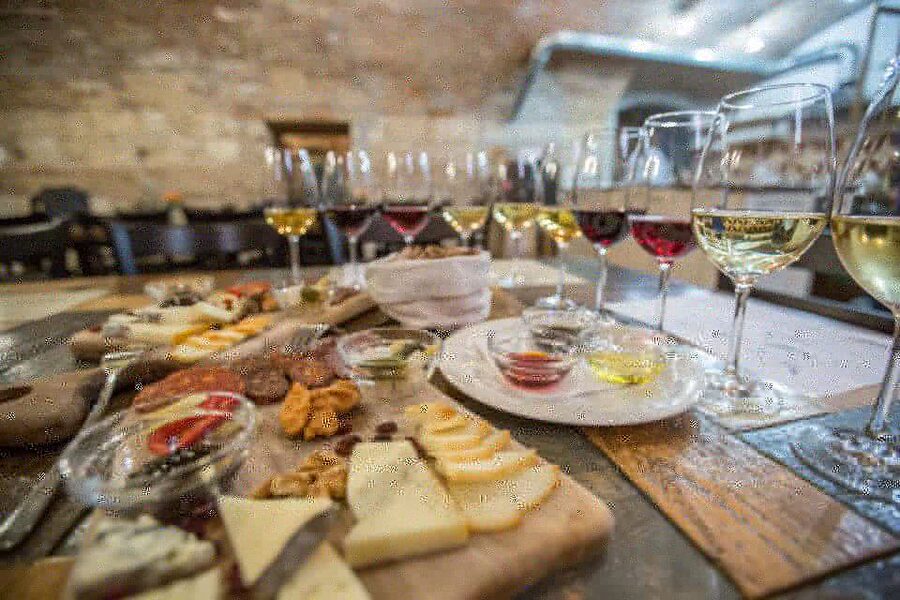
The guide is the heart of this experience. The wines and food matter, but a poor explanation would leave you with five glasses and a vague memory of which one you liked best.
Hosts named Thomas and John have been praised for explaining Hungarian wine history in a clear, lively way. Sam and Bence have also received strong approval for their friendly approach. The useful point is not the name of one particular host, since staff can change, but the style: informative, humorous, and open to questions.
The best guides avoid turning wine into a test. You are not expected to identify every aroma or use specialist language. You can simply say that you prefer one wine to another, then ask why. The sommelier can connect your preference to sweetness, acidity, body, or grape variety.
The English is intended for an international audience. That makes the tasting suitable for couples and small groups with different levels of wine experience. A person who rarely drinks wine can still follow the session, while a more serious wine drinker has a chance to ask about regions and local grapes.
The social setup is part of the appeal. You sit around a table with people from different countries, which can make the 90 minutes feel less like a formal class and more like a shared Budapest experience.
Why the $50 price can make sense
At $50 per person, this is not the cheapest way to drink wine in Budapest. You could order a bottle or several glasses at a bar for less, especially if your only goal is alcohol.
The value comes from the range and guidance. You receive five Hungarian wines, a local cheese and charcuterie plate, bread, artisan oil, tasting sheets, and a map of the wine regions. You also get an English-language lesson that helps you make sense of what you are drinking.
The five glasses are important. This is not a single wine with a small snack attached. You get a structured sample of different styles, including Tokaj’s sweet wine, which would be difficult to replicate by ordering at random.
The tasting sheets are handy if you plan to buy wine later. You can note the names you like and mark the regions or grapes that appeal to you. Some participants have bought bottles after the session, and the tasting room can be a useful place to find a favorite again.
I see the price as fair for a visitor who wants both food and instruction. It is less convincing for someone who simply wants a cheap drink or a full meal. Consider it a guided introduction to Hungarian wine with a generous snack, not a restaurant dinner.
Timing the afternoon well
The experience is generally available on most days between 3:00 PM and 5:00 PM. That timing works well after a morning at the National Museum, a walk through central Pest, or lunch near Kálvin tér.
The 90-minute length is long enough to cover five wines without feeling like an all-day commitment. You can finish with time for dinner, an evening concert, or a walk toward the Danube.
Plan your day around the tasting rather than squeezing it between several fixed bookings. The session is meant to be relaxed, and rushing in from the other side of Budapest would take away from that.
The legal drinking age in Hungary is 18, and children under 18 cannot join. At least two people are required for the session to operate, so a booking can occasionally be changed or cancelled if the minimum is not reached. If that happens, an alternative or full refund is offered.
You can cancel up to 24 hours before the start for a full refund, and you can reserve now while paying later. Those terms help if your Budapest plans are still shifting.
Who will enjoy this most
I would choose this tasting if you want a compact introduction to Hungary rather than a day trip to a wine region. It is particularly good for:
- First-time visitors who want to understand Hungarian wine before ordering it elsewhere.
- Couples looking for a relaxed afternoon activity.
- People who enjoy local food as much as the drink.
- Wine beginners who prefer a friendly explanation over a formal class.
- Experienced drinkers curious about lesser-known Hungarian grapes and styles.
- Visitors staying near the National Museum, Astoria, or Kálvin tér.
It also suits mixed groups. One person can be interested in food, another in wine, and a third simply in meeting people and trying something different.
I would be more cautious if you want a full meal, a vineyard visit, or a private tasting. The setting is central Budapest, not the countryside, and the food is a tasting board rather than a multi-course meal.
You should also pace yourself. Five glasses over 90 minutes can be more than you expect, especially when the wine pours are generous. Eat beforehand or treat the cheese and charcuterie as part of your afternoon meal, and do not plan to drive afterward.
A simple plan for making the most of it
Arrive with an open mind and do not worry about recognizing every grape. Hungarian wine may not taste like the bottles you normally buy, and that is the point.
Use the tasting sheet. Write down the wine names, regions, and your personal favorites. Your own reaction is more useful than trying to sound expert.
Ask about the wine you like best. The host can often explain where to find something similar in Budapest or what style to look for at home. If you are allowed to purchase bottles from the venue, this is the moment to choose rather than buying blindly.
Try every pairing twice, first with the wine alone and then with the food. Pay attention to how the cheese, sausage, smoked duck, or oil changes the balance.
Finally, leave room for the Tokaj wine. It is the most distinctive part of the lineup for many people, and it gives you a memorable introduction to one of Hungary’s most important wine traditions.
Should you book the Budapest wine tasting?
Book it if you want five Hungarian wines, a proper introduction to local regions, and a generous plate of cheese and charcuterie in a central cellar. The strongest reasons are the range of wine, the local food, and the approachable English-speaking sommeliers.
Skip it if you are looking for a full dinner, a countryside winery, or a very small tasting with tiny pours. At $50, the experience earns its value through explanation and variety, not through a bargain price.
For most wine-curious visitors, this is a smart way to spend 90 minutes in Budapest. You leave with a better sense of Tokaj, unfamiliar Hungarian grapes, local food products, and the bottles worth seeking out for the rest of your trip.
FAQ
Where does the Budapest wine tasting take place?
It takes place at The Tasting Table Budapest, Bródy Sándor utca 9, 1088 Budapest, in District VIII. The venue is 150 meters from the National Museum.
How long does the tasting last?
The experience lasts 1.5 hours, or 90 minutes.
How many wines are included?
You receive five glasses of Hungarian wine. The selection includes dry and red wines, with the final glass being a sweet wine from Tokaj.
What food is included?
The tasting includes a local cheese and charcuterie plate, bread, and artisan oil. Possible foods include Mangalica pork sausage, water buffalo salami, smoked duck breast, grey beef sausage, and several types of cheese.
Is the tasting available in English?
Yes. The experience includes an English-speaking live guide.
Can people under 18 attend?
No. The legal drinking age in Hungary is 18, and children under 18 are not suitable for this activity.
Freshly poured around Budapest
- Budapest: Guided Street Food Tour with Sweet Wine★ 4.9 · 149 reviews
- Budapest: Hungarian Wine Tasting with 8 Wines and Tapas★ 4.9 · 446 reviews
- Budapest: Wine & Dine Cruise on the Danube★ 4.6 · 41 reviews
- Budapest: Food Tour Market to Tavern: 14+ Tasters & Wines★ 4.9 · 375 reviews
- Budapest: Essentials of Hungarian Wine Tasting Class★ 4.9 · 174 reviews
- Budapest: Guided Food Tour with Wine, Beer, and Shots★ 4.8 · 71 reviews
- Budapest Culinary & Wine Walk—Budapest’s Signature Food Tour★ 4.8 · 37 reviews
- Budapest: Unlimited Prosecco and Wine Sightseeing Cruise★ 4.3 · 271 reviews
Budapest Wine Tours, side by side.
Countryside Half-day Gastro-Wine Tour from Budapest Meal & pickup
Read our review →Budapest Centre Food Tour with 10+ Tastings, Wine & Street Food
Read our review →
Budapest: Hungarian Wine Tasting with 8 Wines and Tapas
Read our review →
Budapest: Food Tour Market to Tavern: 14+ Tasters & Wines
Read our review →
Budapest: Unlimited Prosecco and Wine Sightseeing Cruise
Read our review →
8-Tier Hungarian Wine Tasting in a Cozy Downtown Wine Bar
Read our review →
Budapest: Essentials of Hungarian Wine Tasting Class
Read our review →
Budapest: Guided Street Food Tour with Sweet Wine
Read our review →Lists this tasting sits in