
Review · USA
Undiscovered Charleston: Half Day Food, Wine & History Tour with Cooking Class
The clever idea here is to let food explain Charleston. Chef Forrest Parker leads a 90-minute walk from the Pineapple Fountain through the historic district, then turns the lessons into a three-course lunch with wine at Bistro Au Vin. You get a city walk, a cooking class, and a proper meal in one four-hour outing.
I like two things right away. First, Parker takes you beyond pretty facades and ties Charleston’s food to crops, labor, migration, and slavery. Second, the meal is not a quick tasting stop: he demonstrates three recipes, serves the finished dishes, pairs them with wine, and sends you home with the recipes.
The main consideration is the pace and timing. You start at 9 a.m. and spend about 90 minutes on foot before lunch, so sturdy shoes and decent fitness matter. Weather can also change the plan, and a storm may shorten or rearrange the walk.
Key points to know before booking
- Food-led Charleston history: The walk links architecture and major sights to the people, ingredients, and cooking traditions that shaped the Lowcountry.
- Chef Forrest Parker guides the entire experience: He is a certified chef tour guide and a 2016 South Carolina Chef Ambassador.
- A real meal follows the walk: Expect a cooking demonstration and three courses served with wine pairings at Bistro Au Vin.
- Small-group setting: The group is limited to 11 people, which allows for conversation and questions.
- Recipes come with you: You receive copies of Parker’s recipes so you can try the dishes at home.
- Tell the chef about dietary needs early: Vegetarian, vegan, pescatarian, dairy-free, nut-free, and gluten-free requests can usually be accommodated with advance notice.
Why this Charleston tour works so well
I like food tours that give you more than a succession of bites. This one gives you a way to understand why Charleston cooks the way it does.
Parker’s approach is especially useful because he is both a chef and a guide. He does not treat food as a separate subject from the city’s past. Instead, he shows how ingredients, cooks, trade, agriculture, and power shaped what ended up on local tables.
That makes the experience different from a standard walking tour followed by lunch. The walk prepares you for the meal. When Parker later discusses a Lowcountry dish, you have already heard about the forces that made that dish possible.
The tone is lively rather than solemn. Parker is known for humor, quick remarks, and a willingness to discuss uncomfortable parts of Charleston’s past. That balance matters. You get architecture and local color, but you also hear about slavery and the people whose work helped create the city’s food traditions.
The small group helps. With a maximum of 11 people, the experience should feel more like a guided conversation than a large procession through downtown. You can ask about a building, a cooking method, or an ingredient without shouting over a crowd.
More wine history around the USA:
- #1 Sonoma Walking Food, Wine Tasting & History Tour (Public Tour)
★ 5.0 · 457 reviews - Gettysburg: Beer, Wine, and History Guided Walking Tour
★ 4.3 · 41 reviews - Douro Valley: Historical Sites, Wine Experience, Lunch & Cruise
★ 5.0 · 5,133 reviews
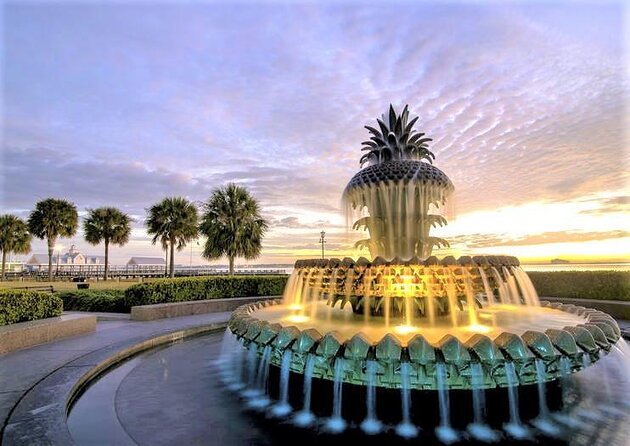
Starting at the Pineapple Fountain
Meet at the Pineapple Fountain at 9 a.m. in Charleston Waterfront Park. This is a simple, central place to begin, and it puts you in the right setting immediately: waterfront views, historic streets, and the city’s familiar architectural backdrop.
From here, Parker begins the food story rather than rushing straight to a restaurant. The walk lasts about 90 minutes and moves through Charleston’s historic district, including the French Quarter and the area around Rainbow Row.
You should expect a walking tour, not a seated lecture. Wear shoes that can handle cobbled or uneven historic streets, and bring protection from sun or rain. The activity requires a moderate level of fitness, though the supplied details do not indicate a strenuous route.
The starting point also makes this a useful first-day activity. You get an orientation to the center of Charleston before spending the rest of the day on your own. Just remember that the tour begins in the morning, not at lunchtime, so plan breakfast accordingly.
Waterfront Park, Rainbow Row, and the streets between
Waterfront Park is more than a meeting place. It gives Parker a natural starting point for explaining Charleston’s position on the water and the city’s connection to trade, crops, and food.
The route then takes in major sights such as Rainbow Row. The colorful row houses are an easy Charleston photo stop, but Parker’s value is in giving the streets a larger context. He points out architecture and craftsmanship while connecting the built city to the food culture that developed around it.
You also spend time on less familiar streets and locations. That is where the experience earns its undiscovered name. The point is not to avoid famous Charleston entirely. You see important landmarks, but you also learn why certain overlooked places matter.
One particularly meaningful theme is the role of enslaved cooks. Parker discusses an enslaved chef whose recipe still helps define local menus. That detail gives the food history a human center. It also keeps the tour from presenting Lowcountry cuisine as an abstract collection of dishes.
I appreciate that the walk does not reduce Charleston to charming homes and polished restaurants. The city’s food traditions came from complicated circumstances, and you hear that plainly. If you want only light sightseeing, some of this material may feel heavier than expected. That is also why it has value.
How the walk turns into a cooking lesson
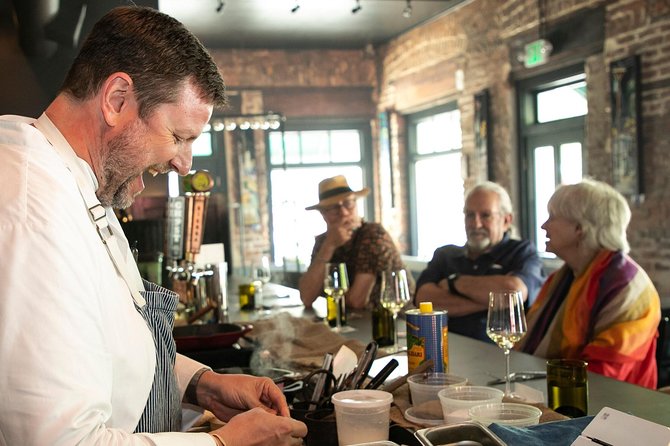
After the walking portion, you move to a cozy bistro for the culinary part of the experience. The setting changes from street-level sightseeing to a more relaxed meal, where Parker demonstrates how to prepare three of his own recipes.
This is not described as a hands-on class in which you chop and cook every course yourself. It is an interactive demonstration. You watch Parker work, hear why he uses certain techniques, and then eat the finished food.
That distinction is worth noting. If you want to spend the afternoon cooking with your own hands, this may not be the right format. If you prefer to watch a skilled chef, ask questions, and then enjoy the result, it is a better fit.
Parker has more than two decades of cooking experience, and he uses that background to interpret Lowcountry classics rather than simply repeat them. The recipes are written by him, so you are not just watching a restaurant kitchen run through its usual menu.
The supplied dishes include Lowcountry favorites such as shrimp and grits, and past menus or guest experiences also mention gazpacho. Exact dishes can change, so do not book expecting a fixed menu unless the operator confirms it. What remains consistent is the format: three recipes, a demonstration, lunch, and wine pairings.
More wine tours around the USA:
- Napa and Sonoma Wine Country Full-Day Tour from San Francisco
★ 4.5 · 4,455 reviews - San Francisco Super Saver: Muir Woods & Wine Country w/ optional Gourmet Lunch
★ 4.5 · 3,352 reviews - 5-Hour Traverse City Wine Tour: 4 Wineries on Old Mission Peninsula
★ 5.0 · 2,369 reviews - Belle Meade Guided Mansion Tour with Complimentary Wine Tasting
★ 4.5 · 2,189 reviews
The three-course lunch at Bistro Au Vin
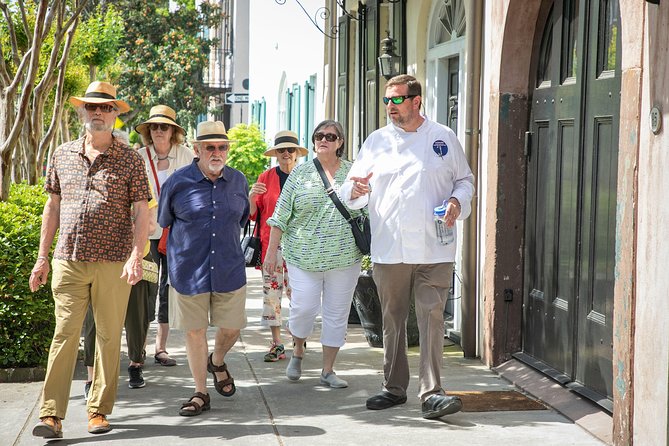
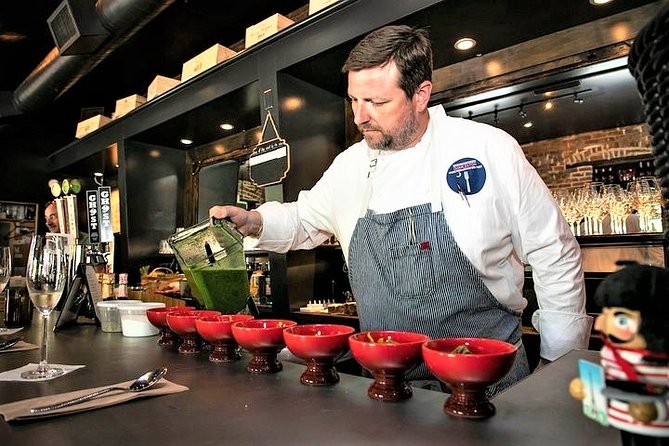
This is where the tour becomes a full food experience rather than a snack-based walking tour. Parker prepares three courses using heritage Lowcountry ingredients, then serves the meal with carefully chosen wine pours from Bistro Au Vin.
The wine is included as tasting pours paired with the food. You can purchase additional wine separately if you want more. If you do not drink wine, Charleston sweet tea and filtered water are available, along with coffee or tea.
I like the pairing because it gives the meal structure. You are not simply eating a dish and moving on. You can compare the food with the wine Parker has selected, then ask about the ingredients and methods while the meal is still fresh in your mind.
The meal also gives you a chance to slow down. Charleston sightseeing can become a parade of houses, churches, and narrow streets. Sitting down after the walk lets you sort through what you have seen, and the food provides a practical way to remember it.
Past menus and comments point to shrimp and grits as a favorite. That dish is a useful example of what the tour does well: it takes an instantly recognizable Lowcountry classic and puts it in a larger story about local ingredients and culinary tradition.
Do not expect the experience to function like a formal wine seminar. The wine is there to support the lunch, not to turn the day into a technical tasting course. This is a food-and-history tour first.
What you take home besides a full stomach
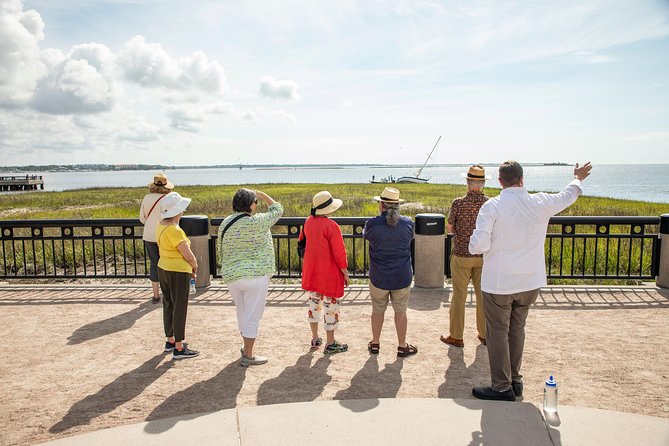
The recipe copies are one of the smartest inclusions. Many food tours are enjoyable in the moment but disappear once you leave town. Here, you receive Parker’s recipes so you can try to recreate the dishes in your own kitchen.
Of course, your version may not taste exactly like lunch at the bistro. Parker has the timing, technique, and professional kitchen experience on his side. Still, the recipes give you a real connection to the meal rather than a souvenir that gathers dust.
Pay attention during the demonstration and take mental notes about texture, seasoning, and order of preparation. The recipes are useful, but the spoken explanations may be just as important.
The cooking segment also makes this a good choice for people who already enjoy food. You do not need to be a trained cook, but curiosity helps. If you like learning why a dish works, you will get more from this than someone who only wants a quick meal.
Dietary needs, age rules, and physical demands
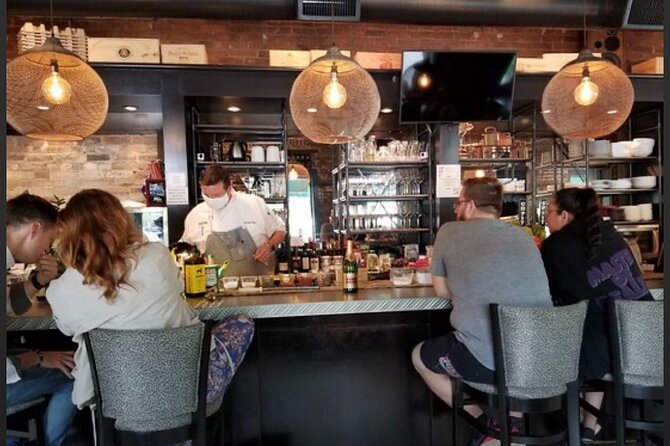
The operator handles meat, shellfish, eggs, dairy, nuts, and gluten. Common dietary needs can usually be accommodated, including vegetarian, vegan, pescatarian, dairy-free, nut-free, and gluten-free meals.
The important part is advance notice. This is not a restaurant where you can assume every alternative is ready at the last minute. Contact the operator directly before the tour if you have allergies, aversions, or a special diet.
The activity is intended mainly for adults age 21 and older. Older teenagers may attend with their parents. Since wine is part of the meal, this age rule is important to check before booking a family outing.
You should also be comfortable walking for about 90 minutes in Charleston’s historic center. Service animals are allowed, and the starting point is near public transportation. The information provided does not describe a specific route for wheelchairs or mobility devices, so ask ahead if that affects your plans.
Weather and the value of a small group
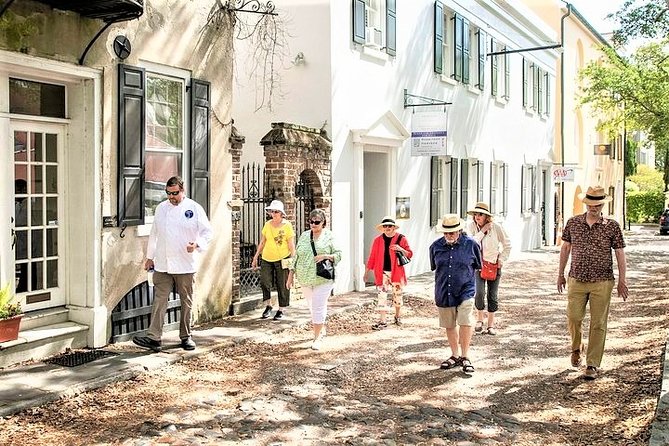
Weather can affect the experience because the first part takes place outdoors. If poor weather forces cancellation, you are offered another date or a full refund. In difficult conditions, the order may also be changed so lunch comes before the walk.
That flexibility is useful, but it does not make bad weather irrelevant. Bring suitable clothing and be ready for the walking section to feel less comfortable in heavy rain or heat. The guide may provide practical help, such as umbrellas, but you should still prepare for the forecast.
The group limit of 11 is a strong part of the value. A large food tour can make the cooking demonstration hard to see and the questions hard to ask. Here, the smaller format gives Parker more room to talk with each person.
It also suits celebrations. Birthdays, family visits, and small reunions fit naturally with a chef-prepared lunch and wine. The four-hour length is long enough to feel special without taking over the entire day.
Is the four-hour format worth it?
No price is provided here, so I cannot judge the exact cost against competing tours. I can judge what you receive: a 90-minute guided walk, a chef-led history lesson, a cooking demonstration, a three-course lunch, wine pairings, nonalcoholic choices, and recipes to take home.
That is a stronger package than a simple historical walk or a food crawl made up of small samples. You are paying for Parker’s time, his cooking, the meal, the wine, and the small-group setting.
The value depends on what you want. If you mainly want to cover as many sights as possible, four hours may feel like a large block of your Charleston schedule. If you want one well-shaped experience that combines place, food, and conversation, the time is easier to justify.
I would schedule it early in your stay. The walk gives you useful orientation, and the food discussion may help you understand other Charleston meals later in the trip. It also avoids filling your evening, when you may want to explore on your own.
Who should book this experience?
I would recommend it to couples, food-focused visitors, small groups of friends, and anyone who wants Charleston’s past explained through something tangible. It is especially good for people who enjoy both local history and cooking.
It is also a strong choice if you have already seen the famous sights and want a more thoughtful angle. You still visit well-known places, but the focus shifts toward lesser-known stories, local ingredients, and the people behind the cuisine.
Families with older teenagers may enjoy it, provided the age rules work for your group. People with dietary restrictions should contact the operator before booking, not after arrival.
I would hesitate only if you dislike walking, do not want to discuss difficult historical subjects, or prefer a fully hands-on cooking class. I would also choose another activity if you need a highly predictable menu, since the dishes can vary.
Should you book Undiscovered Charleston?
Yes, if you want one of Charleston’s more distinctive combinations: a historic walk led by Chef Forrest Parker, followed by a serious meal that puts the stories into practice.
The strongest reasons to book are the small group, the honest treatment of Charleston’s past, the three-course lunch, and the recipes you can use later. The main cautions are the morning start, outdoor walking, wine-centered meal, age rules, and need to report dietary restrictions in advance.
For a first Charleston visit, this is a useful way to get your bearings and learn what makes Lowcountry food more than a list of familiar dishes. For a repeat visit, it offers a fresh reason to walk the historic center again. If that mix sounds like your kind of day, this is a very good use of four hours.
FAQ
Where does the tour begin?
The tour begins at the Pineapple Fountain, 1 Vendue Range, Charleston, South Carolina 29401.
What time does the experience start?
The start time is 9 a.m.
How long is the walking portion?
The walking tour lasts about 90 minutes and covers Charleston’s historic district.
What food is included?
Chef Forrest Parker demonstrates three recipes and then serves lunch based on those recipes, using heritage Lowcountry ingredients.
Is wine included?
Yes. Bistro Au Vin provides wine tasting pours paired with the meal. Additional wine is available for purchase. Sweet tea, filtered water, coffee, and tea are available for people who do not want wine.
Can dietary restrictions be accommodated?
Common dietary needs can usually be accommodated, including vegetarian, vegan, pescatarian, dairy-free, nut-free, and gluten-free requests. Contact the operator in advance so the kitchen can prepare.
What happens if the tour is canceled because of bad weather?
You can choose another date or receive a full refund if poor weather causes the activity to be canceled. Free cancellation is also available when you cancel at least 24 hours before the start time.
Freshly poured around the USA
- Portland: Champagne Brunch Cruise on Willamette River★ 4.9 · 34 reviews
- Portland: Mount Hood Wine and Waterfalls Full-Day Tour★ 4.9 · 49 reviews
- Phoenix: Hot Air Balloon Ride with Champagne and Catering★ 4.8 · 137 reviews
- Phoenix: Hot Air Balloon Flight with Champagne★ 4.8 · 304 reviews
- Willamette Valley Wine Tour★ 4.8 · 44 reviews
- From Atlanta: North Georgia Wine Country Tour★ 4.9 · 63 reviews
- Newport Beach: City Cruises Champagne & Brunch Buffet Cruise★ 4.6 · 88 reviews
- NYC: Long Island Sommelier-Guided Wine Tasting Tour★ 4.8 · 27 reviews
USA Wine Tours, side by side.
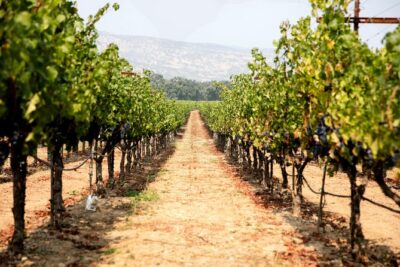
Napa and Sonoma Wine Country Full-Day Tour from San Francisco
Read our review →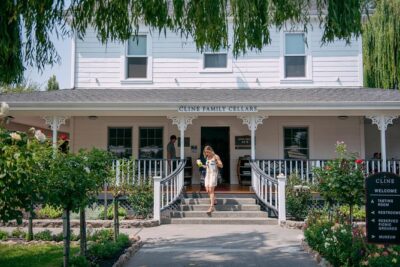
San Francisco Super Saver: Muir Woods & Wine Country w/ optional Gourmet Lunch
Read our review →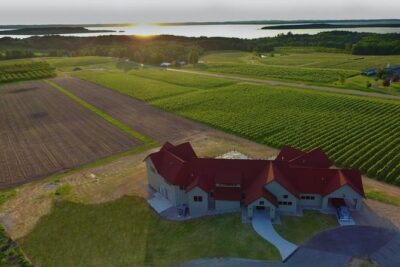
5-Hour Traverse City Wine Tour: 4 Wineries on Old Mission Peninsula
Read our review →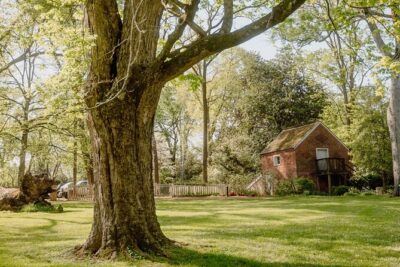
Belle Meade Guided Mansion Tour with Complimentary Wine Tasting
Read our review →
Small-Group Wine Country Tour from San Francisco with Tastings
Read our review →
Key West Small-Group Sunset Sail with Wine and Hors d’oeuvres
Read our review →
St. Augustine’s Wine, Cocktail and Food Experience
Read our review →
Seattle Wine & Snoqualmie Falls Highlights Tour
Read our review →Lists this tasting sits in