

Review · USA
St. Augustine’s Wine, Cocktail and Food Experience
St. Augustine’s best introduction may come between bites of barbecue, sips of wine, and stories about Spanish forts and old city streets. This small-group food and drink walk combines a substantial meal with a guided look at the nation’s oldest city, so you get both a dining plan and your bearings.
I like two things here. First, the $159 price includes food and alcoholic drinks, with no tasting charges added as you go. Second, the group is capped at eight people, which gives guides such as Russ, Alex, and Garry room to talk with you instead of shouting over a crowd.
The main consideration is that this is a walking tour with a moderate fitness requirement, and food choices become much narrower for vegan, vegetarian, kosher, dairy-free, sugar-free, or gluten-free diets. Guide style can also vary, so if you prefer a quiet, strictly historical tour, ask yourself how much personality you want mixed into the afternoon.
Key points to know before booking
- A full afternoon meal: Food portions can be generous enough that you may not want a separate dinner afterward.
- Drinks are built in: Wine, cocktails, alcoholic drinks, bottled water, and non-alcoholic options are included.
- Only eight people: The small group makes conversation and questions much easier.
- A useful first-day tour: The route covers major landmarks and gives you ideas for restaurants and bars to revisit.
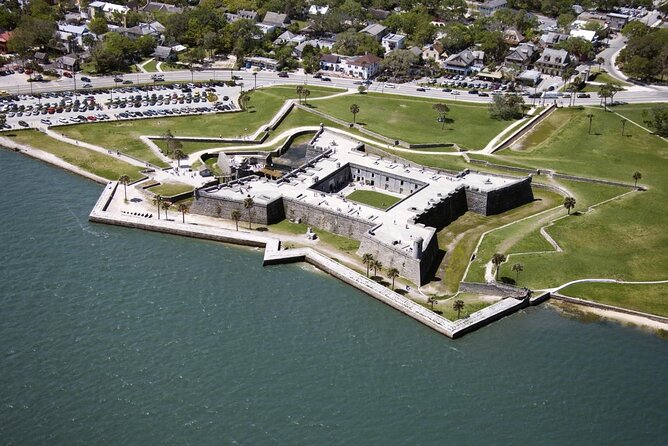
- History between stops: You pass the Castillo de San Marcos, Huguenot Cemetery, Old City Gates, St. George Street, and Plaza de la Constitución.
- Dietary limits matter: Special diets are accepted with advance awareness, but the available selection may be much more limited.
Why this food tour works as a first look at St. Augustine
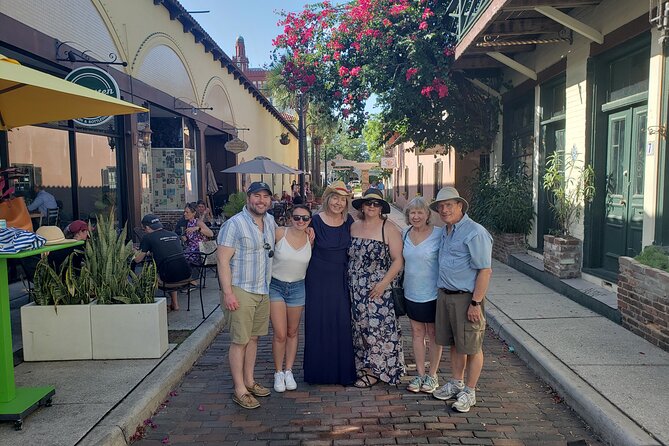
St. Augustine is compact, old, and easy to walk, but its dining scene can be hard to sort out on your own. Tourist streets, historic landmarks, wine bars, cocktail spots, and local restaurants all sit close together. This tour gives you a ready-made route through the center, with food and drinks used as the thread.
The afternoon timing is smart. You avoid making a formal dinner your first major activity, and you get several hours to see the city while it is still active. The experience lasts about three hours and 30 minutes, long enough to make several stops without turning into an all-day march.
I would book this near the start of a St. Augustine stay. You can return to the places that suit you, follow up on restaurant suggestions, and use the guide’s comments to make sense of the streets around the plaza.
The strongest part is the combination of food and place. You are not simply seated for a meal, and you are not only walking past buildings while listening to dates. The bites and drinks give the route a relaxed rhythm, while the guide explains why the buildings and public spaces matter.
More meals with the bottle chosen for you around the USA:
- Napa Valley Wine Train: Gourmet Express Lunch or Dinner
★ 4.7 · 48 reviews - Sorrento Farm and Food Experience including Olive Oil, Limoncello, Wine tasting
★ 5.0 · 2,524 reviews - Rome: Gourmet Food Tour with Dinner & Barolo Wine
★ 4.9 · 2,347 reviews
Starting at Treasury Street and finding the old city
The meeting point is 57 Treasury Street, a central location in the historic district. From there, the route heads through the old core and finishes near Plaza de la Constitución, within two blocks of the plaza. That makes the end convenient for more sightseeing, shopping, or a later reservation.
The tour passes close to major sights rather than treating them as isolated photo stops. That matters in St. Augustine, where the meaning of a street often comes from its connection to a fort, church, cemetery, or waterfront view.
Your guide may be Garry, Russ, or Alex. Garry is repeatedly praised for humor, storytelling, and a strong grasp of the city’s buildings. Russ is often described as funny, helpful, and good at combining food with local context. Alex receives especially warm marks for making the history easy to follow and for pointing out places worth returning to.
That said, personality is part of the deal. One serious account describes a guide interaction that felt uncomfortable, including repeated personal stories, pressure to rate the tour, and a request for a tip. It is an isolated but important caution. If you value a calm, low-pressure style, keep that possibility in mind when deciding how much guide-led entertainment you want.
Castillo de San Marcos: the fort that frames the city
The Castillo de San Marcos is the major historic anchor on the route. Built by Spain in the 17th century, it is the oldest masonry fort in the continental United States and the oldest structure in St. Augustine, at about 325 years old according to the tour information.
You do not appear to have a dedicated interior visit included, so think of this as an outside look and historical orientation rather than a full fort admission. That distinction matters if you want to explore the fort rooms, gun deck, and exhibits. You would need to plan that separately.
Even from outside, the Castillo helps explain St. Augustine’s position in Spain’s plans for the New World. Its thick stone walls and defensive setting make the city’s colonial past feel concrete rather than abstract. This is also one of the route’s strongest photo opportunities, especially for anyone interested in military architecture.
Huguenot Cemetery and the Old City Gates
The Huguenot Cemetery sits near the historic city gates. It served as a Protestant burial ground from 1821 to 1884, after the new American administration recognized that St. Augustine needed a formal Protestant cemetery. Before American control, the city was mainly Catholic, and the Tolomato Cemetery was reserved for Catholics.
The stop is brief, about five minutes, and admission is free. Do not expect a long cemetery visit. Instead, use it as a compact lesson in how political change affected daily life, worship, and burial customs.
Next comes the Old City Gates, built in 1808, and St. George Street. The gates mark the entrance to the city’s historic center, while St. George Street serves as its main spine. You spend about 20 minutes in this area, enough to get oriented and see how the old street plan now functions as the center of modern tourism.
St. George Street can be busy and commercial, so this will not feel like an untouched colonial street. The value is in seeing how historic buildings, shops, restaurants, and pedestrian traffic occupy the same narrow corridor. Your guide’s comments help separate the real historical details from the easy tourist shorthand.
More wine tours around the USA:
- Napa and Sonoma Wine Country Full-Day Tour from San Francisco
★ 4.5 · 4,455 reviews - San Francisco Super Saver: Muir Woods & Wine Country w/ optional Gourmet Lunch
★ 4.5 · 3,352 reviews - 5-Hour Traverse City Wine Tour: 4 Wineries on Old Mission Peninsula
★ 5.0 · 2,369 reviews - Belle Meade Guided Mansion Tour with Complimentary Wine Tasting
★ 4.5 · 2,189 reviews
St. Photios Shrine and the Greek chapter of St. Augustine

The St. Photios Greek Orthodox National Shrine sits just steps from the old city gates and St. George Street. It honors the first Greek colony to come to America in 1768 and is connected with the Greek Orthodox Archdiocese of America.
The shrine adds a useful layer to the city’s story. St. Augustine is often presented through Spanish Catholic beginnings, but this stop points to later communities and the wider range of people who shaped the city.
The supplied route does not specify how long you spend inside or whether an admission fee is included. Treat it as a passing landmark unless your guide gives you more time. This is one place where a question can improve the visit: ask how the Greek community fits into the larger history of St. Augustine.
Plaza de la Constitución, the city’s public room
Plaza de la Constitución is the center of downtown St. Augustine and the place from which the original city plan developed. It is bordered by Government House, the Cathedral Basilica, the Bridge of Lions, and Matanzas Bay.
The plaza follows a Spanish planning idea shaped by the 1573 Law of the Indies. In coastal cities, public squares were placed near the waterfront, where people could see activity and be seen themselves. That makes the plaza more than an attractive open space. It shows how government, religion, commerce, and waterfront access were arranged in the colonial city.
You spend about 10 minutes here, but the area deserves a slower look if you have time later. Notice how several institutions face the same public space. The tour’s final location is nearby, so you can easily return after the food portion ends.
The Cathedral Basilica and Government House

The Cathedral Basilica of St. Augustine dates from 1793 to 1797 and holds an unusual distinction: its congregation was established in 1565, making it the oldest Christian congregation in the contiguous United States. The building itself is also a National Historic Landmark.
The tour information does not promise an interior visit, so you should not assume a formal church tour. Even an exterior explanation adds useful context, especially because the basilica sits directly on the plaza beside civic buildings.
Government House occupies the west end of the plaza. A government building has been on this site since 1598, serving Spanish and British colonial governors and then Spanish officials again. After Spain ceded Florida to the United States in 1821, the current building served as a courthouse and briefly as the Capitol of the Florida Territory.
This is where the route’s history becomes especially layered. The same public site passed through Spanish, British, Spanish, and American periods. You can see how authority changed while the city plan and waterfront setting remained important.
What you actually eat and drink
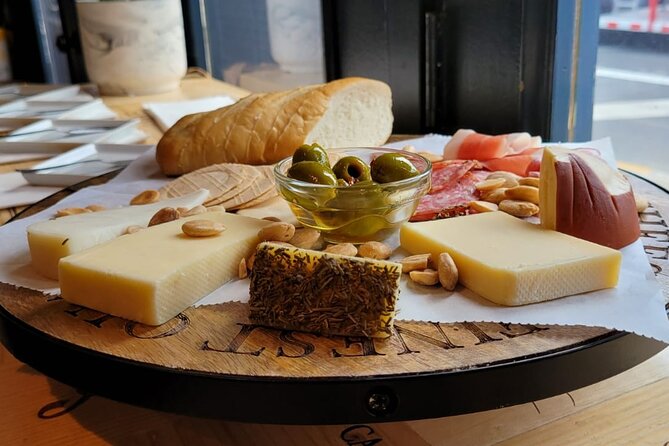
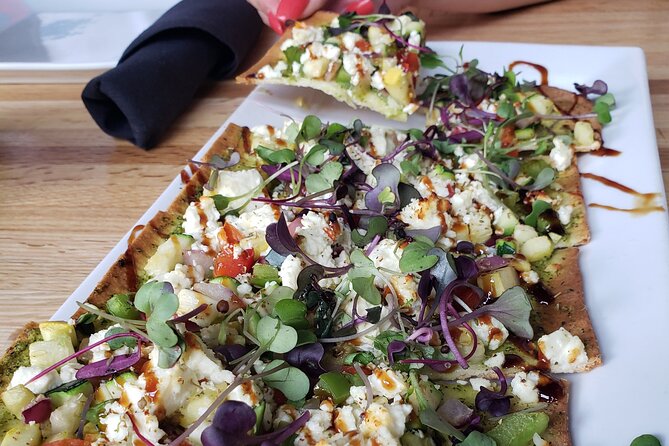
The exact restaurant names and fixed tasting menu are not provided, so you should not book this expecting a published list of specific dishes. The food portion is described as lunch, and the tour includes alcoholic beverages, bottled water, and food samples.
The accounts connected with the experience describe a broad spread: wine, cocktails, barbecue, dessert, brie, and enough food to function as a three-course meal. One person found the servings large enough to skip a later dinner reservation. That makes the price easier to assess, especially in a historic district where a full meal and several drinks can quickly become expensive.
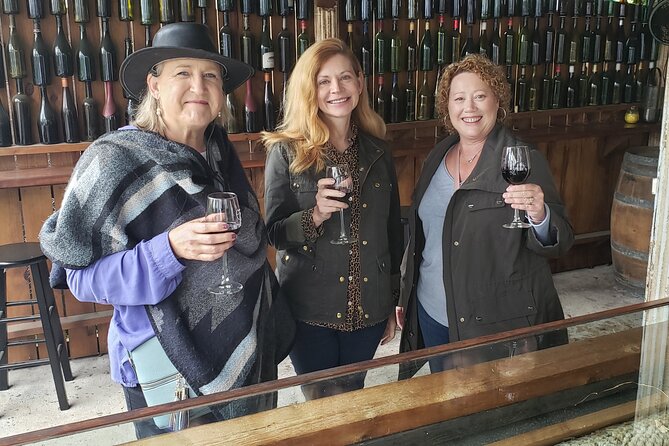
The wine stop may be particularly useful if you want ideas for the rest of your stay. One food and wine fan returned to the same wine spot on the following two days. You might find a drink or dish that deserves a second visit, which is one of the better reasons to take a food tour instead of simply booking a single restaurant.
The drink menu appears to offer choices rather than one fixed pour at every stop. You may be able to select wine or a cocktail from a wider list, but the exact choices can change. Non-alcoholic drinks are available, so you do not need to drink alcohol to take part.
Price, group size, and value
At $159 per person, this is not a cheap walking tour. The value depends on how much food and drink you receive, and on how much you value a guide who can connect meals with the city’s past.
The price includes lunch, alcoholic beverages, and bottled water. You are not asked to pay separate tasting fees at each stop. If the portions are as filling as described, the experience may replace lunch and reduce the need for a large dinner that evening.
The maximum group size of eight is another important part of the value. Small groups tend to make it easier to hear the guide, ask about architecture, and speak with the people you meet. The tradeoff is that a larger tour could cost less, so this is best for you if personal attention matters more than finding the lowest possible price.
Free cancellation is available when you cancel at least 24 hours before the start time. Inside that window, the payment is not refunded, and changes are not accepted. The tour is offered in English and uses a mobile ticket.
Who should book this experience
I would recommend it to you if you want three things in one afternoon: a meal, several drinks or non-alcoholic alternatives, and a guided introduction to central St. Augustine.
It suits couples and friends particularly well, but families can also take part if the adults are comfortable with a drink-focused route. The small group encourages conversation, and several accounts describe meeting enjoyable people along the way.
It is also a good fit for first-time visitors who do not know where to eat. You get a quick tour of the central streets and a chance to decide which places deserve a return visit.
I would be cautious if you have strict dietary needs. Vegetarian, vegan, kosher, dairy-free, sugar-free, and gluten-free choices are described as much more limited. Contact the operator before booking if food restrictions are central to your plans.
You should also be comfortable walking for several hours. Service animals are allowed, and the route is near public transportation, but the experience still calls for a moderate level of fitness.
Should you book St. Augustine’s Wine, Cocktail and Food Experience?
Book it if you want a social, food-centered introduction to St. Augustine and like the idea of learning the city while eating rather than sitting through a formal history lecture. The strongest features are the small group, included food and drinks, generous portions, and guides such as Russ and Alex who bring humor and useful local suggestions.
Skip it if you want a detailed interior tour of the Castillo, cathedral, or shrine, since those visits are not clearly included. You may also prefer another option if you need a carefully controlled menu or dislike a guide with a strong personal style.
For most people who enjoy tasting several things and walking through old streets, this is a practical first-afternoon choice. Just leave room in your schedule, and possibly in your stomach, for a substantial meal.
FAQ
How long does the St. Augustine food and drink tour last?
The experience lasts approximately three hours and 30 minutes.
What is included in the $159 price?
Food, lunch, alcoholic beverages, and bottled water are included. Non-alcoholic drinks are also available.
Where does the tour start?
The meeting point is 57 Treasury Street, St. Augustine, Florida 32084.
Where does the tour end?
The tour ends at Plaza de la Constitución, near 170 St. George Street, within two blocks of the plaza.
How large is the group?
The tour accepts a maximum of eight travelers.
Are non-alcoholic drinks available?
Yes. You can request non-alcoholic drinks during the experience.
Can I cancel for a full refund?
Yes, if you cancel at least 24 hours before the local start time. Cancellations made less than 24 hours before the start time are not refunded, and changes inside that period are not accepted.
Freshly poured around the USA
- Portland: Champagne Brunch Cruise on Willamette River★ 4.9 · 34 reviews
- Portland: Mount Hood Wine and Waterfalls Full-Day Tour★ 4.9 · 49 reviews
- Phoenix: Hot Air Balloon Ride with Champagne and Catering★ 4.8 · 137 reviews
- Phoenix: Hot Air Balloon Flight with Champagne★ 4.8 · 304 reviews
- Willamette Valley Wine Tour★ 4.8 · 44 reviews
- From Atlanta: North Georgia Wine Country Tour★ 4.9 · 63 reviews
- Newport Beach: City Cruises Champagne & Brunch Buffet Cruise★ 4.6 · 88 reviews
- NYC: Long Island Sommelier-Guided Wine Tasting Tour★ 4.8 · 27 reviews
USA Wine Tours, side by side.

Napa and Sonoma Wine Country Full-Day Tour from San Francisco
Read our review →
San Francisco Super Saver: Muir Woods & Wine Country w/ optional Gourmet Lunch
Read our review →
5-Hour Traverse City Wine Tour: 4 Wineries on Old Mission Peninsula
Read our review →
Belle Meade Guided Mansion Tour with Complimentary Wine Tasting
Read our review →
Small-Group Wine Country Tour from San Francisco with Tastings
Read our review →
Key West Small-Group Sunset Sail with Wine and Hors d’oeuvres
Read our review →
Seattle Wine & Snoqualmie Falls Highlights Tour
Read our review →
San Francisco: Muir Woods, Napa & Sonoma Valley Wine Tour
Read our review →Lists this tasting sits in