
Review · ROME
Rome: Hands-On Pasta & Tiramisu Class with Unlimited Wine
Fresh pasta is the star here, but the best part is the full meal you build with your own hands. In one sitting, you make fettuccine, stuffed ravioli, and tiramisu, then sit down to eat it with Italian wine. The class is taught in English by chefs such as Max, Marco, Alessandro, Jacopo, and Zori, depending on the session.
I like the small-group format, which gives you room to work and lets the chef correct your dough, pasta shapes, and technique. I also like that the class feels social without being a formal lecture: snacks, coffee, nonalcoholic drinks, and unlimited wine keep the table lively. The main drawback is dietary: this is not suitable for celiac disease, severe gluten intolerance, or severe nut allergies, and the meeting point varies by booking option.
Key points at a glance
- Three Roman kitchen skills in one class: Make fresh pasta dough, shape stuffed ravioli, and assemble classic tiramisu.
- Small groups with hands-on help: Groups reported in the experience details range from five to eight people, with private options also available.
- Chefs who keep the pace friendly: Max, Marco, Alessandro, Jacopo, Jacob, and Zori are among the instructors named for different sessions.
- A proper sit-down meal follows the work: You eat the pasta and dessert you prepare, with free-flowing Italian wine.
- Useful take-home material: A recipe booklet helps you repeat the dishes at home.
- Plan carefully around allergies: Gluten and nut traces may be present, and gluten-free pasta is not offered.
Why this class is more than a pasta demonstration
Rome offers plenty of food tours, but a cooking class gives you a different kind of connection with Italian food. Instead of simply eating a plate of pasta, you learn why the dough feels right, how a filling is sealed inside ravioli, and how tiramisu comes together in layers.
That hands-on element matters. Mixing flour and eggs by hand gives you an immediate sense of pasta dough that a cooking demonstration cannot provide. You feel when the mixture is dry, when it needs working, and when it begins to turn smooth. The chef guides you through the process, so you do not need previous cooking experience.
I would think of this as a social meal with a practical lesson built in. You spend part of the time at the work surface, then gather around the table to eat. The wine, snacks, and conversation make the class feel relaxed rather than academic.
The format also works well for a mixed group. A keen home cook can ask about technique, while a beginner can follow the chef step by step. The chefs are described as funny, patient, and clear, with Max and Marco especially noted for keeping people involved without rushing them.
More wine tours around Rome:
- Rome: Tuscany & Montepulciano Day Trip with Lunch & Wine Tasting
★ 4.5 · 5,232 reviews - Rome: Pasta & Tiramisu Class with Fine Wine by the Vatican
★ 4.9 · 4,852 reviews - Rome Food Tour: Unlimited Tastings with Fine Wine & Barolo
★ 5.0 · 3,365 reviews
Arriving in a Roman kitchen
The class begins at a designated meeting point in Rome. The exact location can change with the option you book, so check your confirmation rather than assuming every session starts in the same kitchen. Some sessions have been held close to the Colosseum, which can make this an easy addition to a sightseeing day in central Rome.
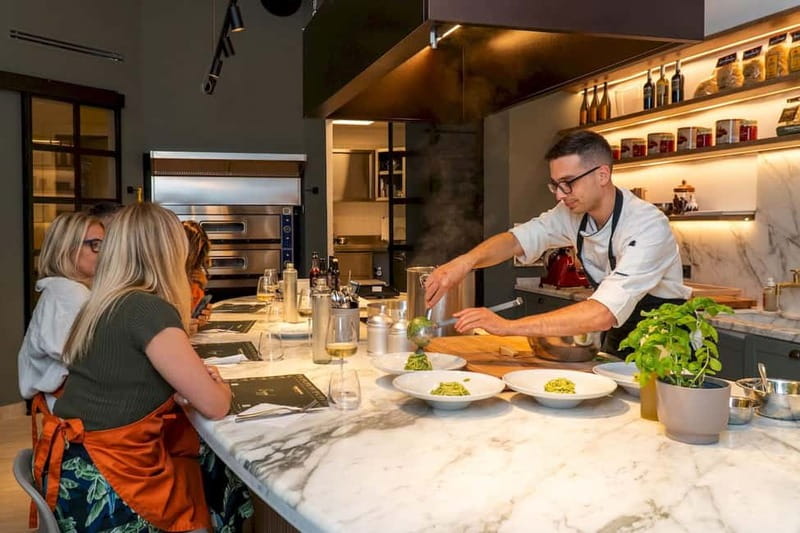
You are welcomed into a clean, inviting kitchen and introduced to the chef and the other people in the group. The setting has been described as modern and well organized, with enough room for small groups to work at the same time.
That group size is one of the practical strengths of this experience. A class of around five to eight people is large enough for conversation but small enough for personal help. You are not left watching from the back of a crowded room. Private sessions are also available if you want the class to focus just on your party.
The language of instruction is English. The chefs also add pieces of Italian food vocabulary and background, which is useful if you want to understand a menu or order pasta with more confidence later in your trip.
Kneading the dough by hand
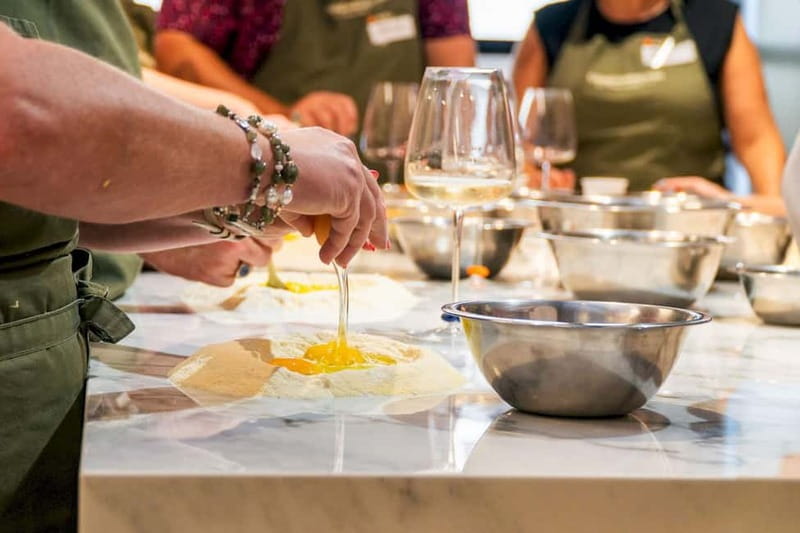
The first major task is fresh pasta dough. You combine flour and eggs with your hands, then knead the mixture until it develops the right texture. The chef explains how the dough should feel and helps you adjust your technique as you work.
This is where the class earns its keep. Pasta dough looks simple, but the small details affect the final result. Too little kneading can leave it uneven. Rolling it too thick can make the finished pasta heavy. The chef’s guidance gives you something useful to take home, rather than just a recipe with no explanation.
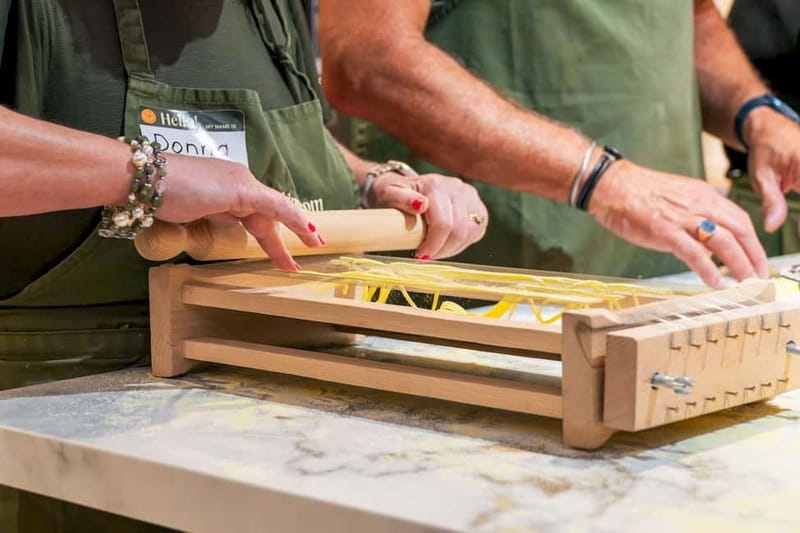
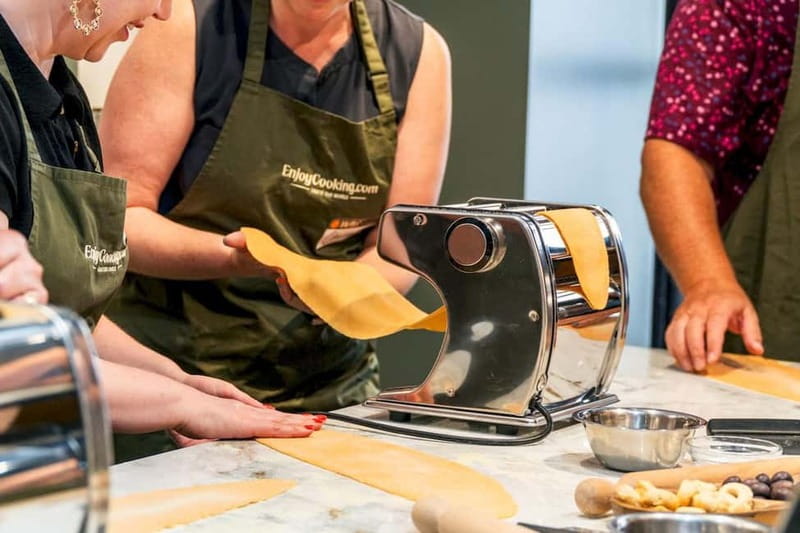
You then roll out the dough and prepare it for two different kinds of pasta. The class focuses on fresh fettuccine and stuffed ravioli, so you get to work with both a long pasta shape and a filled pasta.
Fettuccine is a good first project because the result is familiar and easy to recognize. You see how the sheet is rolled, cut into ribbons, and prepared for cooking. The experience details describe the finished pasta as being cooked al dente, the firm texture that is central to good Italian pasta.
The class also shows how fresh pasta differs from dried pasta. It cooks quickly and has a soft, delicate texture. That is worth learning in person because the timing can be easy to miss when you first try it at home.
Shaping ravioli and choosing the filling
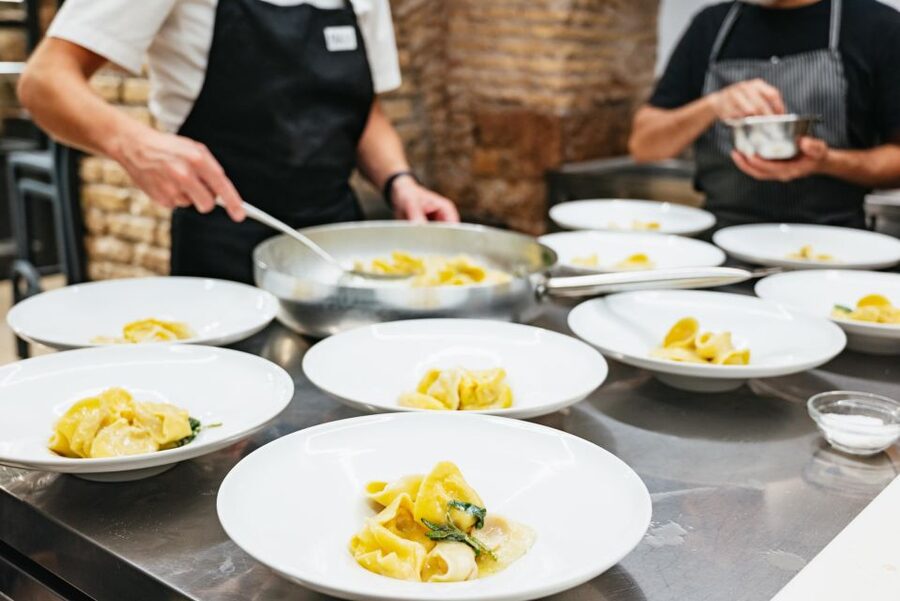
The ravioli section adds a little more precision. You place seasonal filling onto sheets of pasta, fold the dough over, and seal the edges into small pockets.
This is the part where personal guidance is most useful. The filling has to be portioned carefully. Too much makes the ravioli difficult to seal, while too little leaves a disappointing bite. The chef shows you how to press out excess air and close the edges properly.
The fillings are described as fresh and seasonal, though the exact ingredients can vary. That is a good feature for the class, since Italian cooking often depends on what is available and in season. It also means you should not expect one fixed ravioli recipe every time.
Once shaped, the ravioli go into boiling water and cook until tender. You get to see the pasta change as it cooks, then taste the result as part of the meal. Several dishes are prepared during the session, including sauces for the fresh pasta. One detailed class description included red and yellow tomatoes with seasonings cooked in a frying pan, though the precise sauce may depend on the session.
The cooking stage is partly hands-on and partly chef-led. You help prepare the food, but the chef may take over for boiling, sautéing, and timing. That is sensible. A class can teach technique without turning the kitchen into a stressful race to serve several hot dishes at once.
Same vines, another glass to try:
- Rome: Pasta Making Class with Wine, Limoncello, and Dessert
★ 4.9 · 3,177 reviews - Rome: Guided Food Walking Tour with Wine in Trastevere
★ 4.9 · 3,105 reviews - Rome: Tuscany & Montepulciano Day Trip with Lunch & Wines
★ 4.7 · 3,004 reviews - Rome: Trastevere Food tour with Free-Flowing Fine Wine
★ 5.0 · 2,853 reviews
Building tiramisu from espresso and mascarpone
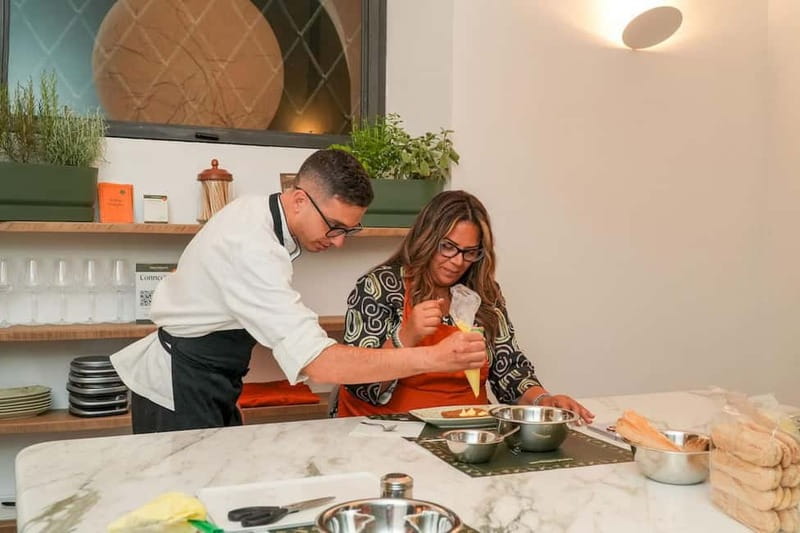
Tiramisu provides a welcome change of pace after the pasta work. You layer espresso-soaked biscuits with creamy mascarpone, then finish the dessert with cocoa.
It is a simple recipe, but the class gives you a chance to see how the texture comes together. The biscuits need enough espresso to soften without collapsing. The mascarpone mixture needs to be creamy, and the layers need to hold their shape.
This is also the easiest dish to repeat at home. Fresh pasta requires equipment, practice, and careful timing. Tiramisu needs a few ingredients and a clear method. The recipe booklet makes it easier to remember the proportions and sequence after your holiday ends.
Do not expect a long pastry course. Tiramisu is one part of a three-part class, not a separate dessert workshop. The value is in making a complete Italian meal in one session, with the dessert ready to enjoy after the pasta.
Sitting down to eat what you made
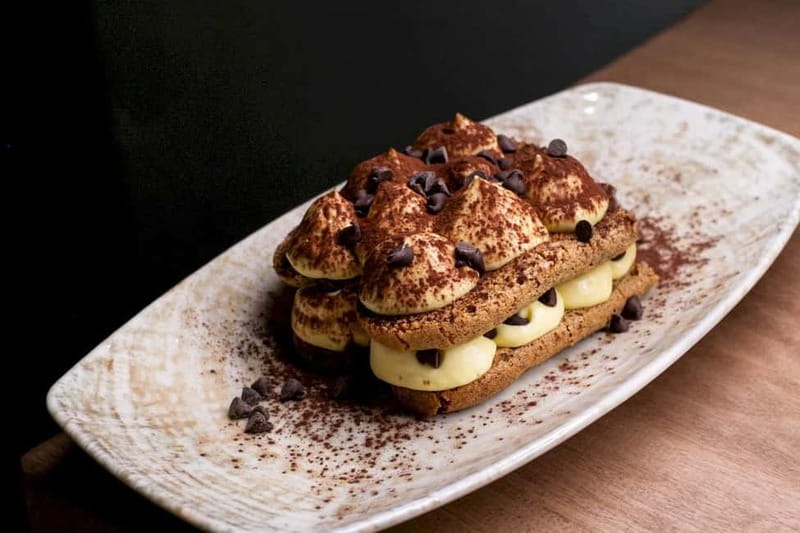
After the cooking, you gather around the table and eat the fettuccine, ravioli, sauces, and tiramisu. This meal is not an extra tasting added at the end. It is the payoff for the work you have done.
The food portions are described as generous, and the class includes snacks while you cook. Italian wine flows throughout the session, with coffee and nonalcoholic drinks also available. If you do not drink alcohol, you can still take part, but the wine is a central part of the social setup.
The meal also gives you time to talk with the chef and the rest of the group. That matters because the cooking itself can be quite focused. Once everyone is seated, you can relax and compare pasta shapes, ask about ingredients, and hear more about Italian food customs.
I like the balance here. You are not rushed out as soon as the last pan is cleared, but this is still a three to 3.5-hour activity rather than an all-day event. A morning class can fit before afternoon sightseeing, while an evening session works well as dinner with a lesson attached.
The chefs and teaching style
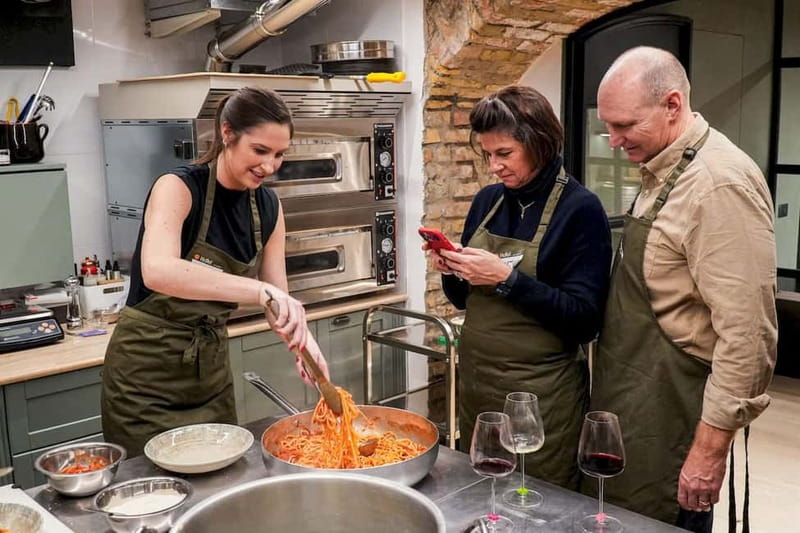
The instructor can vary by date. Named chefs include Max, Marco, Alessandro, Jacopo, Jacob, and Zori, along with other team members. Max is described as funny, attentive, and good at explaining techniques simply. Marco is noted for his energy and ability to keep the atmosphere positive. Alessandro is associated with a relaxed evening class, while Zori is described as patient and humorous.
You should not book this expecting the same chef every time unless your booking specifically confirms one. The important point is that the class is designed around personal instruction, not a single celebrity chef.
A good cooking teacher watches the whole table, not just the most confident cook. This class appears to follow that model. The chef demonstrates, then lets you work, stepping in when your dough or pasta shape needs help. That makes it suitable for beginners and still useful for people who already cook.
The food history and Italian vocabulary are extra benefits rather than the central promise. If you want a serious culinary qualification, this is not that. If you want to understand what you are doing while preparing a traditional meal, it fits well.
What the price includes at $112.15
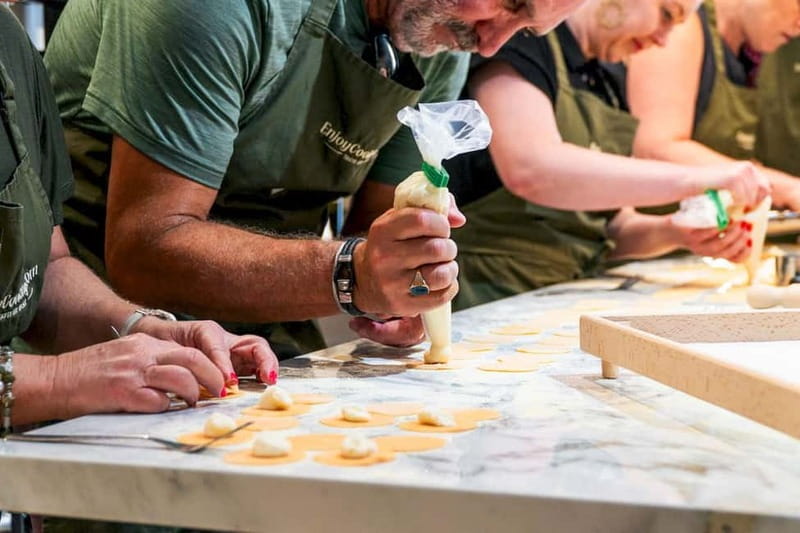
At $112.15 per person, the cost is higher than simply ordering a pasta dinner in Rome. That comparison misses much of what you are paying for. The price covers a three to 3.5-hour activity, personal instruction, the ingredients, the meal, wine, snacks, coffee, nonalcoholic drinks, and a recipe booklet.
The unlimited wine is a noticeable part of the value, especially for an evening booking. You are also getting entertainment and social time, not just food. For two people, the class can replace a dinner reservation while adding a skill you can use later.
I would consider the price fair for someone who wants an activity rather than another restaurant meal. It is less attractive if you are mainly looking for the cheapest way to eat pasta or if you dislike group cooking.
The small-group and private options affect the experience. A smaller group gives you more work space and more chances to ask questions. A private session may suit families, couples, or friends who want a more personal setting, though you should check the exact price for the option you select.
Who should book this experience
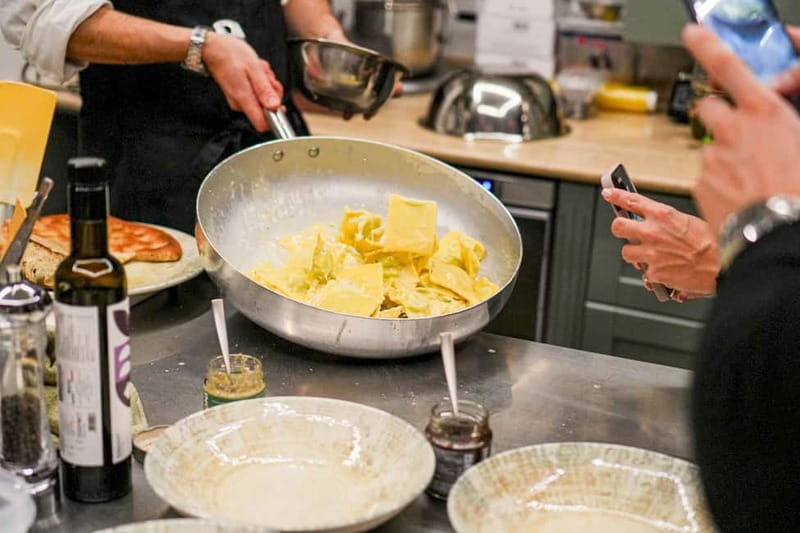
This class suits you if you enjoy food, like practical activities, or want a break from sightseeing. It is especially good for couples, families, and friends who want to share a meal they helped prepare.
It can also work well for multigenerational groups. The class has welcomed a family with a nearly two-year-old, and all age groups have taken part. Still, young children need supervision around hot water, sharp tools, and busy work surfaces.
You do not need to be an experienced cook. The chef provides guidance throughout, and the recipes are designed around familiar dishes. At the same time, a confident home cook will find useful details in the dough texture, pasta thickness, filling, and cooking time.
This is less suitable for anyone who wants a quiet meal with no structured activity. It is also not suitable for people with celiac disease or gluten intolerance. Gluten-free options are not provided, and traces of gluten and nuts may be present. Tell the operator about dietary needs and severe allergies when booking, but do not treat this as a safe option for serious gluten or nut allergies.
Timing, location, and booking advice
The activity lasts roughly three to 3.5 hours, with starting times available according to the date. Build in enough time to reach the meeting point, since the location can vary by option. The class ends back at the meeting point, so it does not include hotel pickup or drop-off.
If you want to combine it with the Colosseum, check the exact address and class time first. A session near the monument can be convenient, but you should not assume every option uses the same location.
Cancellation is flexible up to two days in advance for a full refund. That is useful when your Rome plans are still shifting, but you still need to check the booking terms for your selected option.
Should you book it?
Book this class if you want to do something active, eat a full Italian meal, and leave Rome with recipes you can actually repeat. The combination of fresh fettuccine, ravioli, tiramisu, personal instruction, and unlimited wine gives the experience strong value for a food-focused afternoon or evening.
I would skip it if you have serious gluten or nut concerns, dislike cooking, or want a purely local restaurant experience with no group activity. For everyone else, this is a friendly way to turn dinner into part of your Rome story, with enough instruction to make the experience useful after you return home.
FAQ
How long does the Rome pasta and tiramisu class last?
The class lasts approximately three to 3.5 hours. Starting times vary, so check availability for the date you want.
What dishes will I make?
You will prepare fresh fettuccine, stuffed ravioli, and classic tiramisu. You will also work with pasta sauces and fillings during the class.
Is wine included?
Yes. Free-flowing Italian wine is included, along with coffee, nonalcoholic drinks, and snacks during the cooking session.
Is the class taught in English?
Yes. English is the stated language of instruction.
Is the class suitable for people with celiac disease or gluten intolerance?
No. The class is not recommended for people with celiac disease or gluten intolerance. Gluten-free options are not available, and traces of gluten and nuts may be present.
Does the experience include hotel pickup and drop-off?
No. Hotel pickup and drop-off are not included. The meeting point varies according to the option booked, and the activity ends back at that meeting point.
Freshly poured around Rome
- Rome: Pompeii Tour with Wine and Lunch by High Speed Train★ 4.8 · 485 reviews
- Pasta and tiramisù Cooking class with Wine at Piazza Navona★ 4.8 · 235 reviews
- Rome: Small-Group Art Class with Wine★ 4.8 · 106 reviews
- From Rome: Tuscany, Montepulciano Tour with Wine & Lunch★ 4.9 · 36 reviews
- From Rome: Frascati Wine Region Tour with Wine Tasting★ 4.8 · 53 reviews
- From Rome: Pasta & Tiramisù Cooking Class near Spanish Steps★ 4.7 · 27 reviews
- Rome: Pizza and Tiramisù Cooking Class with Glass of Wine★ 4.8 · 144 reviews
- Rome: Wine and Paint Experience in Piazza Navona★ 4.9 · 46 reviews
Rome Wine Tours, side by side.

Rome: Tuscany & Montepulciano Day Trip with Lunch & Wine Tasting
Read our review →
Rome: Pasta & Tiramisu Class with Fine Wine by the Vatican
Read our review →
Rome Food Tour: Unlimited Tastings with Fine Wine & Barolo
Read our review →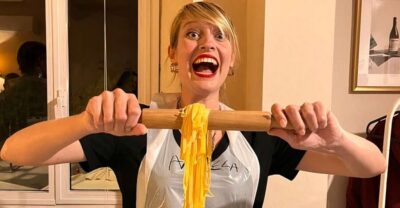
Rome: Pasta Making Class with Wine, Limoncello, and Dessert
Read our review →
Rome: Guided Food Walking Tour with Wine in Trastevere
Read our review →
Rome: Tuscany & Montepulciano Day Trip with Lunch & Wines
Read our review →
Rome: Trastevere Food tour with Free-Flowing Fine Wine
Read our review →
Rome: Gourmet Food Tour with Dinner & Barolo Wine
Read our review →Lists this tasting sits in