
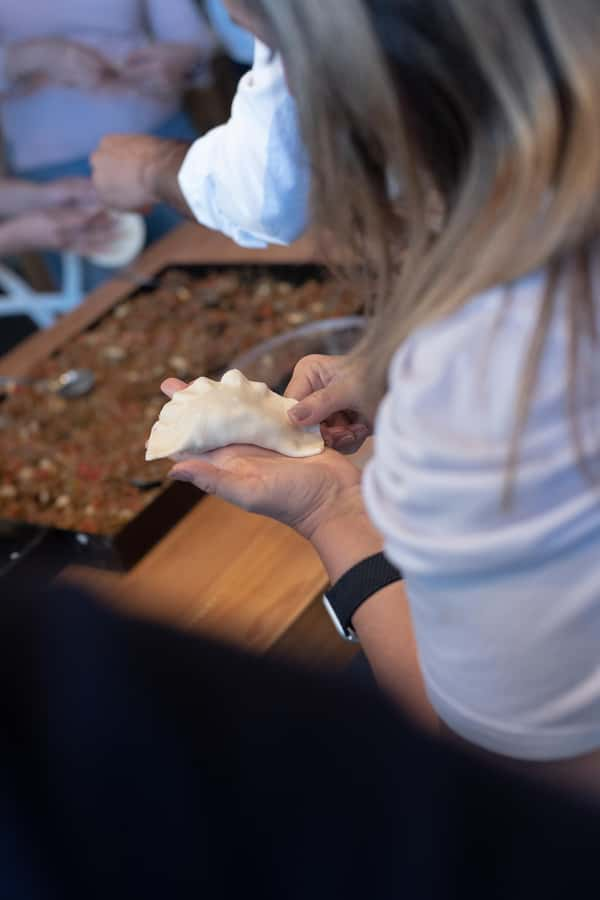
Review · ARGENTINA
Premium Empanadas Cooking Class & Wine Tasting Experience
Argentine empanadas are wonderfully practical food: easy to fold, easy to eat, and welcome at breakfast, lunch, dinner, or as a snack. This small-group class in Palermo pairs the cooking with three important Argentine wines, Malbec, Cabernet Sauvignon, and Cabernet Franc, so you get a meal and a bit of food culture in the same sitting.
I like the hands-on format, since you make the empanadas rather than simply watch someone else cook. I also like the wine education, especially the explanation of grape types and Argentine winemaking. The main consideration is the filling: one participant found the onion too dominant, and at $49, this is not a bargain meal if you are mainly looking for food.
Key points
- Make your own Argentine empanadas: Prepare the dough and filling, fold the pastries, and eat the finished results.
- Taste three Argentine grapes: The wine portion includes Malbec, Cabernet Sauvignon, and Cabernet Franc.
- Learn while you cook: Guides explain empanada traditions, grape characteristics, and local winemaking.
- Small groups help conversation: One session had only seven people, while another was a private class for a couple.
- Choose from three tour languages: Spanish, English, and Portuguese are available.
- Allow extra time if needed: The advertised duration is two hours, though one class ran about two and a half hours.
A Palermo class that turns dinner into a lesson
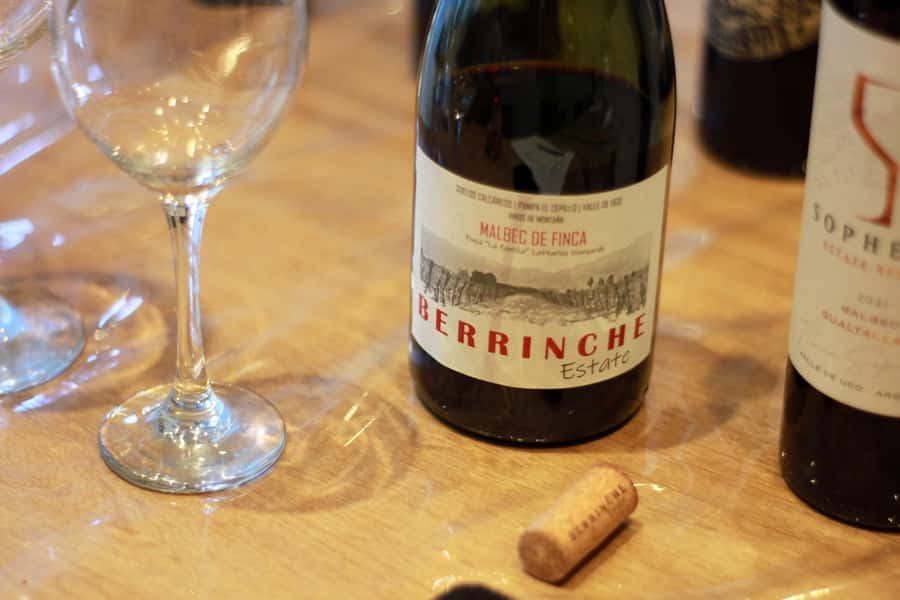
This experience takes place at Gorriti 4882 in Palermo, with another instruction listing Gorriti 4886 as the meeting point. Because those numbers differ, check the final booking details carefully before setting off, and arrive five minutes early.
You do not get hotel pickup or drop-off, so plan your own way to the meeting point. Once there, the focus is simple: cook, taste, talk, and learn. That makes this a useful choice if you want an activity that gives you a meal without taking up an entire day.
The class is designed for adults, and no one under 18 may take part. Guides speak Spanish, English, or Portuguese, so you can choose a session that matches your language needs.
The venue has received especially strong marks for being clean, bright, spacious, and easy to reach. That matters in a cooking class. You need enough room to work with dough, ingredients, and a wine glass without feeling packed around the table.
Folding empanadas instead of just ordering them
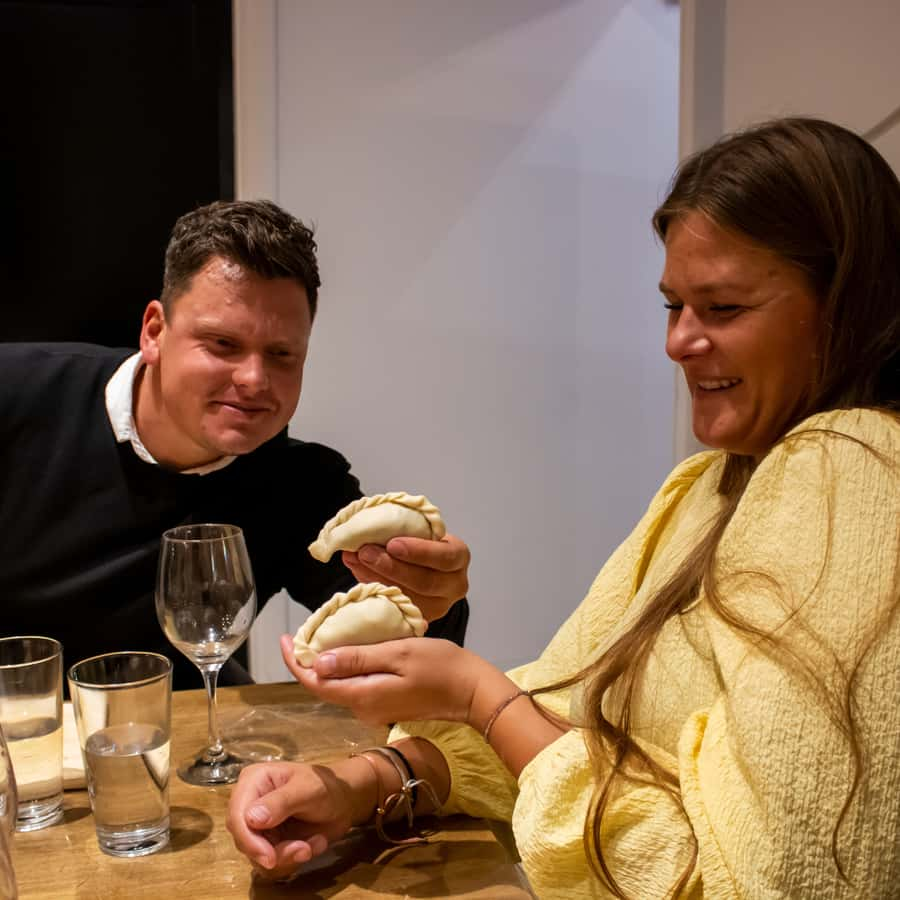
The central part of the class is making typical Argentine empanadas from an authentic recipe. You work through the process with a guide, then eat what you prepare.
The details supplied do not give a full minute-by-minute recipe, so do not expect a formal culinary-school lesson with a long list of technical stages. The appeal is more direct. You learn a familiar Argentine dish by actually handling it, shaping it, and sitting down to eat the result.
That hands-on step gives the meal more meaning than ordering an empanada at a café. You see how the pastry comes together, and you get a better sense of why empanadas work so well in Argentine daily life. They can be a main meal, a starter, or a portable bite, and the class presents them in that flexible spirit.
Do not worry if your folding technique is not perfect. One participant said the finished empanadas did not look especially good but tasted delicious. That is a fair expectation here: you are learning a useful dish, not competing in a pastry contest.
The filling may be the one point to watch. One person felt the onions overwhelmed the other ingredients and thought the amount was more than expected from empanadas around Buenos Aires. The class presents the recipe as traditional, but Argentine empanadas vary by region and cook. If you dislike onions, ask about the filling before you begin.
More Wine Tastings in Argentina:
- From Salta: Full-Day Tour to Cafayate with Wine Tasting
★ 4.5 · 478 reviews - From Salta: Cafayate Day Trip with Wine Tasting
★ 4.4 · 226 reviews - Buenos Aires: Wine Tasting and Lunch at Bodega Gamboa
★ 4.8 · 177 reviews
Three wines, three different personalities
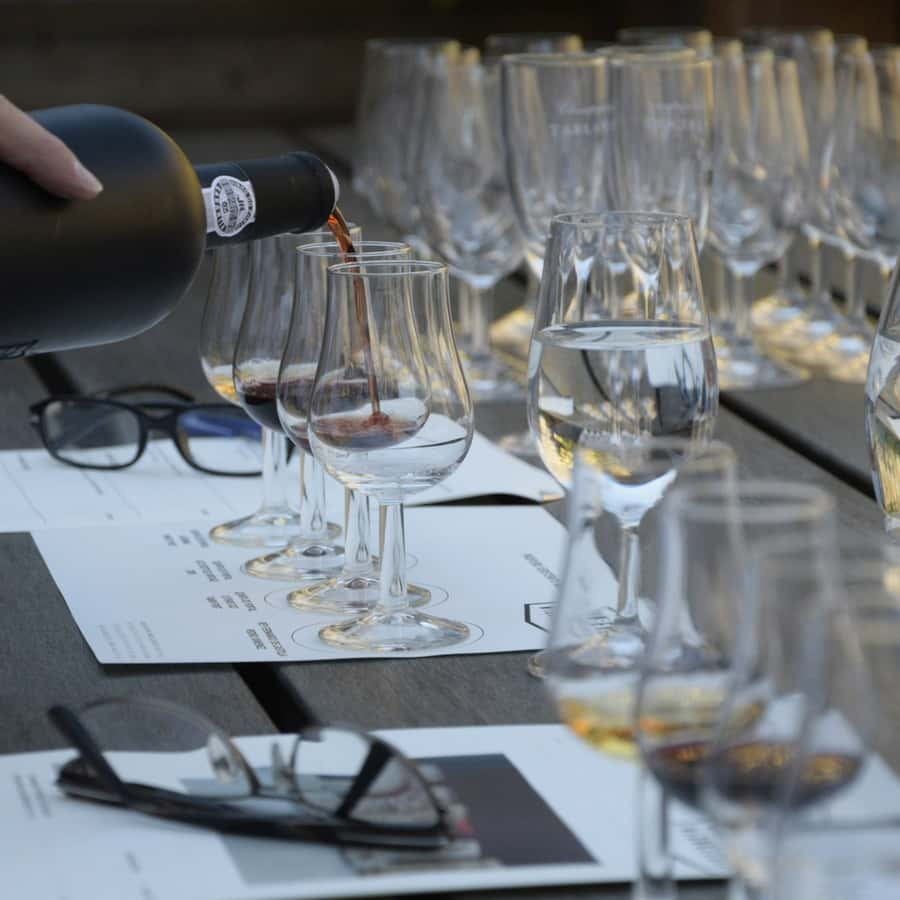
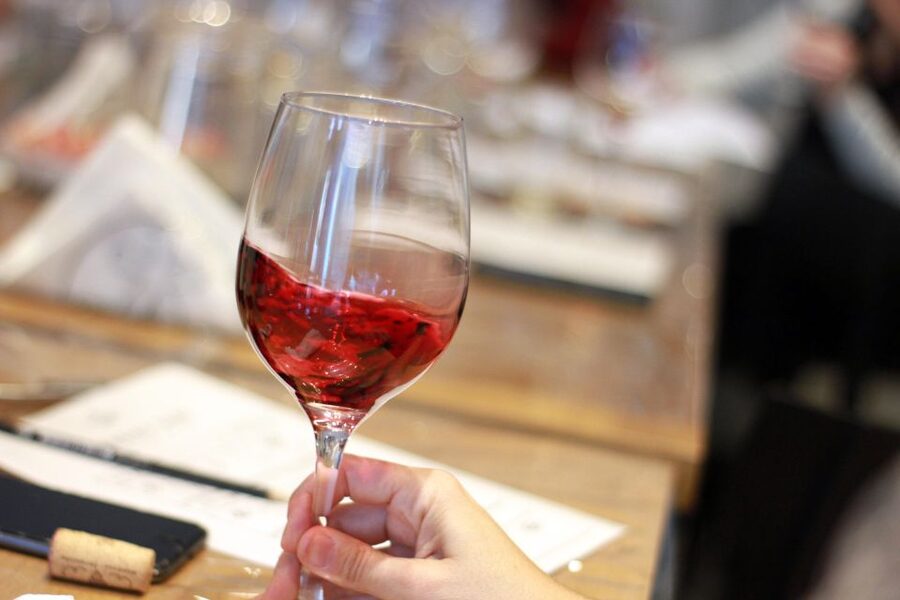
The wine tasting gives the class its second half of Argentine identity. You sample Malbec, Cabernet Sauvignon, and Cabernet Franc, while the guide explains the grapes, their flavors, and the methods used to make wine in Argentina.
Malbec is the wine most closely associated with Argentina internationally, but tasting it beside Cabernet Sauvignon and Cabernet Franc gives you a broader picture. Instead of treating Argentine wine as one single style, the session helps you notice how grape varieties differ.
The guide also discusses wine from different areas of Argentina. That regional context is useful if you plan to visit wineries, shop for bottles, or order wine with dinner later in your trip.
The tasting is not presented as a separate lecture detached from the food. The schedule links the wine with each stage of the cooking. One participant particularly liked the way the tasting and recipe work were timed together, so the session moved between instruction, preparation, and eating.
That pacing is important. A wine talk can become dry if you are only listening, while a cooking class can feel rushed if every minute is spent on preparation. Here, the two activities give each other a natural rhythm.
You should also expect a social setting. The group format encourages conversation at the table, and a group of about seven people was described as small enough for easy discussion. On another date, only a couple attended, making the experience much more personal. Your group size will affect the feel of the class, but the design allows for both a shared and a more intimate session.
The guides make a real difference
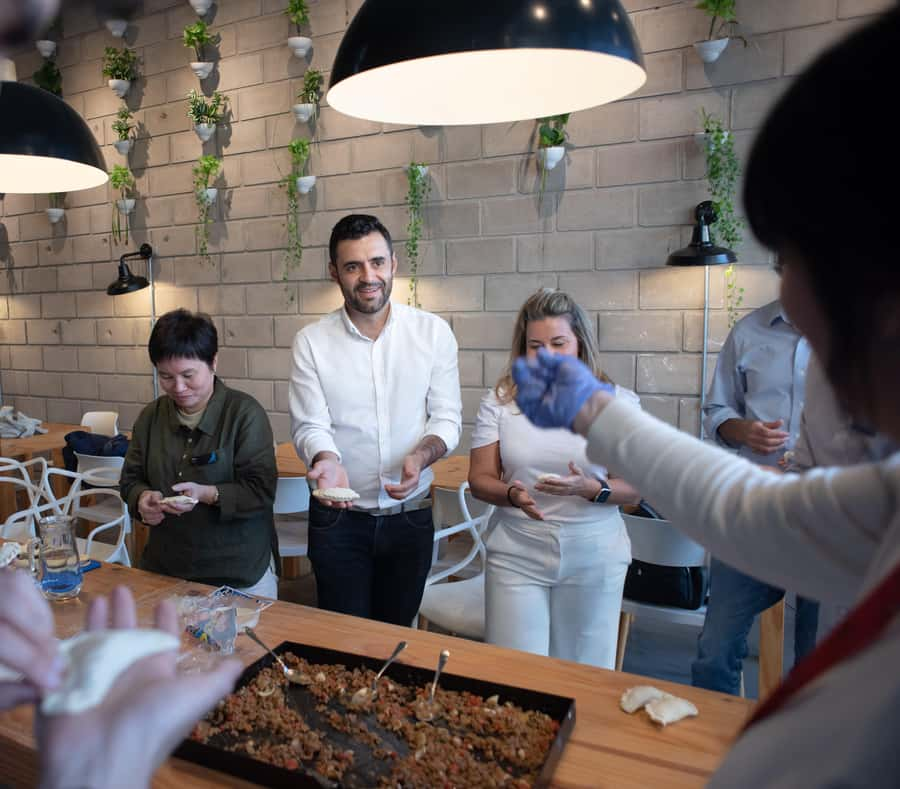
The guide is not just there to hand you ingredients. The strongest part of the experience is the combination of cooking instruction, wine explanation, and informal advice about Buenos Aires.
Catalina has been praised for making the evening relaxed and pleasant, with clear guidance on both food and wine. Valentin has led participants through the recipe, explained the wines, and offered background about Argentina and recommendations around the city.
Lourdes has included history about food, wine, and culture, while Fernando has been described as a strong teacher and host. Tomás has received praise for explaining the cooking process clearly, offering lunch and wine suggestions, and preparing chimichurri that one participant considered the best they tasted in Argentina.
These names matter because the class depends on the person at the table. A good guide keeps beginners moving without making them feel clumsy, explains wine without turning it into a vocabulary test, and answers questions about the city along the way.
The available guide languages are Spanish, English, and Portuguese. If you want the fullest explanation, make sure you select the language you understand most comfortably when booking.
Why the small-group format works
A large cooking class can turn food preparation into an assembly line. You may see the instructor clearly, but you spend less time asking questions or talking with the people around you.
This experience is designed for small groups, and that is one of its best features. Seven people is small enough for conversation, yet large enough to feel social. A two-person booking can feel almost private, though a quieter class may have less of the lively table talk that some people enjoy.
The format suits solo visitors, couples, and friends who want a shared activity. It also works well for an afternoon or evening when you want to meet people without signing up for a full city tour.
The class is not aimed at children, since the minimum age is 18. That makes the atmosphere more adult and allows the wine portion to remain central.
More wine tours around Argentina:
- From Mendoza: 3 Wineries, Olive Oil Factory Tour & Tasting
★ 4.6 · 901 reviews - Mendoza: Half-Day Wine Tour with Tastings
★ 4.3 · 727 reviews - From Salta: Cafayate, land of wines and imposing ravines
★ 4.4 · 347 reviews - Mendoza: Full Day Wine Tour with 3 Course Lunch
★ 4.3 · 153 reviews
A useful way to spend a short afternoon
At two hours, this is compact by cooking-class standards. You can fit it into a day of sightseeing without giving up a major part of your schedule.
It also works well before a flight or during a spare afternoon. One participant used the class while waiting for an evening flight and found it a good way to use the extra time. Another added it to the last afternoon in Buenos Aires and wished they had scheduled it earlier in the trip.
That second point is worth considering. If you take the class early in your stay, you can use the guide’s suggestions for restaurants, wine, lunch, and city stops during the rest of your visit. If you schedule it near departure, it still makes a pleasant final activity, but you lose some of that practical follow-up value.
The advertised time is two hours, although one session lasted around two and a half hours. If you have a tight airport connection or a fixed dinner reservation, leave some margin. The meeting point is in Palermo, and you must arrange your own onward transportation.
What $49 buys you
At $49 per person, the price sits above the cost of simply buying empanadas and a glass of wine. You are paying for instruction, ingredients, a guide, and the tasting, not only for the food on the plate.
I think the price is easier to justify if you want three things at once: a meal, a cooking lesson, and an introduction to Argentine wine. It is also good value for a short itinerary because the two-hour format combines several experiences without requiring a full day outside the city.
The value is less convincing if you already know how to make empanadas or mainly want a cheap lunch. The class is an activity, not a budget restaurant replacement. One participant considered it expensive despite enjoying the evening, and that is a fair warning.
The ingredients are included, as is the wine tasting, so you do not need to budget for a separate materials fee. Hotel transport is not included, and no pickup or drop-off is provided.
The booking terms add some useful flexibility. You can reserve now and pay later, and cancellation up to 24 hours before the activity allows a full refund. Check availability for current start times rather than assuming the class runs at a particular hour.
Food quality, tradition, and honest expectations
The finished empanadas are meant to be eaten as part of the class, and the general expectation is tasty, satisfying food. Participants have praised both the pastries and the wines, with one particularly enjoying the host’s chimichurri.
Still, this is a learning experience. Your empanadas may look uneven, and the filling may not match your personal preference. That is part of the tradeoff between a guided class and a restaurant meal where the kitchen controls every detail.
The onion concern deserves attention because it is specific rather than vague. If you want a mild filling or prefer meat and other ingredients to take the lead, ask what goes into the mixture and whether adjustments are possible. The available information does not promise substitutions, so do not assume they are offered.
The class also gives you a chance to ask about the broader food culture of Argentina. Guides have discussed empanada traditions, wine regions, and local customs, making the food more than a standalone recipe.
Who should book this experience
I would recommend this class to an adult who wants a gentle introduction to Argentine food and wine without leaving Buenos Aires. It suits you especially well if you like learning by doing, enjoy small social groups, and want a guide who can add city advice to the main activity.
It is also a good fit for couples. A private-feeling session may be possible when attendance is low, while a larger small group gives you more table conversation.
Solo visitors can benefit from the social setup, particularly if they want a simple way to meet people over food. The class does not require advanced cooking skills, and the point is participation rather than perfect presentation.
I would be more cautious if you are under 18, do not drink wine, dislike onions, or want a polished restaurant meal. You can still enjoy the cultural information, but the experience is built around cooking empanadas and tasting wine.
Final call: book for the experience, not just the meal
Book this if you want to spend two relaxed hours making Argentine food, tasting three local wine varieties, and talking with a guide about Buenos Aires. The strongest reasons are the hands-on cooking, the small-group setting, and the guides’ added advice about food and the city.
Skip it if $49 feels high for a meal, if you need a strict two-hour schedule, or if onion-heavy fillings would spoil the experience for you. For most adults who want more than sightseeing photos, this is a worthwhile Palermo activity, especially early in a Buenos Aires stay when the restaurant suggestions can still help you.
FAQ
Where does the empanadas class take place?
The meeting point is listed at Gorriti 4882 in Palermo. Another instruction gives Gorriti 4886, so check your final booking information carefully.
How long does the activity last?
The advertised duration is two hours. One session was reported to last about two and a half hours, so allow extra time if you have another booking afterward.
How much does the class cost?
The listed price is $49 per person.
What wines are included?
The tasting includes Malbec, Cabernet Sauvignon, and Cabernet Franc.
Is the wine tasting part of the cooking class?
Yes. The activity combines the empanada lesson with a guided tasting and an explanation of grape characteristics and Argentine winemaking methods.
Which languages are available?
The live guide can conduct the experience in Spanish, English, or Portuguese.
Are ingredients included?
Yes. The empanada ingredients are included in the activity price.
Is hotel transportation provided?
No. Hotel pickup and drop-off are not included, so you must make your own way to the Palermo meeting point.
Can children join the class?
No. The experience is not suitable for children under 18.
What happens if it rains?
The activity takes place in rain or sunshine. You should attend as scheduled unless the provider contacts you with a change.
Can I cancel the booking?
You can cancel up to 24 hours in advance for a full refund. The reserve-now, pay-later option also lets you hold a place without paying immediately.
Freshly poured around Argentina
- Mendoza: Premium Wine Tasting★ 4.4 · 48 reviews
- Mendoza: Winebike Tasting Tour with Optional Lunch★ 4.1 · 73 reviews
- Mendoza: Top Wineries Guided Tour with Transportation★ 4.8 · 99 reviews
- Mendoza: Wine Tasting Tour with Lunch and Private Transport★ 4.6 · 48 reviews
- From Salta: Cafayate Day Trip with Wine Tasting★ 4.4 · 226 reviews
- Buenos Aires: Wine Tasting and Lunch at Bodega Gamboa★ 4.8 · 177 reviews
- Buenos Aires: Palacio Barolo Guided Night Tour with Wine★ 4.4 · 54 reviews
- Premium Argentinian Wines and Malbec Tasting Experience★ 4.6 · 60 reviews
Argentina Wine Tours, side by side.
From Mendoza: 3 Wineries, Olive Oil Factory Tour & Tasting
Read our review →
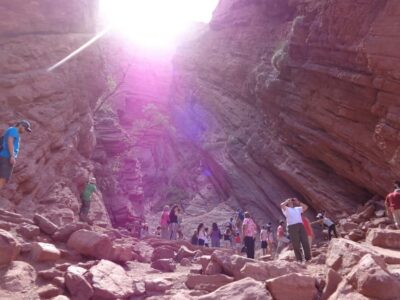
From Salta: Full-Day Tour to Cafayate with Wine Tasting
Read our review →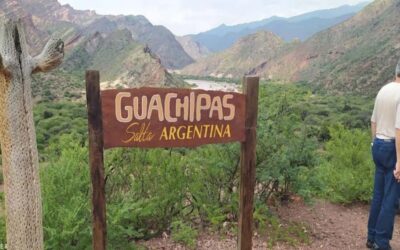
From Salta: Cafayate, land of wines and imposing ravines
Read our review →
From Salta: Cafayate Day Trip with Wine Tasting
Read our review →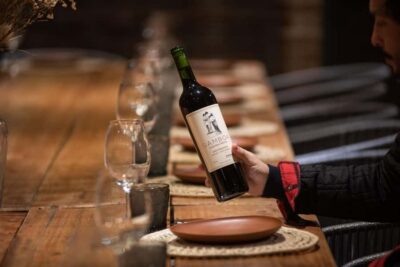
Buenos Aires: Wine Tasting and Lunch at Bodega Gamboa
Read our review →
Mendoza: Full Day Wine Tour with 3 Course Lunch
Read our review →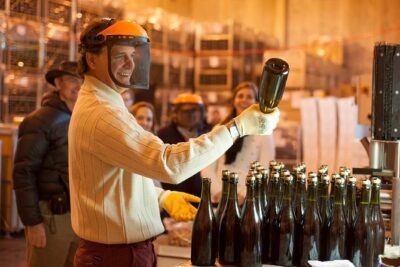
Lists this tasting sits in