
Review · BORDEAUX
Workshop Bordeaux wine tasting: 4 reds & charcuterie pairing
Bordeaux makes some of France’s most famous red wines, but fame alone does not tell you what is in your glass. This small, one-hour class gives you a clear way into the subject, comparing Left Bank Cabernet Sauvignon with the softer, fruitier Merlot often linked to the Right Bank. You also get four wines, a mystery glass, charcuterie, and an aroma game.
I especially like the six-person limit, which keeps the class conversational rather than formal. I also like that Cécilia and Mathilde do not stop at naming grapes. They explain how grape variety, soil, blending, and winemaking affect smell, texture, and ageing. The possible drawback is the short format: one hour gives you a useful introduction, but not a full wine-region tour or a leisurely meal.
Key points at a glance
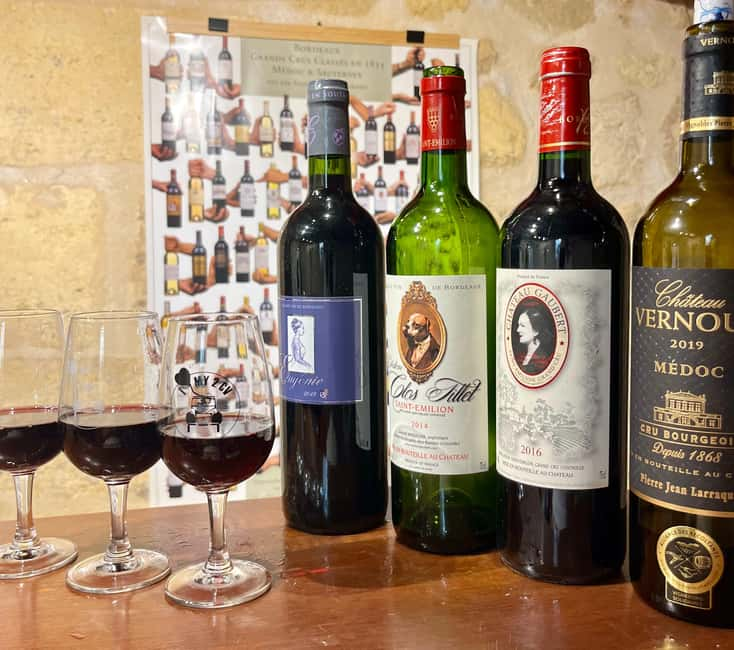
- Four Bordeaux reds plus a mystery glass: Compare single-varietal wines, blends, a Grand Cru, and a mature bottle.
- Left Bank and Right Bank explained: Learn why Cabernet Sauvignon and Merlot can produce such different styles.
- Charcuterie pairing included: Test how food changes the taste and feel of each wine.
- Aroma game and booklet: Use simple tools to keep learning after the class ends.
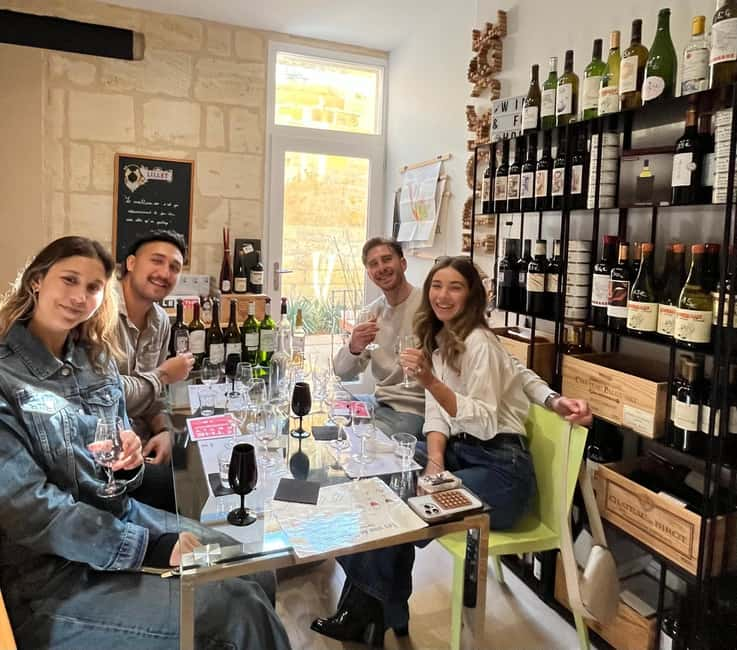
- Small group of up to six: Expect an informal session with room for questions.
- Central Bordeaux meeting point: Find the tasting room at 25 Avenue Thiers, just 100 meters from the Stalingrad stop on tram A.
Why this short Bordeaux class works
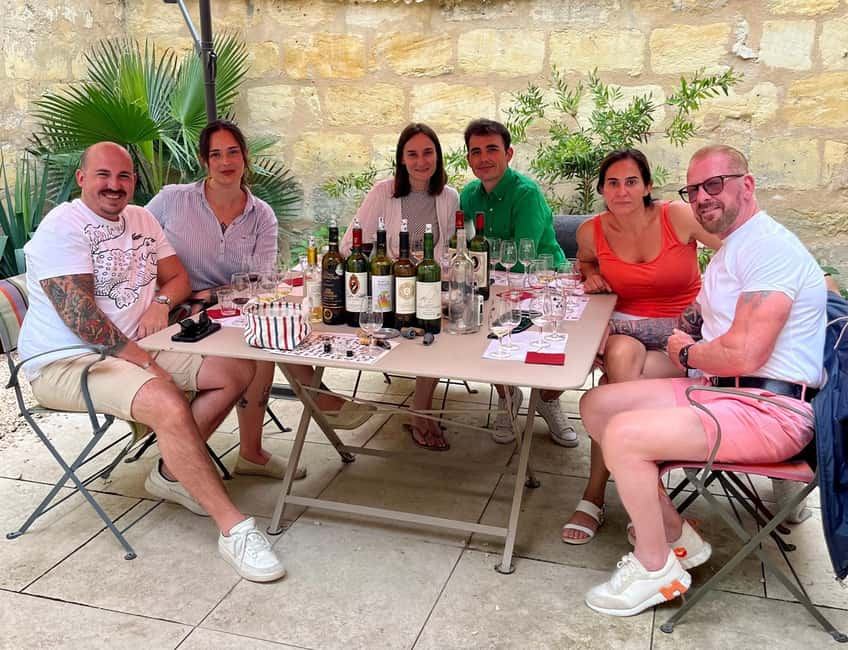
Bordeaux can feel like a puzzle made of famous names, complicated labels, and hundreds of appellations. This class gives you a manageable hour to sort out the basics. You do not simply taste four unrelated reds. Each glass is chosen to show a different part of Bordeaux’s identity.
The session covers the two broad sides of the Gironde estuary. On the Left Bank, Cabernet Sauvignon often brings structure, firm tannins, and the ability to age. On the Right Bank, Merlot often gives a rounder texture and more immediate fruit. Those are useful general guides, not strict rules, and the tasting helps you see where the broad differences come from.
You also look at blends, a central part of Bordeaux wine. Instead of treating a bottle as the work of one grape, you learn how varieties can work together. One wine may bring freshness, another body, another colour or length. That basic lesson can make Bordeaux labels less intimidating when you visit a wine shop or restaurant later.
The class is aimed at beginners, but it is not only for people who have never tasted wine. If you already know the main grape varieties, the comparisons between estates, blends, organic production, Grand Crus, and older wine give you more to think about.
More Wine Tastings in Bordeaux
- Bordeaux: Cité du Vin Entry Ticket and Wine Tasting
★ 4.6 · 3,885 reviews - From Bordeaux: Afternoon Saint-Emilion Wine Tasting & snack
★ 4.8 · 1,581 reviews - Medoc or Saint Emilion Wine Tasting and Chateau from Bordeaux
★ 5.0 · 1,415 reviews
Meeting Cécilia or Mathilde in Bordeaux
Cécilia and Mathilde are certified wine experts trained at the Université du Vin. The tone is designed to be friendly and interactive, with conversation taking priority over a long lecture.
That matters in a wine class. You can ask why one wine feels dry, why another seems smoother, or why an older bottle smells different from a young one. The teaching approach includes games and discussion, so you are not expected to arrive with a vocabulary of professional tasting terms.
The aroma game is a particularly useful touch. It encourages you to identify smells before worrying about getting the answer exactly right. You may find familiar fruit, spice, or earthy notes in the wines, but the real value is learning to pause, smell, and describe what you notice.
Past sessions have also included practical advice for the rest of a Bordeaux visit, including food suggestions. If you are staying in the city for several days, that kind of local guidance can be as useful as the formal wine lesson.
Four reds, one mystery glass, and a taste of Bordeaux
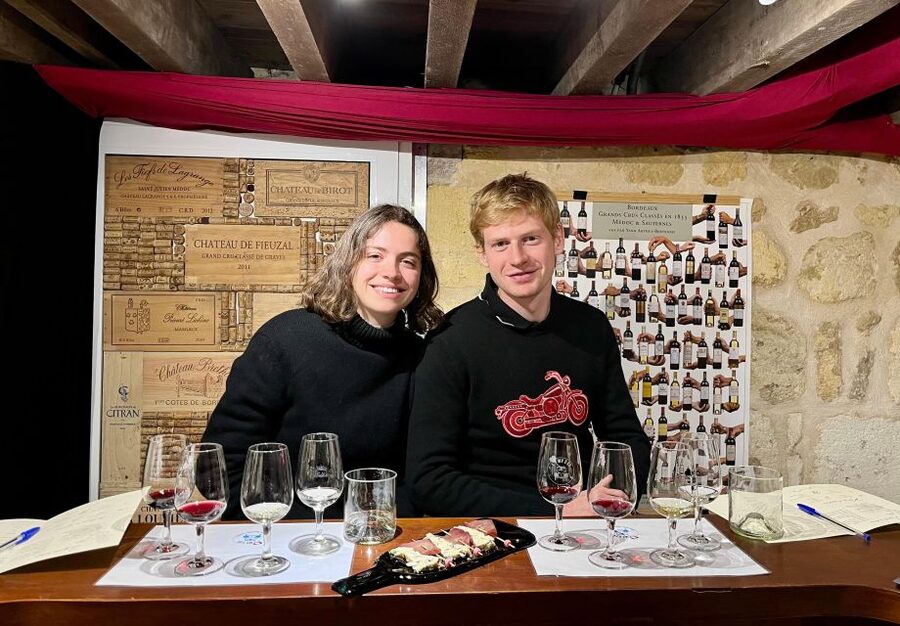
The main tasting includes four Bordeaux red wine glasses and one mystery glass. The mystery wine adds a small challenge: you use what you have learned and try to identify its style or characteristics without being told everything first.
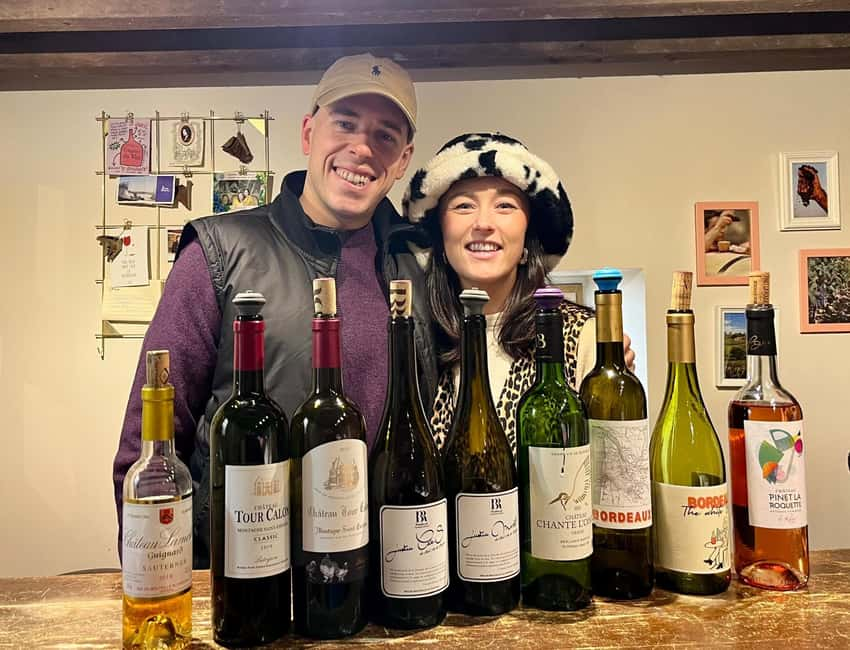
The four selected wines are meant to show several sides of the region. You may taste a single-varietal wine that lets Merlot or Cabernet Sauvignon speak clearly. You also taste blends from family-run organic estates, along with prestigious Grand Cru wine. The selection includes a mature wine, which is important because many people know Bordeaux mainly through its reputation for ageing but rarely get to compare an older bottle directly.
The point is not to decide which bottle is the best. Instead, you learn what changes from glass to glass. Look for differences in aroma, weight, tannin, fruit, and finish. Notice how a wine feels in your mouth, not just how it smells.
A mature Bordeaux can show you why ageing matters. Fruit may become less obvious, while savoury, earthy, or more developed notes appear. A younger red may taste brighter and more direct. The class makes these differences easier to grasp because you are comparing wines in one sitting.
You may also discuss vinification, the way the wine is made. Fermentation choices, ageing, and the source of the grapes all affect the final result. You do not need to memorise every technical term. The useful lesson is that a wine’s character comes from several decisions, not from the grape name alone.
Left Bank and Right Bank without the confusion
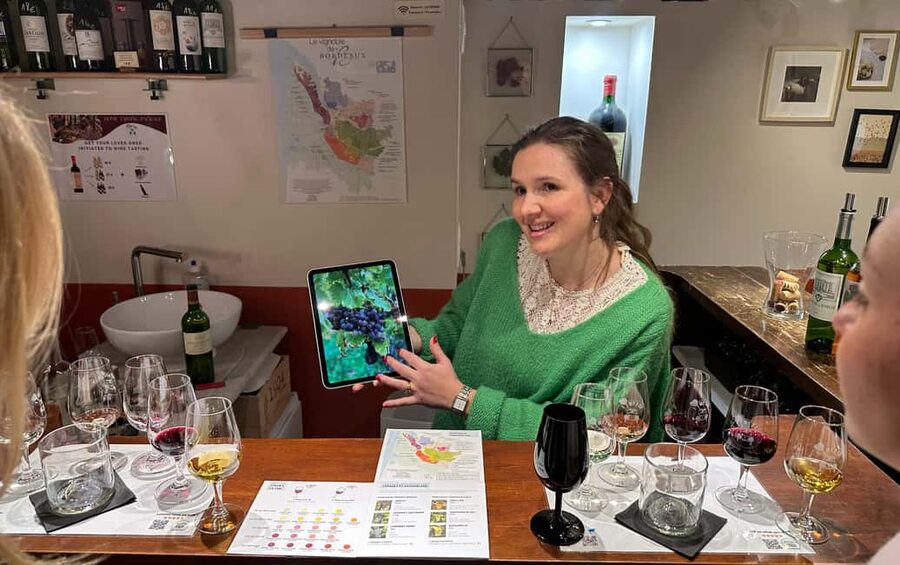
For many people, the best part of a Bordeaux class is finally understanding the Left Bank and Right Bank distinction. It gives you a simple map for thinking about the region.
The Left Bank includes famous areas such as the Médoc, where Cabernet Sauvignon is a major influence. Wines from this side are often more structured and suited to ageing. They may feel firmer or more serious when young.
Saint-Émilion represents the Right Bank in the class description. Merlot often plays a larger role there, giving wines a softer texture and more open fruit. That does not mean every Right Bank wine tastes the same, or that every Left Bank wine is hard and tannic. Bordeaux is too varied for such neat rules. Still, the contrast gives you a helpful starting point.
The tasting also introduces appellations, the place names that appear on Bordeaux labels. You learn why the name of the area matters, how blends reflect local traditions, and how a bottle’s origin can give you clues about its likely style.
If you plan to visit Médoc or Saint-Émilion separately, this class can make those outings more meaningful. You will have a few questions ready, rather than simply looking at estates and tasting rooms without a framework.
More Wine Tastings in France
- Saint Emilion Day Trip with Sightseeing Tour & Wine Tastings from Bordeaux
★ 5.0 · 1,120 reviews - Saint Emilion Half-Day Trip with Wine Tasting & Winery Visit from Bordeaux
★ 4.5 · 1,034 reviews - From Bordeaux: Half-Day Saint-Émilion Tour and Wine Tasting
★ 4.7 · 699 reviews - Saint-Emilion Electric Bike Day Tour with Wine Tastings & Lunch
★ 5.0 · 696 reviews
Charcuterie pairing makes the lesson practical
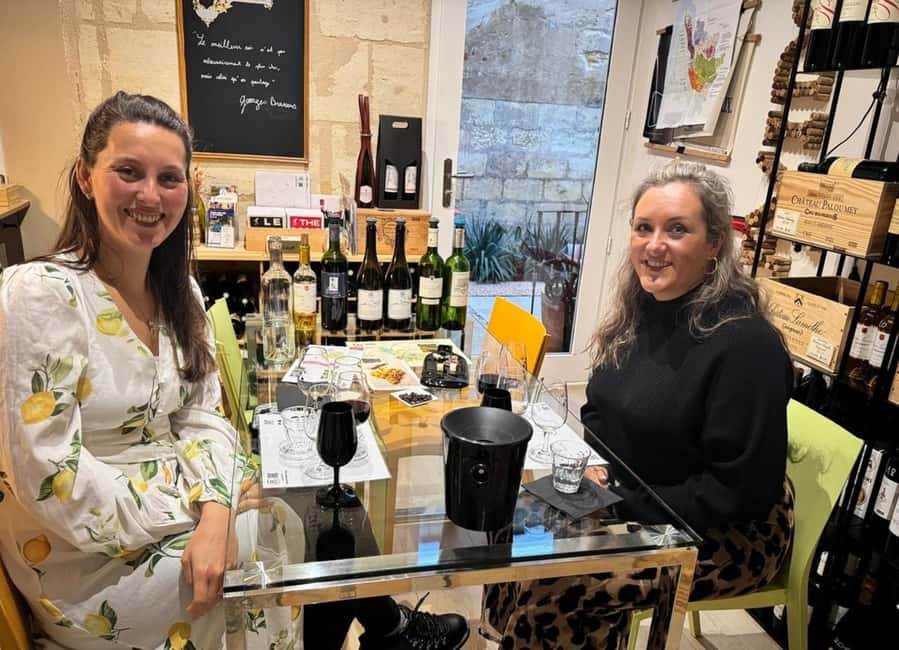
Each wine is paired with artisanal charcuterie. This is more than a snack between glasses. Food can change how wine tastes, especially its tannin, acidity, and sense of weight.
A salty or savoury bite may make a firm red seem smoother. A wine with plenty of fruit may feel different beside cured meat than it does on its own. You get to test the pairing instead of hearing a general rule and taking it on faith.
The food also keeps the one-hour session grounded. Four or five wines can be a lot to take in, and charcuterie gives the tasting a social, relaxed feel. It is not a full lunch or dinner, so do not book it as a meal replacement. Think of it as a well-matched accompaniment.
I like this part for another reason: it helps you use the lesson later. You can take the same approach at a French restaurant. Taste the wine first, try the food, and notice what shifts. That is a more useful skill than memorising a list of wine terms.
The tasting room and its changing setting
The meeting point is 25 Avenue Thiers in Bordeaux, about 100 meters from the Stalingrad stop on tram A. The room is hidden behind a building, so do not expect a large shopfront. Look for the Guy Hoquet panel and the grey door beside it. The bell is marked I Love Tasting.
Depending on the season, the class takes place in a stone-built tasting room, a private courtyard, or an underground cellar. Each setting gives the hour a different feel. The cellar can add atmosphere, while the courtyard may be pleasant when conditions allow. The indoor room provides a practical setting for the lesson.
The location is convenient if you are using public transport, but you should allow a moment to find the entrance. This is not a case of walking into a clearly marked wine bar. The detailed directions matter.
There is no hotel pickup or drop-off. You make your own way to the address, which is easy to plan if you are already in Bordeaux. The activity is not suitable for people with mobility impairments, so check the access needs of your group before booking.
Is $46 a fair price for one hour?
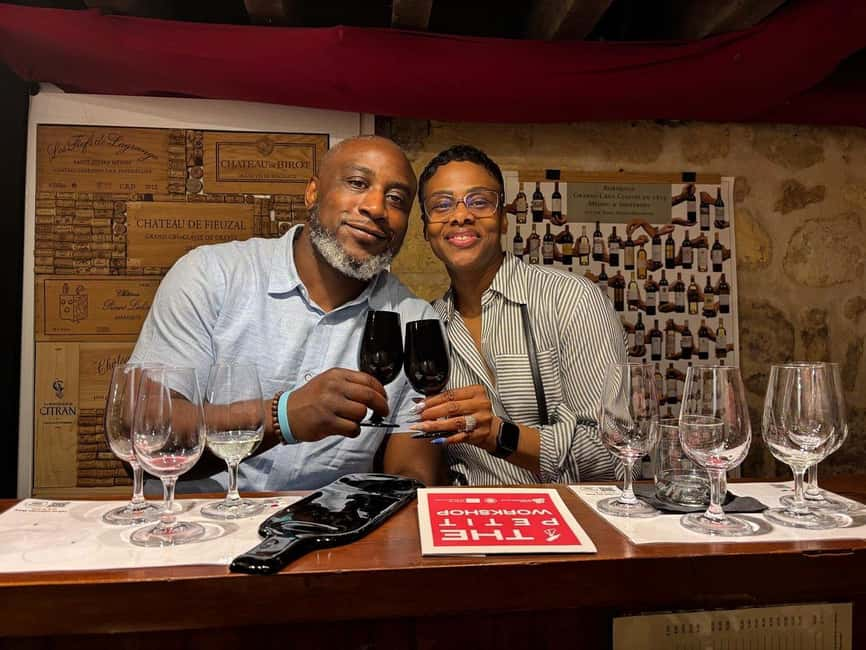
At $46 per person, this is not the cheapest way to drink Bordeaux wine. You could buy a bottle and some charcuterie for less. But that comparison misses the main value of the class.
You are paying for instruction, five tasting glasses including the mystery wine, food pairing, an aroma game, a small group, and a booklet to take home. You also get access to wines chosen to show differences across Bordeaux, including a mature wine and prestigious examples that may cost more to sample on your own.
The strongest value comes if you want to understand what you are tasting. A standard wine flight may give you several glasses but leave you unsure why they differ. Here, the comparisons are explained as you go.
The one-hour length keeps the price from becoming a major commitment. It fits neatly before dinner or between sightseeing plans. The trade-off is that the session moves at a brisk pace. If you want long conversations over every bottle, a longer tasting or winery visit may suit you better.
Who will get the most from this experience?
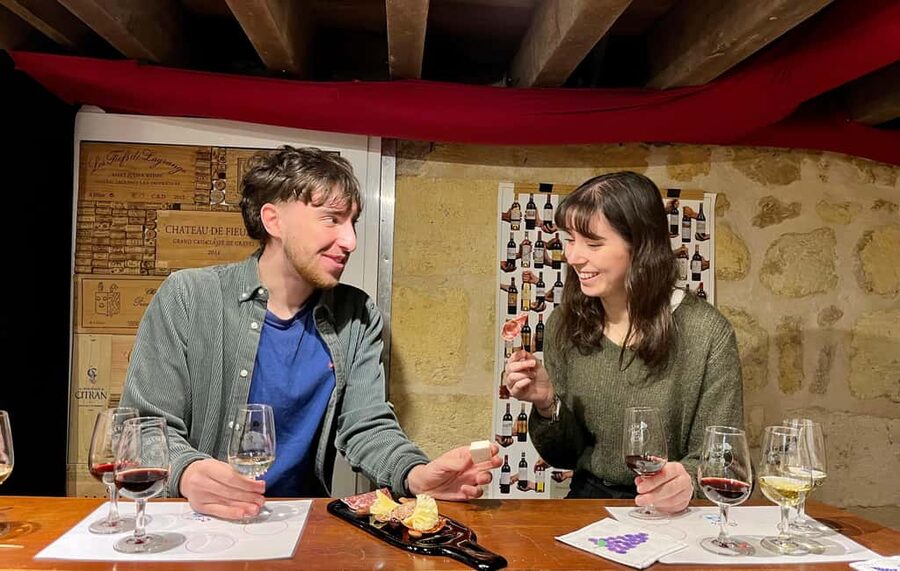
I would choose this class for a first visit to Bordeaux, especially if you want an introduction before booking a full-day trip to the wine estates. It also suits couples, solo visitors, and small groups who prefer an intimate room to a large commercial tasting.
It is a good choice for people who feel unsure about wine language. You do not need to know the difference between tannin and acidity before arriving. The aroma game and guided comparisons give you a way to take part without feeling tested.
It also works for experienced wine drinkers who want to focus on Bordeaux rather than taste a random selection of French wines. The contrast between Merlot and Cabernet Sauvignon, plus the discussion of blends and ageing, gives the class a clear purpose.
You should think twice if you want a full day among vineyards, visits to working estates, or a broad tour of the Bordeaux region. This is a city tasting class. It teaches you how to approach the wines, but it does not take you into Médoc or Saint-Émilion.
White wine drinkers can also be accommodated if the organizers know in advance. A white Bordeaux tasting is available, so contact them before booking if someone in your group does not prefer reds.
Practical booking details
The group is limited to six participants, and the guides speak English, French, and Spanish. That small size is one of the main reasons the class can feel like a conversation rather than a presentation.
You can cancel up to 24 hours before the activity for a full refund. The reserve-now, pay-later option lets you hold a place without paying immediately, which is useful when your Bordeaux schedule is still changing.
Ask in advance about groups larger than six. The organizers invite requests for bigger parties, but the usual format is deliberately small.
Should you book the Bordeaux wine tasting?
Book it if you want a clear, friendly introduction to Bordeaux wine without giving up half a day. The best reasons are the small group, the well-planned comparisons, the charcuterie pairing, and the chance to taste a mature wine alongside younger styles.
I would especially recommend it before a Médoc or Saint-Émilion excursion. You will arrive with a better sense of what to look for in the glass and a basic understanding of why the two areas can produce different wines.
Skip it if your main goal is a vineyard visit, a long meal, or a full regional tour. For everyone else, $46 buys more than five pours. It gives you a practical way to understand Bordeaux and a booklet to help you keep using that knowledge after the hour ends.
FAQ
Where does the Bordeaux wine tasting take place?
It takes place at 25 Avenue Thiers, 33100 Bordeaux, about 100 meters from the Stalingrad stop on tram A. Look for the Guy Hoquet panel, then use the grey door beside it. The bell is marked I Love Tasting.
How long does the experience last?
The tasting class lasts one hour. Starting times vary, so you need to check availability when booking.
How many wines will I taste?
You will taste four Bordeaux red wines and one mystery glass. The wines are selected to show different grapes, blends, estates, and stages of ageing.
Is food included?
Yes. The tasting includes artisanal charcuterie paired with the wines.
What languages are available?
The live guide can conduct the experience in English, French, or Spanish.
Is the class suitable for beginners?
Yes. The class is designed for curious beginners as well as people who already enjoy wine. It includes an aroma game, explanations of tasting technique, and a booklet to take home.
Can people who prefer white wine join?
Yes. A white Bordeaux tasting can be arranged for accompanying people who prefer white wines. You should let the organizers know in advance.
Freshly poured around Bordeaux
- From Bordeaux: Essential Morning Tour with Wine Tasting★ 4.8 · 55 reviews
- From Bordeaux: Half-Day Saint-Émilion Tour and Wine Tasting★ 4.7 · 699 reviews
- Guided Bordeaux Wine Tasting Class with 6 Wines and pairings★ 4.9 · 181 reviews
- From Bordeaux: Half-Day Saint-Emilion Wine Tour★ 4.8 · 257 reviews
- From Bordeaux: Saint-Émilion Half-Day Tour with Wine Tasting★ 4.9 · 389 reviews
- Bordeaux: Saint-Emilion Village Day Trip, 2 Chateaux & Lunch★ 4.8 · 57 reviews
- From Bordeaux: Full-Day Medoc Wine Tour★ 4.8 · 119 reviews
- From Bordeaux: Medoc Half-Day Wine Tour★ 4.6 · 280 reviews
Bordeaux Wine Tours, side by side.
Bordeaux: Cité du Vin Entry Ticket and Wine Tasting
Read our review →
Bordeaux: River Garonne Cruise with Glass of Wine and Canelé
Read our review →
From Bordeaux: Afternoon Saint-Emilion Wine Tasting & snack
Read our review →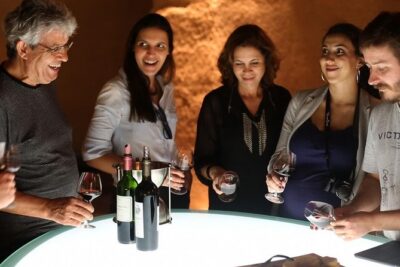
Medoc or Saint Emilion Wine Tasting and Chateau from Bordeaux
Read our review →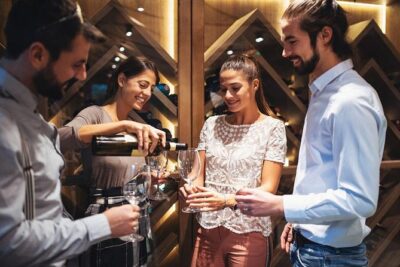
Saint Emilion Day Trip with Sightseeing Tour & Wine Tastings from Bordeaux
Read our review →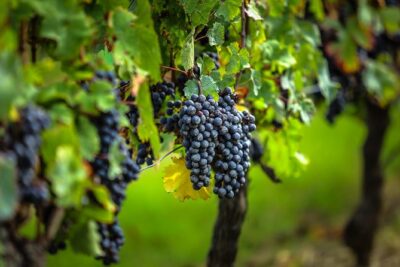
Saint Emilion Half-Day Trip with Wine Tasting & Winery Visit from Bordeaux
Read our review →
From Bordeaux: Half-Day Saint-Émilion Tour and Wine Tasting
Read our review →
Saint-Emilion Electric Bike Day Tour with Wine Tastings & Lunch
Read our review →Lists this tasting sits in