
Review · BORDEAUX
Guided Bordeaux Wine Tasting Class with 6 Wines and pairings
Bordeaux wine can feel like a code of place names, grape varieties, blends, and classifications. This 75-minute class makes that code easier to read, using six Bordeaux wines, an aroma game, and simple tasting steps. Cécilia and Mathilde are trained at the Université du Vin, and other guides, including Ilona, Camille, Hugo, and Aurélienne, also lead sessions.
I like the small scale, limited to six people, and the clear comparison of Left Bank and Right Bank wines. I also like that you taste with food, not just from a glass. The main drawback is that this is a city tasting class, not a vineyard visit, and the food portions may be light for some people.
Key points at a glance
- Six wines in one focused session: Expect a mystery wine, dry whites, red blends, and a sweet wine, with the exact selection adapted to the group.
- Bordeaux made understandable: Learn how soil, appellation, grape choice, blending, oak aging, and geography shape the wine in your glass.
- Aroma practice that actually helps: Use an aroma game and scent samples before tasting, a useful aid if wine usually just smells like wine to you.
- Food pairings are part of the lesson: Small tasters show how the right bite can change the way a wine tastes.
- A genuinely small group: With no more than six participants, you can ask questions and receive personal guidance.
- A flexible setting: Depending on the weather and season, the class takes place in a cellar, equipped tasting room, or private patio.
Why this short Bordeaux class works
The appeal here is simple: you can get a working introduction to Bordeaux without giving up half a day for transport to a château. At $53 per person, the price is reasonable for six pours, instruction, food pairings, an aroma exercise, and a take-home booklet.
The value is strongest if Bordeaux wine feels confusing to you. A bottle label may name an appellation rather than a grape, and many Bordeaux wines are blends rather than single-variety wines. This class gives you a framework for making sense of those labels and for spotting the broad differences between the region’s major areas.
I would not treat it as a replacement for visiting vineyards. You will not spend the afternoon walking among vines or touring a winery. Instead, you get a compact lesson in a personal setting, with enough variety to help you decide what to seek out during the rest of your stay.
More Wine Tastings in Bordeaux
- Bordeaux: Cité du Vin Entry Ticket and Wine Tasting
★ 4.6 · 3,885 reviews - From Bordeaux: Afternoon Saint-Emilion Wine Tasting & snack
★ 4.8 · 1,581 reviews - Medoc or Saint Emilion Wine Tasting and Chateau from Bordeaux
★ 5.0 · 1,415 reviews
Finding the discreet tasting room
The meeting place is intentionally easy to miss. From the street, you should look for number 25 and the ring marked I LOVE TASTING. The tasting room is not plainly visible from outside, so read the directions carefully and allow a little time to identify the entrance.
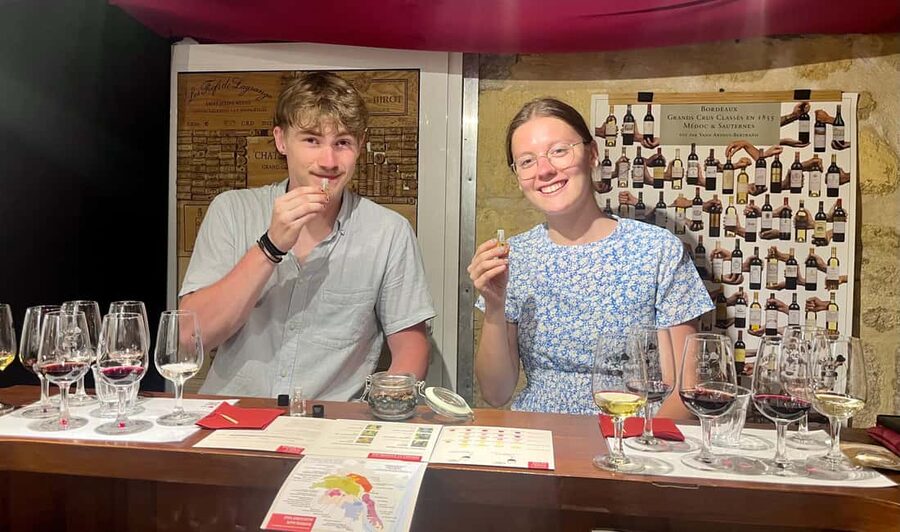
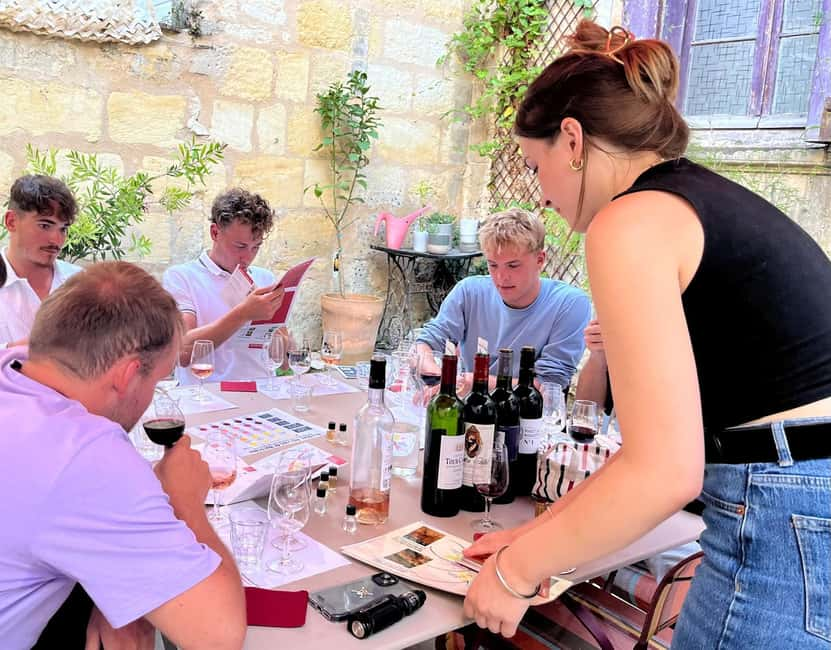
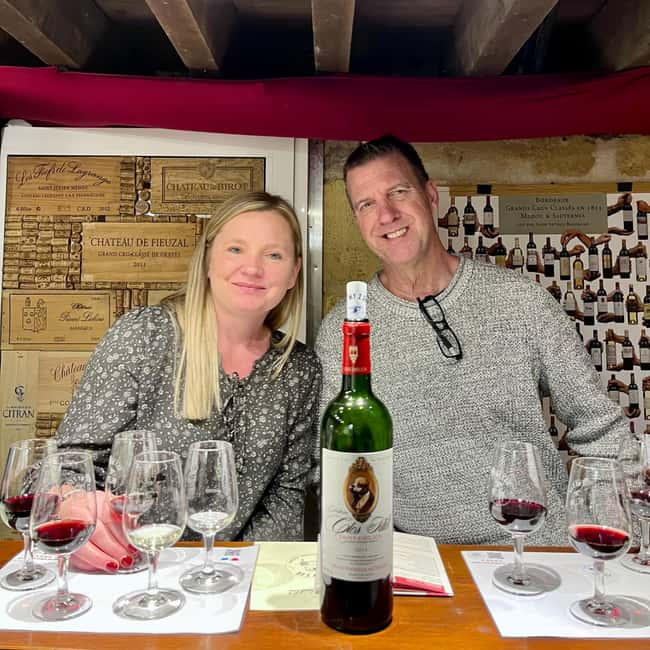
Inside, the setting is more personal than a large commercial tasting hall. The cellar has been converted for tasting, while a dedicated room is used throughout the year. In good weather, the class may move to a private patio or garden. The setting can feel like a home-based wine lesson, which suits the conversational style of the class.
This arrangement has a practical benefit. You are not one person in a large crowd waiting for a guide to finish the same speech. With a maximum of six participants, the guide can ask what you already know, answer specific questions, and adjust the pace to the group.
If you have mobility concerns, take note before booking. The experience is not suitable for people with mobility impairments, and the exact room may vary.
The opening lesson: how to taste without guesswork
The session begins by giving you a method. You will be guided through the basic order of tasting: look at the wine, smell it, taste it, and think about its texture, structure, and finish. The goal is not to turn you into a sommelier in an hour, but to give you useful habits.
The aroma game is one of the best features for beginners. Rather than asking you to identify an obscure scent from a glass, the exercise gives you a reference point. Smelling separate aromas first can help you notice fruit, floral, herbal, spice, or earthy notes in the wine itself.
That is valuable because many new wine drinkers feel they are failing when they cannot detect the aromas described by experts. Here, you can learn that tasting is not a test with one correct answer. You are learning to compare what you sense and to describe it with greater confidence.
The guide also explains color, alcohol, acidity, and texture. Those details matter at the table. A wine’s body and freshness can tell you why it suits a dish, while the balance between fruit, tannin, and acidity helps explain why two wines made from different blends feel so different.
Six wines that show Bordeaux’s range
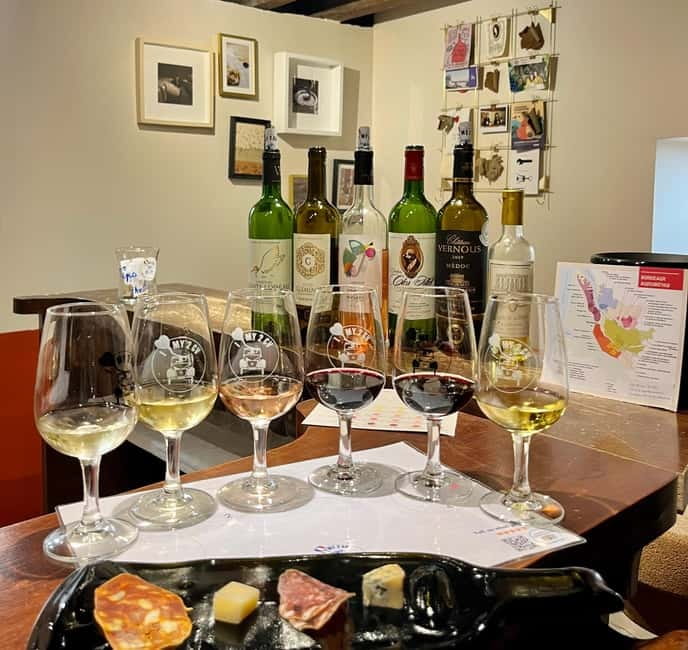
The tasting moves through a selection designed to show variety rather than simply offer six similar bottles. The planned format includes one mystery wine, two dry white wines representing the Left Bank and Right Bank, three red wines featuring blends and both banks, and a sweet wine. The description also specifies six glasses, so the exact lineup may be adjusted according to the group and individual preferences.
That small uncertainty is worth clarifying when you arrive. The session is designed around six wines, but the written outline describes more categories than six individual pours. Ask the guide which wines are included that day, especially if you have a strong preference for red or white.
The mystery wine gives the class an interactive start or midpoint. You can use the tasting method before being told what you are drinking, then compare your impressions with the guide’s explanation. This turns the lesson into a practical exercise instead of a lecture.
The dry whites introduce a side of Bordeaux that many visitors overlook. The Left Bank and Right Bank comparisons show how place and grape choices can affect freshness, body, and aroma. If you usually associate Bordeaux only with red wine, this is a useful correction.
The red wines focus on blends, one of the region’s defining habits. The guide explains why Bordeaux producers combine grape varieties rather than relying on one alone. You will also hear about the role of oak aging and how time in barrels can influence aroma, texture, and the feel of a wine.
The sweet wine provides a final change of pace. It shows that Bordeaux is not one single flavor profile or drinking style. A sweet wine can also make the food pairing section easier to understand, since sweetness, salt, richness, acidity, and dessert flavors can shift the balance of a bite.
More Wine Tastings in France
- Saint Emilion Day Trip with Sightseeing Tour & Wine Tastings from Bordeaux
★ 5.0 · 1,120 reviews - Saint Emilion Half-Day Trip with Wine Tasting & Winery Visit from Bordeaux
★ 4.5 · 1,034 reviews - From Bordeaux: Half-Day Saint-Émilion Tour and Wine Tasting
★ 4.7 · 699 reviews - Saint-Emilion Electric Bike Day Tour with Wine Tastings & Lunch
★ 5.0 · 696 reviews
Left Bank, Right Bank, and the logic of soil
The geography lesson is more than a map exercise. Bordeaux’s Left Bank and Right Bank refer to the sides of the Garonne and Dordogne river system, and the class uses that split to explain broad regional differences.
You will learn why gravel and clay soils matter, and why certain grapes are more successful in particular places. Cabernet Sauvignon and Merlot receive special attention, not as isolated grape names but as parts of a larger system involving soil, climate, tradition, and blending.
The class also covers appellations, terroirs, classifications, and the history of Bordeaux wine. These terms can sound formal, but they help you interpret a bottle once you leave the tasting room. The useful lesson is that a Bordeaux label often tells you where the wine comes from, while the blend and producer tell you more about its character.
The guide may use maps, photographs, booklets, or videos to make the regional differences clear. The teaching style changes slightly with the instructor, but the strongest sessions are interactive. Cécilia is known for adapting the explanation to the group, while Mathilde is especially good at connecting geography, history, and tradition in a relaxed way.
Food pairings that make the wine easier to understand
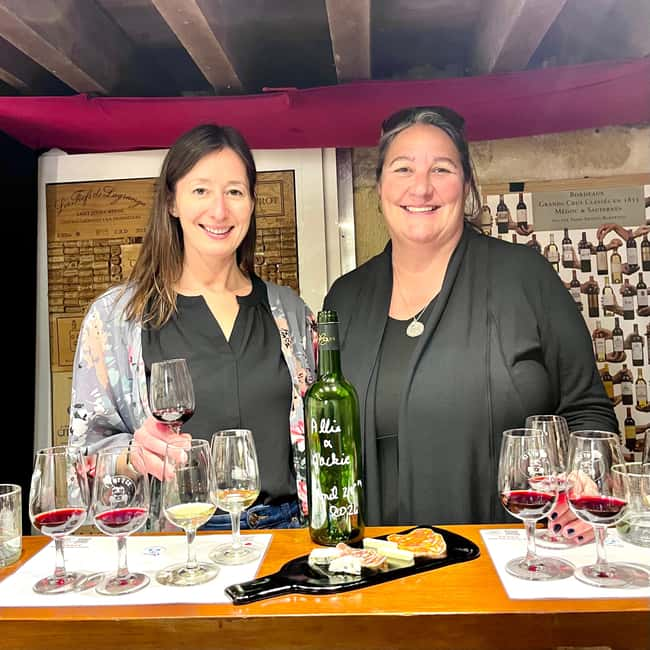
The pairing portion is not a full meal. It is a series of small tasters designed to show how wine and food affect one another. That distinction matters if you are arriving hungry.
The useful part is the comparison. A bite can make a wine seem softer, sharper, fruitier, or sweeter. You may also find that a wine you did not favor on its own works much better with food. This is one of the most practical lessons for restaurant dining in Bordeaux.
The guides explain the reasoning behind each combination rather than presenting a list of rigid rules. You learn to think about weight, acidity, sweetness, salt, texture, and intensity. That gives you a better chance of choosing a successful bottle later, even when the restaurant menu does not provide detailed advice.
Food preferences can also shape the tasting. The wine selection is described as adaptable to individual tastes, so tell the guide at the start if you generally prefer reds, whites, dry wines, or sweeter styles. If you want a full lunch or dinner, plan that separately.
The guides and the tone of the class
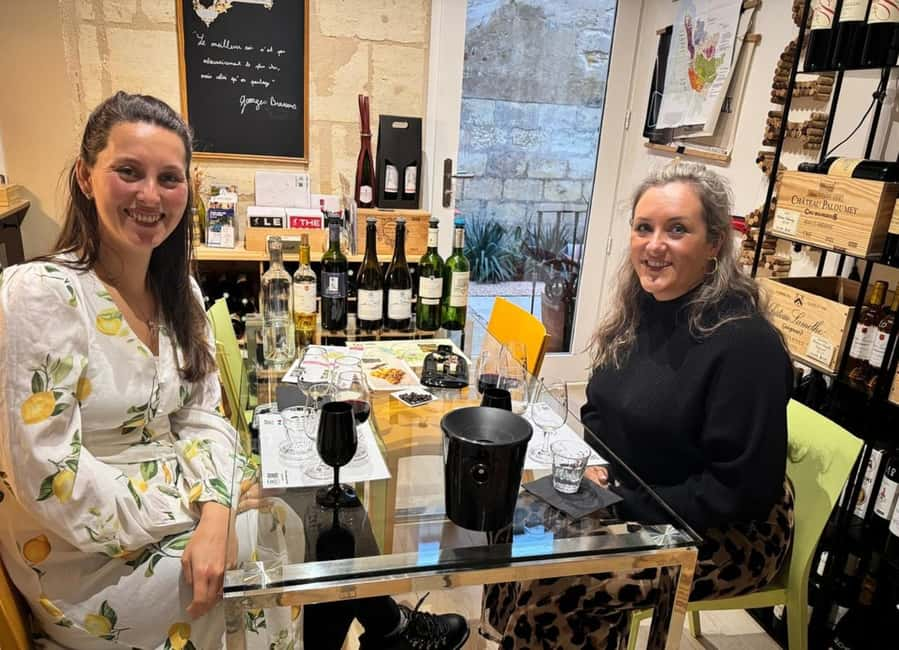
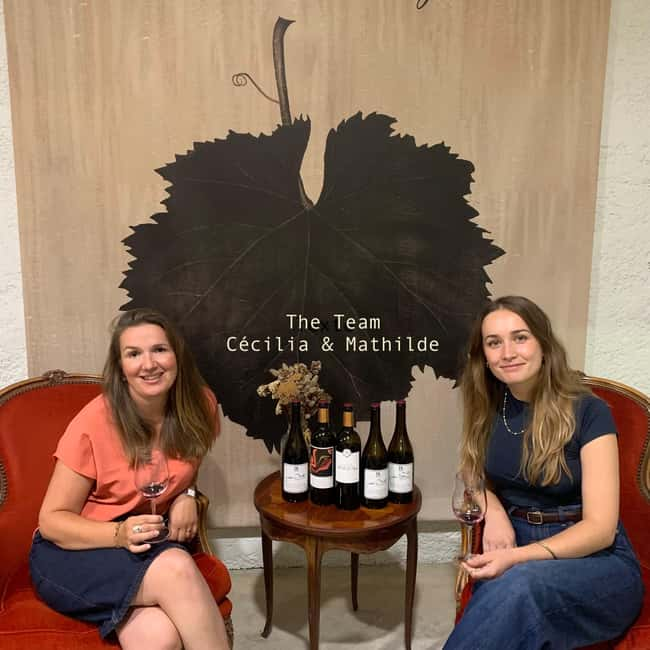
The experience depends heavily on the person leading it, and the available guides bring different strengths. Cécilia is associated with clear explanations, personal recommendations, and a warm teaching style. Mathilde combines strong regional knowledge with an easy manner and a talent for drawing a mixed group into the conversation.
Ilona has led sessions for beginners who felt overwhelmed by Bordeaux’s many wine choices. Hugo brings more attention to the science of winemaking, while Aurélienne has been praised for explaining the region thoroughly without making the class feel stiff. Camille is another welcoming host who uses food pairings to make the lesson practical.
You may also encounter a guide who speaks English, French, or Spanish. It is worth checking language availability when you book, since the language you prefer may not be available at every time.
The best reason to choose this class is not the promise of fancy terminology. It is the chance to ask ordinary questions without feeling out of place. You can say that a wine smells like something familiar, admit that you do not understand a label, or ask why one bottle costs more than another.
What you take home
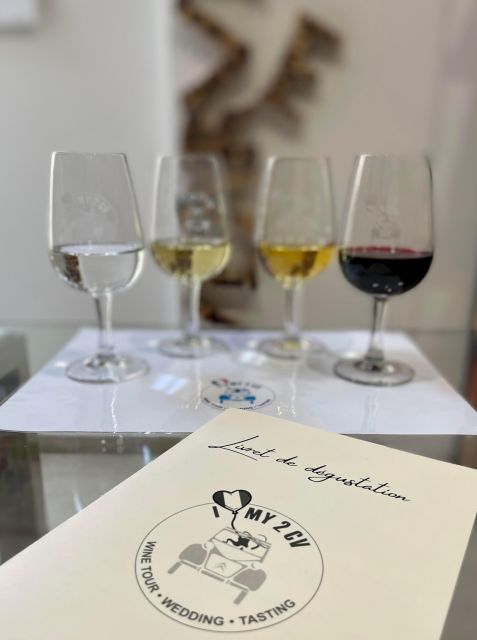
The tasting booklet is a useful touch. It covers Bordeaux wines and the tasting method, giving you something to consult when you visit a wine shop or order at a restaurant. It is also a place to record the names of wines you liked, since six samples can blur together by the end of a short session.
The cellar has the wines tasted during the class available for purchase. That makes it easy to take home a bottle you already understand rather than choosing at random from a large shelf. Check the practical rules for transporting wine if you are flying, and do not assume that every bottle will suit your luggage plans.
The booklet and the chance to buy the wines add value, but they should not pressure you into a purchase. The useful outcome is knowing what styles you enjoy. If the class helps you discover that you prefer a dry white, a Merlot-led red, or a sweet wine with dessert, that information is worth carrying into the rest of your trip.
Who should book this experience
I would choose this for a first visit to Bordeaux, especially if you have one free hour and want more than a quick pour at a wine bar. It is also a smart option in winter, when a long vineyard excursion may be less appealing or harder to fit into a short itinerary.
It suits beginners particularly well. You do not need to know grape varieties or understand French appellations before arriving. The small group also works for experienced drinkers who want to ask detailed questions about blends, oak, soil, or food matching.
Couples may occasionally find themselves in a very small group or even a private session if no one else books the same time. That can make the lesson more personal, but you should not book expecting a private class unless the provider confirms it.
This is less suitable if your main goal is a full day among vineyards, a château tour, or a substantial meal. It is also not the right pick if you need a fully accessible venue or cannot manage the discreet entrance and room arrangement.
Is the $53 price fair?
At $53, I consider this good value for a 75-minute guided session. You are paying for six wines, a trained instructor, aroma practice, food pairings, a booklet, and a small group rather than a crowded tasting counter.
The price makes most sense when you use the class as a starting point for the rest of your Bordeaux visit. Afterward, you can walk into a wine shop with better questions and order at dinner with more confidence. It also saves the time and transport cost of arranging a separate vineyard trip.
The value is weaker if you are already an experienced Bordeaux drinker and want rare bottles, extensive cellar access, or a long technical seminar. For most visitors, though, the combination of structure, variety, and personal guidance is a fair deal.
Should you book it?
Book this class if you want Bordeaux wine explained in plain language, with enough tasting practice to make the subject less intimidating. The strongest features are the six-wine format, the Left Bank and Right Bank comparisons, the aroma game, and the food pairings.
Skip it if you want a vineyard walk, a château visit, or a full meal. Otherwise, this is a well-sized introduction that fits neatly into a city itinerary. I would book it early in your stay, then use what you learn to guide the bottles and restaurant choices that follow.
FAQ
How long does the Bordeaux wine tasting class last?
The class lasts 75 minutes.
How many wines are included?
Six glasses of Bordeaux wine are included. The planned tasting covers a mystery wine, dry white wines, red wines, and a sweet wine, with the selection adaptable to tastes.
What kind of wines will I taste?
The session includes dry whites from the Left Bank and Right Bank, red wines based on varietal blends from both banks, and a sweet wine. The exact selection can vary.
Are food pairings included?
Yes. Wine and food pairings are included as part of the class.
Is a tasting booklet included?
Yes. You receive a personal booklet about Bordeaux wines and the tasting method.
Is the aroma game included?
Yes. The aroma game is included and helps you practice identifying scents before and during the tasting.
What languages are available?
The experience is offered in English, French, and Spanish.
How many people are in the group?
The group is limited to six participants.
Is hotel pickup and drop-off included?
No. Hotel pickup and drop-off are not included.
Where do I find the tasting room?
The entrance is at number 25 on the street. Look for the ring marked I LOVE TASTING, since the tasting room is not visible from the street.
Can I cancel for a refund?
You can cancel up to 24 hours in advance for a full refund.
Can I pay later?
Yes. You can reserve a place and pay later, keeping your travel plans flexible.
Freshly poured around Bordeaux
- From Bordeaux: Essential Morning Tour with Wine Tasting★ 4.8 · 55 reviews
- From Bordeaux: Half-Day Saint-Émilion Tour and Wine Tasting★ 4.7 · 699 reviews
- From Bordeaux: Half-Day Saint-Emilion Wine Tour★ 4.8 · 257 reviews
- From Bordeaux: Saint-Émilion Half-Day Tour with Wine Tasting★ 4.9 · 389 reviews
- Bordeaux: Saint-Emilion Village Day Trip, 2 Chateaux & Lunch★ 4.8 · 57 reviews
- From Bordeaux: Full-Day Medoc Wine Tour★ 4.8 · 119 reviews
- From Bordeaux: Medoc Wineries Tour with Tastings★ 4.6 · 182 reviews
- From Bordeaux: Medoc Half-Day Wine Tour★ 4.6 · 280 reviews
Bordeaux Wine Tours, side by side.
Bordeaux: Cité du Vin Entry Ticket and Wine Tasting
Read our review →
Bordeaux: River Garonne Cruise with Glass of Wine and Canelé
Read our review →
From Bordeaux: Afternoon Saint-Emilion Wine Tasting & snack
Read our review →
Medoc or Saint Emilion Wine Tasting and Chateau from Bordeaux
Read our review →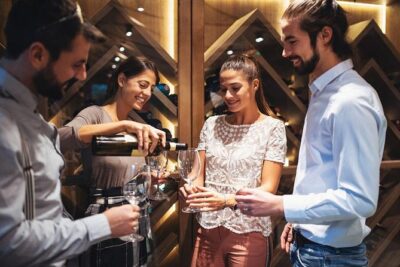
Saint Emilion Day Trip with Sightseeing Tour & Wine Tastings from Bordeaux
Read our review →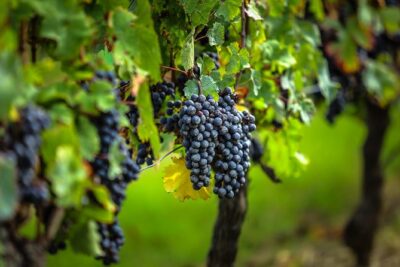
Saint Emilion Half-Day Trip with Wine Tasting & Winery Visit from Bordeaux
Read our review →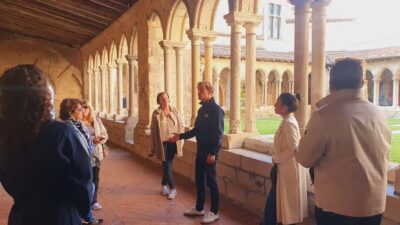
From Bordeaux: Half-Day Saint-Émilion Tour and Wine Tasting
Read our review →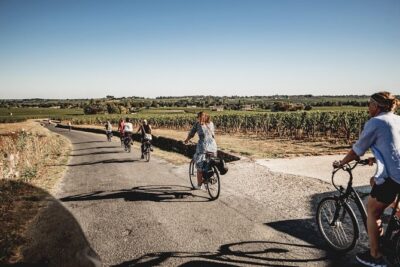
Saint-Emilion Electric Bike Day Tour with Wine Tastings & Lunch
Read our review →Lists this tasting sits in