
Review · PORTO
Porto: What is Fado? Commented Live Concert with Port Wine
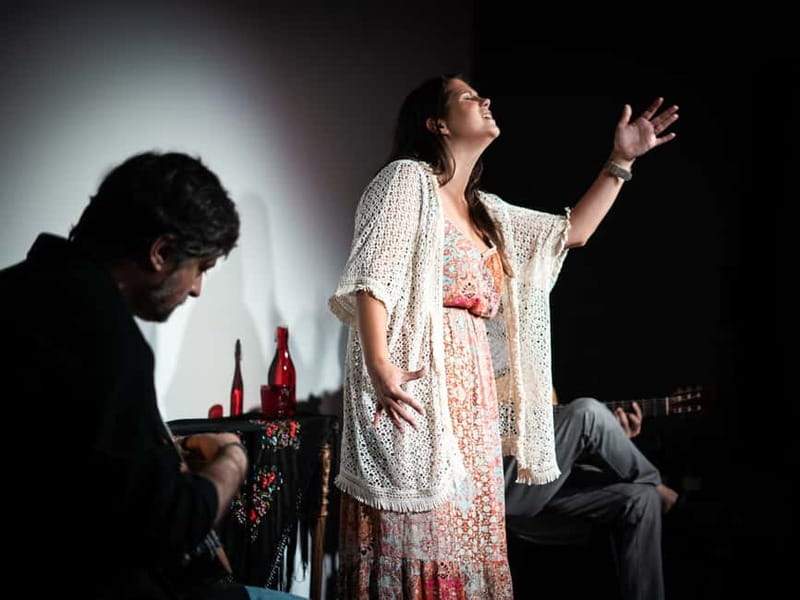
Porto’s Fado na Baixa does more than put singers on a small stage. It explains why this music matters, then lets you hear its changing forms through male and female voices, Portuguese guitar, student tradition from Coimbra, and songs linked to Amália Rodrigues. The short films and spoken commentary give the music a useful frame, especially if you know little about Fado.
I like two things here. First, the one-hour format keeps the experience focused, with music and explanation taking turns rather than competing. Second, the show includes a glass of Tawny Port and a glimpse of Coimbra Fado, a style many first-time listeners miss. The main consideration is that this is an introduction rather than a full concert, and one hour may leave you wanting more.
Key points to know
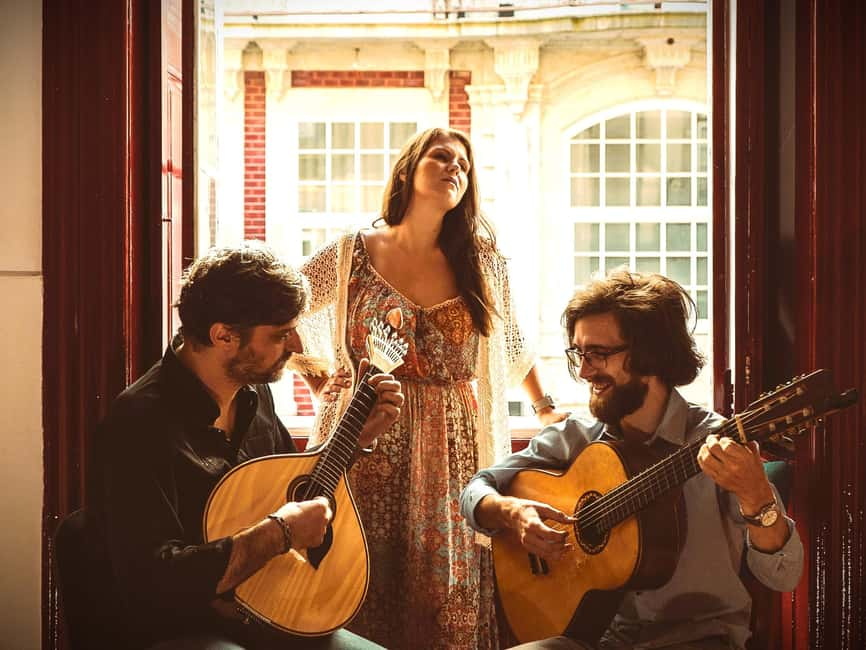
- Four performers cover several Fado traditions: Expect male and female singers, a standard guitar, and the distinctive Portuguese guitar.
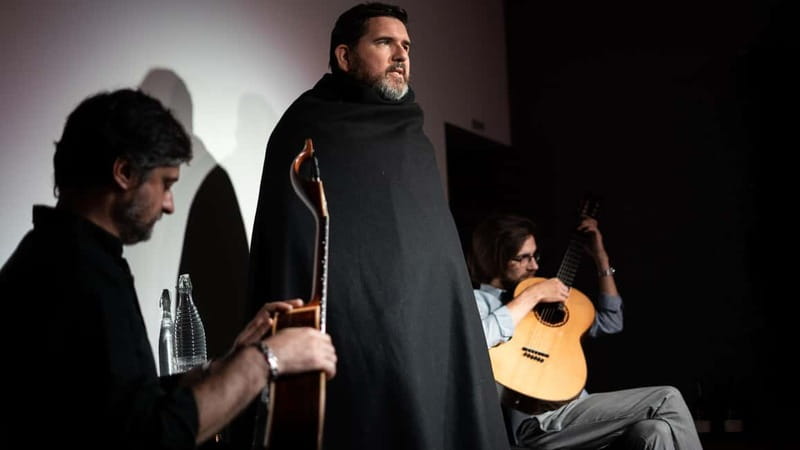
- Coimbra Fado gets proper attention: A male singer and former Coimbra University student present this student-linked tradition.
- Short films explain the music: Commentary and testimonials in several languages help you follow the lyrics, instruments, and cultural background.
- A Tawny Port tasting is included: You can sip Port while listening to the Portuguese guitar and Fado singers.
- The venue is small and central: The licensed auditorium is in a 19th-century building at R. de São João 99, close to the Douro River in Ribeira.
- It is accessible and easy to fit into an evening: The show lasts one hour, with Portuguese, Spanish, English, and French support.
Why Fado na Baixa works for first-time listeners
Fado can be difficult to understand when you hear it without context. The melodies are often mournful, the lyrics may be unfamiliar, and the Portuguese guitar has a sound unlike the guitars most visitors know. Fado na Baixa addresses that problem directly.
The performance is arranged as a short cultural lesson with live music at its center. You hear a style, receive some background, and then hear another style in a new setting. Short films and personal testimonials appear between the songs, with language support in English, French, Spanish, and Portuguese.
That format matters. You are not asked to know what saudade means before the show begins. Instead, you get a sense of how longing, fate, farewell, love, work, and memory enter Fado. The explanations do not replace the music. They help you listen for details you might otherwise miss.
I would choose this experience early in a Porto visit if Fado is new to you. It gives you enough understanding to make later performances, recordings, or a visit to Lisbon’s Fado neighborhoods more meaningful.
More Port lodge tastings around Porto:
- Porto: Live Fado Show with Glass of Port Wine
★ 4.8 · 6,498 reviews - Porto: Bridges Cruise & Sunset & Port Wine Cellar Option
★ 4.2 · 4,180 reviews - Porto: Fado & Port Wine in Traditional Portuguese Music Shop
★ 4.8 · 2,906 reviews
Entering the Ribeira auditorium on R. de São João
The show takes place at Fado na Baixa, at R. de São João 99, 4050-553 Porto. The address is in the heart of Ribeira, near the Douro River, so it is easy to pair with an evening walk through Porto’s central riverfront district.
The auditorium is in a 19th-century building, and its small scale suits Fado. This music depends on the singer’s voice, the pause before a phrase, and the conversation between the voice and instruments. A large theater could make the performance feel distant. Here, the setting is intended to keep the music close.
The chairs have a vintage look. One Portuguese audience member felt they could use an upgrade, though the same comment noted that they were sufficient for a one-hour show. That is useful practical information: comfort is adequate rather than luxurious, and the short running time limits the issue.
The auditorium is licensed and wheelchair accessible. A host or greeter can assist in Portuguese, Spanish, English, or French, while the audio guide is offered in those same four languages.
The opening: traditional Lisbon Fado
The first musical section introduces traditional Lisbon Fado, the highly promoted style most associated with the city where Fado first developed. Expect an intense vocal approach, expressive lyrics, and the familiar image of the Fado singer accompanied by guitar.
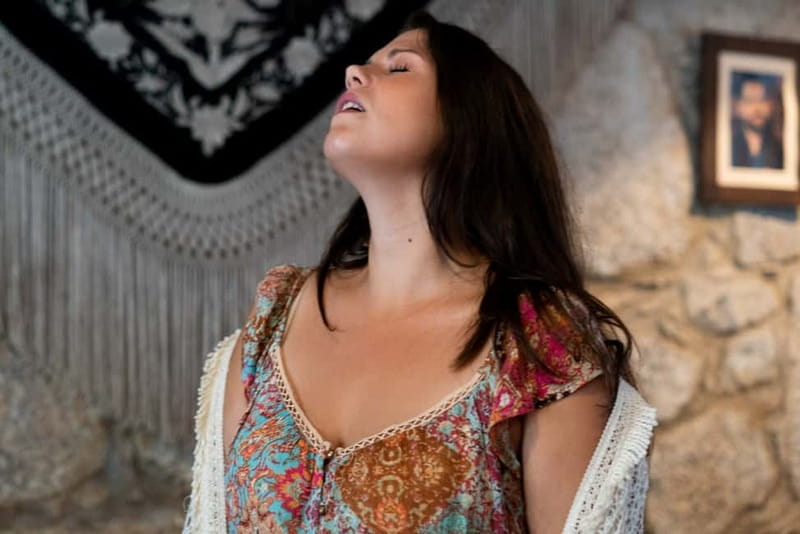
The show uses both male and female voices. That contrast gives you a wider sense of the tradition than a performance built around only one singer. You can hear how the same emotional world changes with the singer’s range, phrasing, and stage presence.
The music often concerns ordinary human struggles rather than grand historical events. Songs about fishermen and loved ones left behind help connect Fado to work, family, separation, and life beside the sea. You do not need to understand every Portuguese word to recognize the feeling, but the commentary makes the themes easier to follow.
This part is especially useful for someone who has heard the word Fado but does not know what it sounds like. You receive the basic form first, before the show moves into regional contrasts and later developments.
Listening for the Portuguese guitar
One of the show’s best teaching moments concerns the Portuguese guitar. Its bright, ringing sound can seem almost decorative at first, yet it carries much of Fado’s musical identity. The performance gives you time to notice how it answers the singer and adds motion around the melody.
The musicianship is a major reason to book this rather than simply playing Fado in the background at a restaurant. Mário Henriques is identified as an excellent Portuguese guitar player, while Rato is also praised as a strong instrumentalist. If you play guitar, you may find the Portuguese guitar section particularly absorbing.
You also hear the difference between Lisbon and Coimbra playing techniques. That distinction gives the performance a real purpose. The Portuguese guitar is not presented as one fixed sound. Its role and treatment shift according to the Fado tradition being explored.
A glass of Tawny Port accompanies this part of the program. The pairing is simple but well judged. Port gives you a small taste of another Portuguese tradition while the instrument is being explained, and it adds a relaxed social touch to what could otherwise feel like a formal music lecture.
The serving is alcoholic, so anyone avoiding alcohol should note that the information provided does not list a non-alcoholic replacement. One person specifically wished for that option. The Port itself is described as enjoyable, but the cultural value of the experience does not depend on drinking it.
More music among the vines around Porto:
- Porto: Fado Live Music, Wine & Cultural Introduction
★ 4.9 · 150 reviews - Warsaw Concert: Chopin – Painted by Candlelights with Wine
★ 4.8 · 1,442 reviews - Porto: Authentic Fado Concert With Port Wine & Views
★ 4.8 · 543 reviews - Krakow: Chopin Concert by Candlelight with Wine
★ 4.6 · 447 reviews
Coimbra Fado and the student tradition
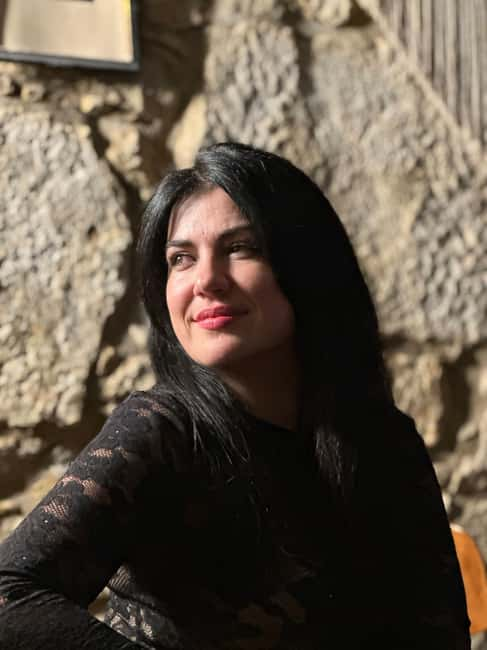
The Coimbra section is one of the most distinctive parts of the program. Coimbra Fado is linked to Portuguese university life and has its own sound and customs. It is not simply Lisbon Fado performed in another city.
The male singer is a former student at Coimbra University, which connects the performance to the tradition being presented. That detail gives this segment a personal quality. You are not just hearing a category explained on a screen. You are hearing a singer with a direct connection to the university culture that helped shape it.
The show presents Coimbra Fado as a male-sung tradition, following its customary form. This provides a clear contrast with the opening Lisbon material and helps you understand why Portuguese Fado contains several distinct worlds.
The inclusion of Coimbra is valuable because a short introductory concert could easily focus only on the better-known Lisbon style. Instead, the program gives you a broader view of Fado in Portugal. If you are interested in university traditions, farewell songs, or the relationship between music and student identity, this section may be the emotional high point.
Amália Rodrigues and the next generation of Fado
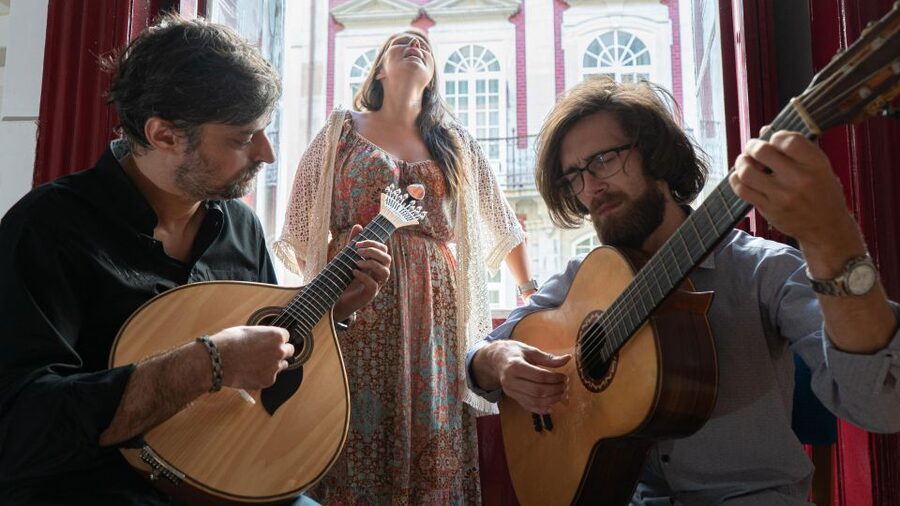
The program then turns to Amália Rodrigues, widely known as the queen of Portuguese Fado. Her importance is explained through the way she transformed traditional Fado and brought it much wider recognition.
This section helps answer a basic question: how did an intimate, strongly local form of music become one of Portugal’s best-known cultural exports? The answer is not presented only through dates and names. You see how a major performer can respect an older form while changing its reach, style, and public image.
The presentation also shows that Fado did not stop with its traditional forms. Later singers use different poetry, combine Fado with other musical styles, and still honor older practices. That balance is important. Fado is treated as a living form, not a museum display.
The final part also includes audience participation. You may be guided to sing along during selected sections, which gives the performance a lighter, more social finish. The sing-along is limited rather than constant, so it does not take over the music. It simply reminds you that Fado belongs to communities, not only to professional performers.
How the films and testimonials shape the evening
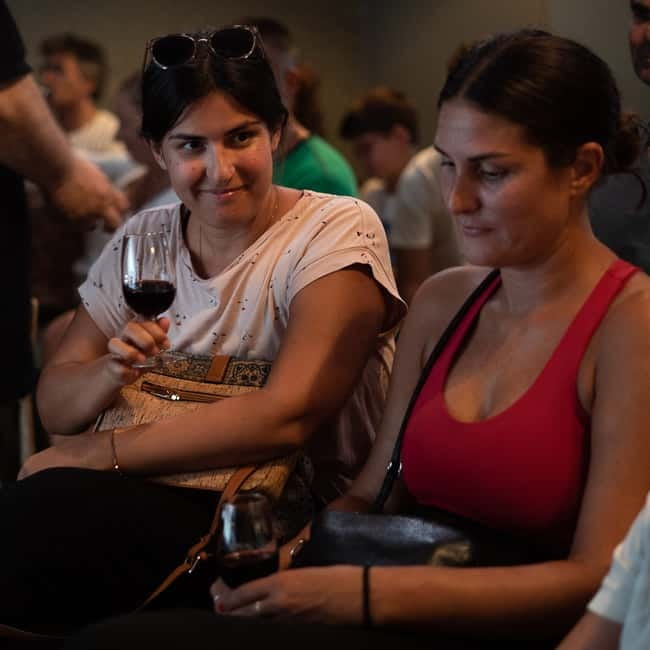
The multimedia material is short and placed between live sections. It includes personal testimonials in several languages, along with footage that explains Fado’s story and development.
I like this approach because the screen content does not attempt to carry the whole experience. The singers and musicians remain the main event. The films act as signposts, telling you what to listen for and why a particular style matters.
The commentary covers the Portuguese guitar, Lisbon and Coimbra traditions, major figures, and Fado’s movement from traditional to contemporary forms. The amount of explanation is generally suited to a relaxed evening activity. It gives enough context without turning the show into a classroom presentation.
If you already know Fado well, you may find parts of the historical material familiar. One local audience member felt the story section ran a little long and preferred the music. That is a fair warning. This is designed for people seeking orientation as well as performance, so experienced listeners may want a longer, more music-heavy concert instead.
A one-hour schedule with real value at $18
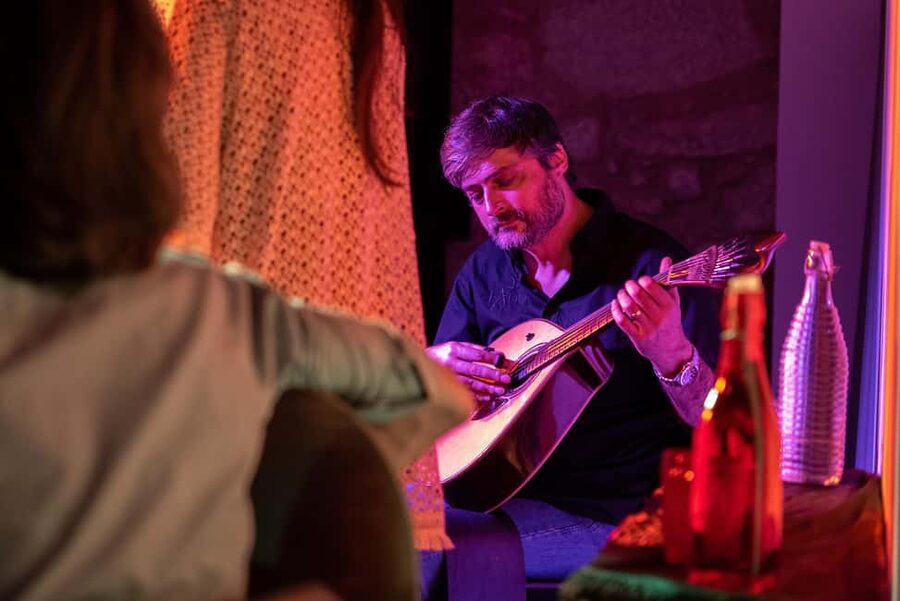
At $18 per person, this is a strong-value evening activity for anyone who wants more than a few songs without committing to a long dinner show. The price includes the performance, multimedia content, audio guide, and a glass of Port.
The cost looks especially reasonable when you consider the range covered in one hour. You hear traditional Lisbon Fado, Coimbra Fado, Portuguese guitar, material connected to Amália Rodrigues, and newer directions for the genre. A longer concert might offer more songs, but it would not necessarily provide this much explanation.
The short duration also makes the show easy to fit around other plans. You can attend before or after dinner, use it as a break from sightseeing, or choose it on a night when you do not want a late event. Several people found the one-hour length just right, while others wished the music could continue. Both reactions make sense.
Keep your expectations clear. This is not a full evening of uninterrupted Fado, and it is not a large theatrical production. It is a compact introduction with professional musicians, an intimate setting, and carefully arranged cultural background.
Who should book this Porto Fado experience?
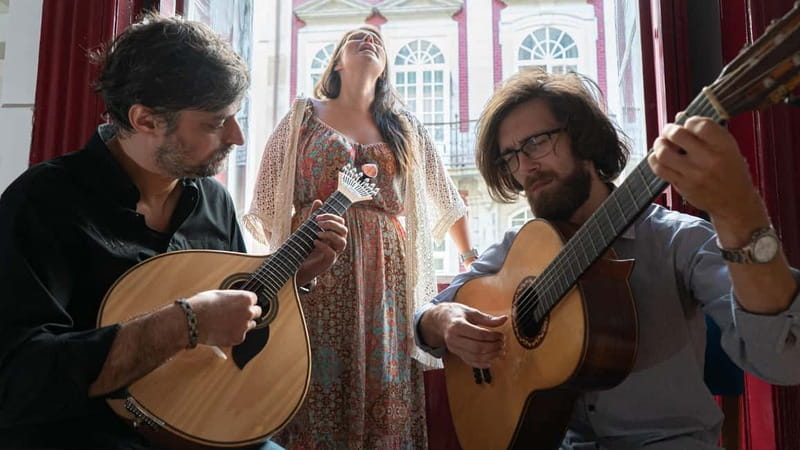
I would recommend it most strongly to first-time Fado listeners. If you have wondered what makes Fado different from other Portuguese music, the commentary gives you an answer before you leave.
It also suits families with older children or teenagers who may struggle with a long, solemn concert. The visual sections and guided audience moments give the evening some variety. A couple visiting Porto can also use it as a low-effort cultural night after a full day of hills and cobbled streets.
Music lovers should pay attention to the Portuguese guitar sections. The musicians are a serious part of the appeal, and the contrast between Lisbon and Coimbra playing adds substance beyond the usual restaurant performance.
You might choose a different event if you already know Fado well and mainly want a long, uninterrupted set. This show spends time explaining its subject, and its one-hour structure leaves limited room for extended songs.
Practical details before you reserve
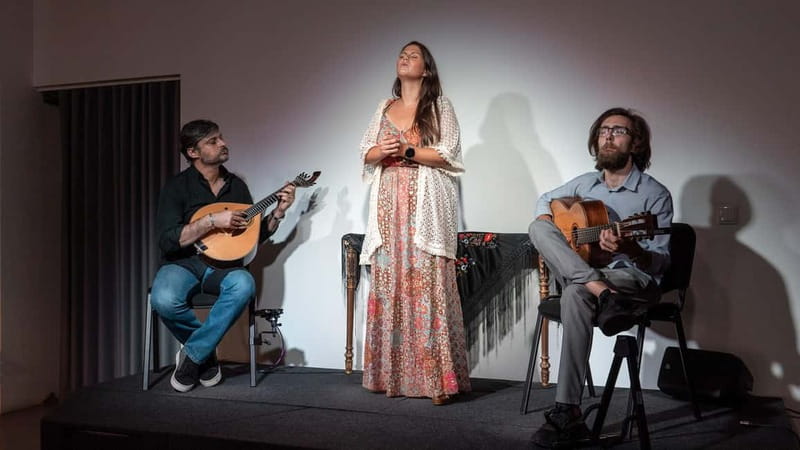
Book at Fado na Baixa, R. de São João 99, in central Ribeira. Check the available starting times when selecting your date, since the exact schedule is not fixed in the information provided.
The experience is wheelchair accessible. Host support is available in Portuguese, Spanish, English, and French, and the audio guide uses those languages as well. You can cancel up to 24 hours before the start for a full refund, and the reserve now, pay later option allows more flexibility.
The included Port is Tawny Port. If you do not drink alcohol, check with the venue about alternatives before booking, since a non-alcoholic option is not specified.
Arrive ready to listen rather than expecting a meal or a full restaurant evening. The central location makes it easy to continue your night in Ribeira afterward, but the show itself focuses on music, explanation, and the drink.
Should you book Fado na Baixa?
Book it if you want a clear, well-paced introduction to Portuguese Fado, especially if you are new to the music. The combination of live singing, skilled guitar playing, Coimbra tradition, short films, audience participation, and Tawny Port gives you a lot for $18.
I would choose it for the context as much as for the songs. You learn why Lisbon and Coimbra Fado differ, how the Portuguese guitar works, why Amália Rodrigues matters, and how Fado continues to change. The only real trade-off is the one-hour limit and the amount of commentary.
For a first Fado experience in Porto, that trade-off is sensible. You leave with enough background to know what you heard, and enough music to understand why the form remains so moving.
FAQ
Where does the Fado concert take place?
It takes place at the Fado na Baixa auditorium at R. de São João 99, 4050-553 Porto, in the Ribeira area near the Douro River.
How long does the experience last?
The performance lasts one hour.
What languages are available?
The host or greeter can assist in Portuguese, Spanish, English, and French. The audio guide is also available in Portuguese, Spanish, English, and French.
Is Port wine included?
Yes. The experience includes a glass of Tawny Port.
What types of Fado are presented?
The program covers traditional Lisbon Fado, Coimbra Fado, the Portuguese guitar, Amália Rodrigues, and later developments that connect Fado with other musical styles.
Is the auditorium wheelchair accessible?
Yes. The experience is listed as wheelchair accessible.
Freshly poured around Porto
- Porto Wine Tasting Experience with Portuguese Tapas Plate★ 4.7 · 356 reviews
- Porto: Taylor’s Port Cellar Tour & WOW The Wine Experience★ 4.5 · 136 reviews
- Porto: The Wine Experience, Best Wine Museum in the World★ 4.7 · 621 reviews
- Porto: Tile Painting Workshop with Tea and Port Wine★ 4.9 · 66 reviews
- Porto: Self-Guided Bike and Boat Tour with Port Wine Tasting★ 4.7 · 52 reviews
- Porto: Douro River Boat Tour with Wine Tasting★ 4.9 · 167 reviews
- Porto: Sunset Walking Tour with Port Wine and Views★ 4.6 · 95 reviews
- Porto: Private Yacht Tour with Wine, Snacks & 6 Bridges★ 5.0 · 515 reviews
Porto Wine Tours, side by side.

From Porto: Douro Valley w/ Boat Tour, Wine Tasting & Lunch
Read our review →
Complete Douro Valley Wine Tour with Lunch, Wine Tastings and River Cruise
Read our review →
Porto: Douro Valley with Winery Lunch, Tastings & Cruise
Read our review →
Porto: Live Fado Show with Glass of Port Wine
Read our review →
From Porto: 2 Wine Regions, Farm-to-Table Lunch & Boat
Read our review →
Douro Valley: Historical Sites, Wine Experience, Lunch & Cruise
Read our review →
Authentic Small Group Douro Wine Tour with Lunch & River Cruise
Read our review →
Porto: Bridges Cruise & Sunset & Port Wine Cellar Option
Read our review →Lists this tasting sits in