
Review · LECCE
Lecce: Pasta Making Class in 1400s-Era Courtyard with Wine
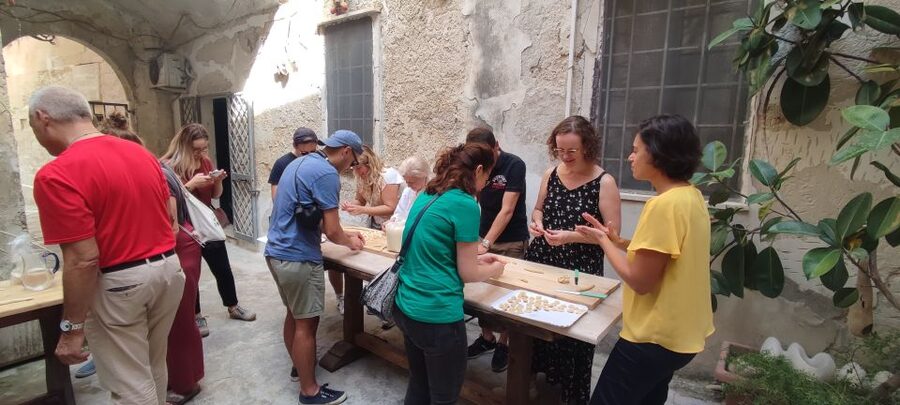
Lecce’s best pasta lesson takes place in an unlikely spot: the courtyard of the Faggiano Archaeological Museum, in a building dating to the 1400s. You’ll sit with a local cook, turn flour and water into orecchiette and sagne, then eat what you made with wine. The old courtyard gives the class real character, while the shared meal makes it feel social rather than formal.
I like the hands-on teaching and the warm, slightly bossy style of the pasta ladies. They show you each movement, correct your dough, and keep the group moving. I also like the value: for $68, you get 2.5 hours of instruction, equipment, wine, and a meal made from your own pasta.
The main drawback is group size. Some sessions have around 20 people, so you may share table space and wait your turn for close help. That adds energy and conversation, but it is not the quiet, private lesson you might picture.
Key things to know before booking
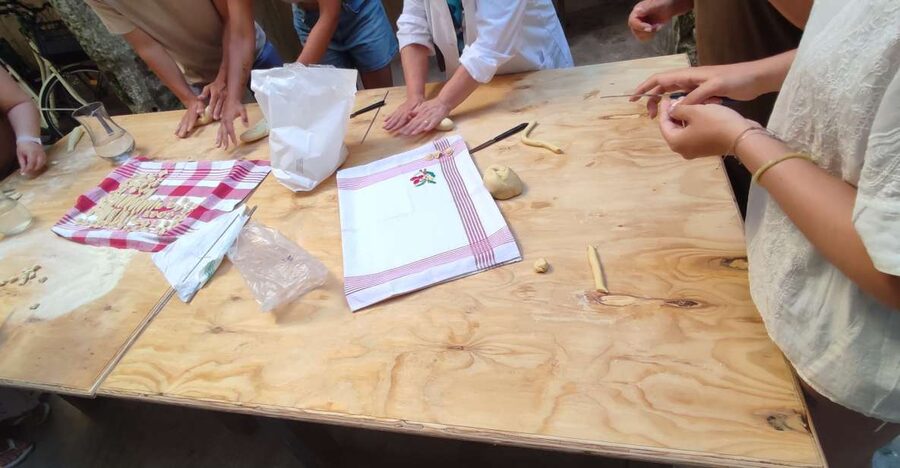
- You make two Apulian pasta shapes: Learn the hand movements for orecchiette and sagne, with some sessions also described as making maccheroni.
- You eat what you prepare: After the lesson, your pasta is cooked and served with wine, creating a full evening rather than a quick demonstration.
- The Faggiano Archaeological Museum is the setting: The meeting point is Via Ascanio Grandi 58, in central Lecce.
- The teaching is practical and multilingual: Instruction is available in Italian, English, and French, with guides such as Luciana and Therese helping explain the lesson.
- Expect a friendly group atmosphere: You may meet people from several countries and share the meal at communal tables.
- Bring identification and dress for the weather: The class runs rain or shine, and you should bring a passport or ID card.
Starting in Lecce’s 1400s-era courtyard
The meeting point is the Faggiano Archaeological Museum at Via Ascanio Grandi 58. That puts you in central Lecce, where the setting does much of the welcoming before the cooking starts.
The class takes place in a courtyard dating from the 1400s. You are not simply placed in a modern cooking studio with stainless-steel counters and a cooking-school feel. Instead, you work in a historic building that connects the food to Lecce itself. The courtyard is one of the main reasons this experience feels different from a standard pasta workshop.
The museum setting also gives the evening a sense of place. Faggiano is an archaeological museum in the center of town, so you are cooking inside a site with its own story rather than meeting at a generic venue. I would allow a little extra time to locate the entrance, especially if you are finding it after dark.
The activity is listed as wheelchair accessible, and transport is not included. Since the meeting point is central, you will need to make your own way there. Check the start time when booking, as the available times can vary.
More wine tours around Italy:
- Tuscany Day Trip from Florence: Siena, San Gimignano, Pisa and Lunch at a Winery
★ 5.0 · 21,634 reviews - Florence: Pasta Cooking Class with Unlimited Wine
★ 4.9 · 10,285 reviews - Florence: Chianti Wineries Tour with Wine Tasting
★ 4.5 · 10,071 reviews
Mixing flour and water by hand
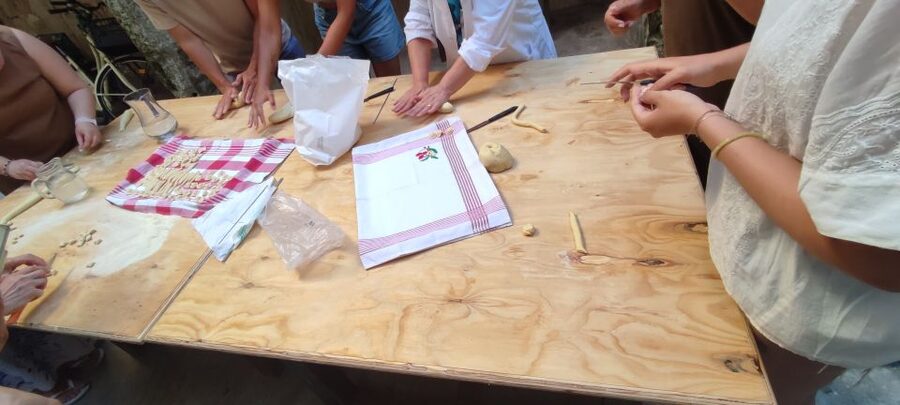
The lesson begins with the basic material: flour and water. Your instructor shows you how to mix them and how to work the dough with your hands. The equipment is included, so you do not need to bring kitchen tools.
This simple start is useful because Apulian pasta depends on touch. You learn how firm the dough should feel and how to move from a rough mixture to something smooth enough to shape. It sounds easy when the cook demonstrates it. Once you try it, the hand movements can be surprisingly tricky.
That difference is part of the fun. The local cooks make the process look effortless, but you will need patience to copy the same motions. Some of the best teaching comes when the instructors stop, watch your hands, and show the movement again.
The tone is friendly but not overly polished. The cooks may correct you firmly when your pasta shape goes wrong. I would not take that as a problem. It is part of the class’s old-school character, and the direct guidance helps you improve rather than leaving you to guess.
Names connected with the teaching include Luciana, Therese, and Nonna Teresa, though the exact team may vary. The guides are described as speaking clear English, Italian, and French, and Luciana is noted for helping explain the lesson in several languages.
Shaping orecchiette and sagne
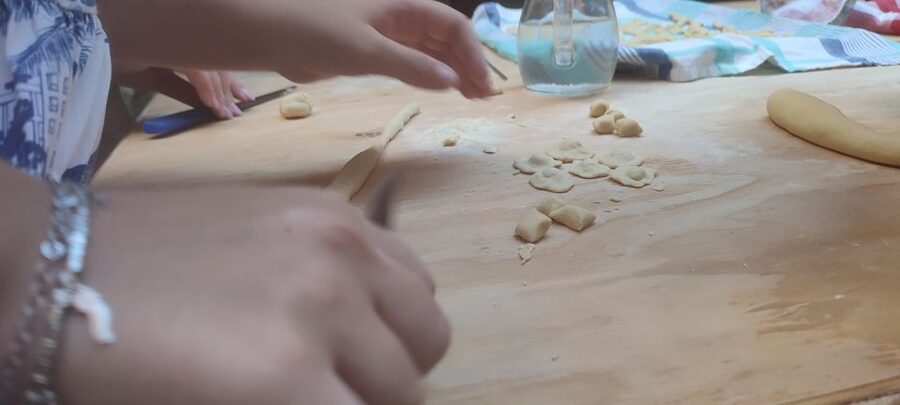
Orecchiette means little ears, a shape strongly associated with Puglia. You roll and cut pieces of dough, then use a knife or your fingers to create the small, cupped form. The shape is not just decorative. Its hollow center helps hold sauce, which is one reason it works so well in southern Italian cooking.
Sagne is another traditional Apulian pasta. The class introduces the techniques used to make it, giving you more than one shape to practice. Some descriptions of the class also refer to maccheroni, so the exact second pasta may be described differently depending on the session.
You should expect a lesson in technique, not a recipe lecture. The value is in learning the movement. You can go home with a better sense of how to make the pasta again, even if your first batch looks more rustic than the instructor’s.
That is worth knowing before you book. This is not a polished food presentation where you watch a chef do everything. You will handle the dough, make mistakes, ask for help, and compare your shapes with the people beside you.
The class works well for couples, families, and solo visitors who enjoy shared activities. One parent described children aged 10 and 14 enjoying the lesson, but younger children may need help with the hand movements. The supplied information does not set a minimum age, so check the booking details if that matters for your family.
A communal meal with wine afterward
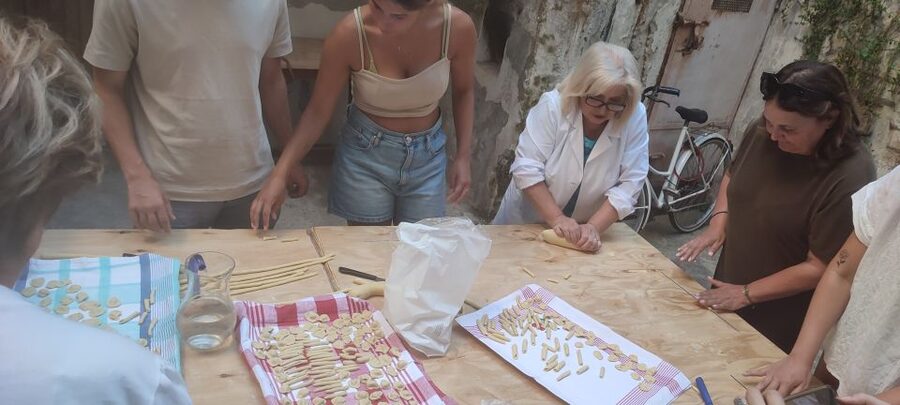
After you shape the pasta, the kitchen team cooks it. You then sit down to eat the result with wine. This turns the class into a small meal and gives you time to talk with the other participants.
The food is the natural reward for the work. You have watched the dough take shape, handled each piece, and then tasted the finished pasta. The meal may be simple, but that is fitting. The point is to understand the everyday craft behind a beloved regional food, not to sit through a restaurant tasting menu.
The social part is just as important. People from several countries may share the tables, and the cooking gives everyone an easy topic of conversation. If you are visiting Lecce alone, this is one of the better ways to spend an evening without eating by yourself.
Wine is included with the meal. Some accounts also describe snacks or an aperitivo while the pasta cooks, plus dessert in certain sessions. These details may vary, so I would treat them as possible extras rather than guaranteed parts of every booking.
The meal also helps balance the class’s busy moments. With a group of around 20, you may not receive one-to-one attention at every stage. Once everyone sits down together, the larger group becomes an advantage.
Same vines, another glass to try:
- Small-Group Wine Tasting Experience in the Tuscan Countryside
★ 5.0 · 7,392 reviews - Florence: Pasta & Tiramisu Cooking Class with Unlimited Wine
★ 4.9 · 6,708 reviews - Florence: Pasta Cooking Class with Unlimited Wine
★ 5.0 · 6,413 reviews - Pisa, Siena and San Gimignano Day Trip with Lunch & Wine Pairing
★ 4.5 · 6,006 reviews
What the group size means
The class can be lively. Around 20 people have attended some sessions, and that number affects the feel of the evening. You may share a work surface, watch a demonstration from behind other people, or wait briefly while an instructor checks someone else’s dough.
Still, the group format has clear benefits. You can see how other beginners handle the pasta, laugh over the uneven shapes, and compare results. Several sessions brought together people from six or seven countries, which gives the meal an easy international feel without requiring a separate social activity.
If your priority is personal coaching, ask yourself how much crowding you can tolerate. The instructors work hard to keep the activity personal, and the group is generally well organized, but this is not an intimate private class.
I would book it for the atmosphere as much as for the pasta. If you want exact measurements, advanced knife skills, or a chef focused only on your table, choose a smaller workshop. If you want to cook, eat, drink, and meet people in an atmospheric setting, the group size is easier to accept.
Is $68 a fair price?
At $68 per person, the experience is reasonably priced for Lecce. The fee covers a professional cook, the historic museum location, cooking equipment, instruction, your pasta meal, and wine.
I would compare it with the cost of a normal dinner plus a separate activity. Here, your meal is part of the lesson, and the setting adds something you would not get in a basic restaurant. You also leave with a technique you can try at home.
The value is strongest if you enjoy participation. You are not paying just to admire the courtyard or eat a plate of pasta. You are paying for the time, guidance, ingredients, shared table, and chance to make the food yourself.
It is less compelling if you are not interested in cooking. The class spends much of its time handling dough, shaping pasta, and waiting for it to cook. Someone looking for a quick cultural stop may find the 2.5-hour format too long.
Reserve now and pay later is available, and you can cancel up to 24 hours before the activity for a full refund. The course may be canceled if the minimum number of people is not reached, with notification and a refund. Those terms make it easier to fit the class into a changing Apulia itinerary.
A practical evening in Lecce
Plan on 2.5 hours from start to finish. That gives you enough time to learn both pasta shapes, work with the dough, eat, and talk with the group.
Wear something comfortable that you do not mind using in a cooking setting. The supplied information does not list a required dress code, but flour and dough are part of the activity. Bring your passport or ID card, as requested.
The course runs rain or shine. Since it takes place in a courtyard, weather may affect your comfort even though the activity continues. A light layer can be useful if your session runs in the evening or during a cooler part of the year.
The class is offered in Italian, English, and French. If you need instruction in one of those languages, select the right option or confirm it while booking. Clear explanations matter here because the pasta shaping is easier to understand when you can see and hear each step.
I would not schedule this immediately before a major timed event. The class is social, and the meal is part of the experience, so leave yourself room afterward. It works best as an evening plan in Lecce’s old town.
Who will enjoy this class most
I would recommend it to:
- Couples looking for a shared activity beyond sightseeing
- Families with older children who enjoy hands-on food lessons
- Solo visitors who want an easy way to meet people
- First-time visitors to Puglia who want a regional food experience
- Anyone interested in making pasta from basic ingredients
- People who value atmosphere as much as formal instruction
I would be more cautious if you dislike group activities or need a quiet, private setting. I would also look elsewhere if you want to learn several sauces, use advanced equipment, or take home a large quantity of pasta. The focus is on two traditional shapes, a communal meal, and the pleasure of learning together.
The class is also a good match for people who enjoy imperfect results. Orecchiette can be harder to shape than it looks, and the instructors may need to correct your technique. That challenge is part of the lesson, not a sign that you are doing something wrong.
Should you book the Lecce pasta class?
Book it if you want a social evening in a memorable setting, with real hands-on work and a meal at the end. The strongest reasons are the 1400s-era courtyard, the local cooks, the chance to make orecchiette and sagne, and the included wine.
Skip it if you want a private chef-led lesson or a small group with constant individual attention. A session of around 20 people can feel crowded, and pasta shaping takes patience.
For most visitors, I think the $68 price is fair. You get a regional cooking lesson, a historic central location, food, wine, and a chance to share an evening with people from around the world. It is a lively introduction to Apulian food, with enough practical instruction to keep making pasta after you leave Lecce.
FAQ
Where does the pasta-making class meet?
The meeting point is the Faggiano Archaeological Museum at Via Ascanio Grandi 58 in central Lecce.
How long does the experience last?
The class lasts 2.5 hours.
What pasta will I learn to make?
You will learn techniques for making orecchiette and sagne. Some descriptions of the activity also refer to maccheroni.
Is food and wine included?
Yes. You eat the pasta you make after the class and have wine with the meal.
What languages are available?
Instruction is available in Italian, English, and French.
What happens if the minimum group size is not reached?
The course may be canceled if the minimum number of participants is not reached. You will be notified and refunded.
Freshly poured around Italy
- Private Flavors of Florence Walking Tour(Food&Wine Included)★ 4.8 · 46 reviews
- Pizza-Making Workshop by night with glass of wine★ 4.9 · 45 reviews
- Pramaggiore: Ornella Bellia Winery Guided Tour & Tasting★ 5.0 · 90 reviews
- Rome: Pompeii Tour with Wine and Lunch by High Speed Train★ 4.8 · 485 reviews
- Polignano a Mare: Street Food Tour with Tastings and Wine★ 4.7 · 154 reviews
- Polignano a Mare: Private Cruise with Champagne★ 4.8 · 66 reviews
- Pizza and Tiramisu Cooking Class with Wine in Milan★ 4.9 · 80 reviews
- Pisa: Cathedral Guided Tour and Tower tickets & wine tasting★ 4.8 · 78 reviews
Lecce Wine Tours, side by side.
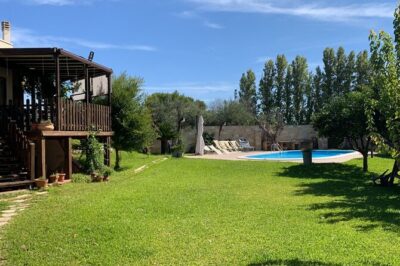
Cooking class, dinner and wine tasting near Lecce
Read our review →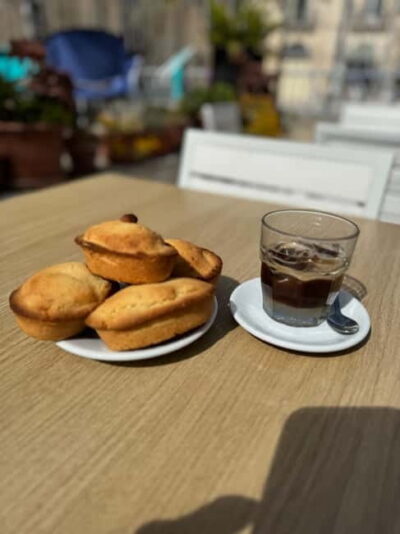
Lecce: Guided Street Food Walking Tour with Food and Wine
Read our review →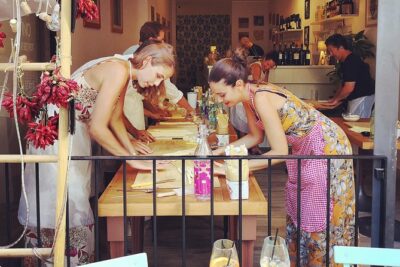
Orecchiette Cooking Class and Wine Pairing in Lecce
Read our review →
Lists this tasting sits in