
Review · SPAIN
La Palma: Roque de los Muchachos Stargazing Tour with Wine
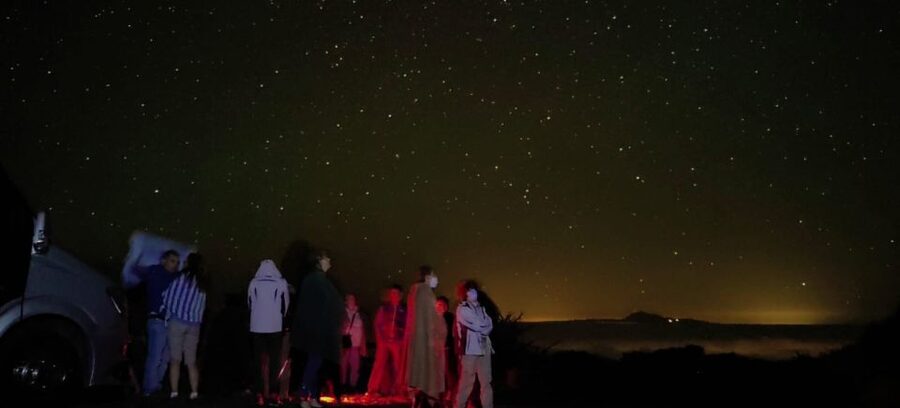
The best part of this La Palma outing comes after sunset, when a guide points a telescope at Saturn, planets, star clusters, and distant galaxies. Before that, you watch the sun drop from high above the island with a glass of wine in hand. It is a big sky evening, not just a quick look through a telescope.
I like two things right away: transportation is included, which matters on steep, dark mountain roads, and the guides explain why Roque de los Muchachos attracts major observatories. The main drawback is comfort. It gets very cold, toilet access is limited or unavailable, and the trip can run until 1 a.m.
Key points
- 2,426 metres above sea level: Reach La Palma’s highest point and see the observatory buildings from the road.
- Sunset with one glass of wine: The wine stop comes before the full night-sky session.
- Telescope viewing: Depending on conditions, you may see planets, galaxies, nebulae, and star clusters.
- Multilingual guiding: Tours operate in English, Spanish, and German. Guides such as Stefanie have explained the sky in all three languages.
- No nighttime mountain driving: Hotel pickup and return are included from listed areas, with drop-off between 10 p.m. and 1 a.m.
- Weather and moon matter: Cloud, rain, or a full moon can cancel or weaken the experience.
Why Roque de los Muchachos makes this outing special
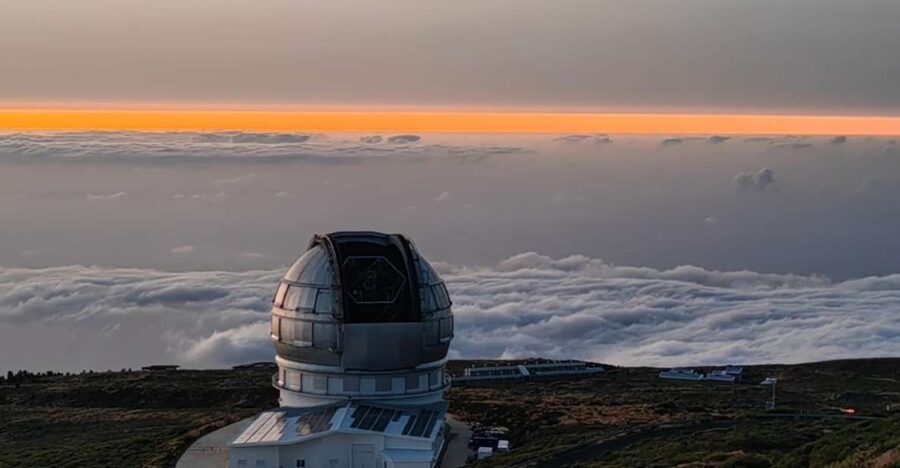
La Palma is prized for its dark skies, and Roque de los Muchachos is the island’s high point at 2,426 metres. The air and darkness make this a serious astronomy location, not simply a scenic lookout with a telescope added for tourists.
You do not enter the observatories. At night, the buildings are closed, and this outing stays outside. That may disappoint anyone expecting an indoor observatory tour, but the road near the summit lets you see the telescope installations and hear what each one does.
Your guide explains why the observatories were placed here and points out telescopes on both sides of the road. This adds useful context to the view. You are not merely looking at impressive white domes and instruments. You learn why altitude, clear air, and low light pollution matter.
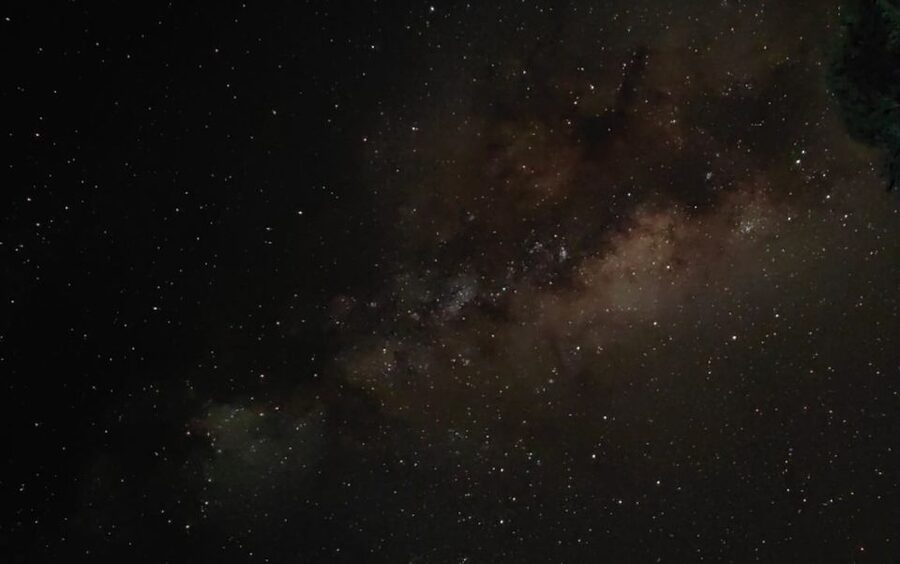
The appeal is also personal. From a bright city, you may know the Milky Way as a photograph more than a daily sight. At Roque de los Muchachos, the dark sky can change your sense of scale. One reviewer described being stunned by how much city light hides. That is exactly the point of coming here.
More wine tours around Spain:
- Montserrat Half-Day Tour with Tapas and Gourmet Wines
★ 5.0 · 7,359 reviews - Montserrat & Cogwheel Train, Gourmet Wine Tasting & Tapas/Lunch
★ 5.0 · 6,290 reviews - Barcelona Tapas and Wine Experience Small-Group Walking Tour
★ 5.0 · 5,804 reviews
The long ride up the mountain
The outing lasts about six to seven hours, with pickup available from areas including Fuencaliente, Los Cancajos, Santa Cruz de La Palma, and, depending on the option booked, Los Llanos. The exact pickup point and start time vary. Since sunset changes through the year, your departure will not be fixed at one universal hour.
The ride is part of the cost and part of the trade-off. You spend a good portion of the evening in a bus, but you avoid driving narrow, steep mountain roads at night. That is a real benefit. Even confident drivers may prefer to watch the view and let an experienced driver handle the return in darkness.
The mountain road can also make the trip feel longer than expected. Road closures have caused particularly long journeys, and the final return may not reach your hotel until between 10 p.m. and 1 a.m. Check the timing against your next morning plans.
The vehicle is identified by a La Palma Transfer & Tours sign. Pickup instructions can vary, so pay close attention to the meeting point rather than assuming the bus will stop exactly outside your accommodation. One outing had the bus waiting farther away than the directions suggested.
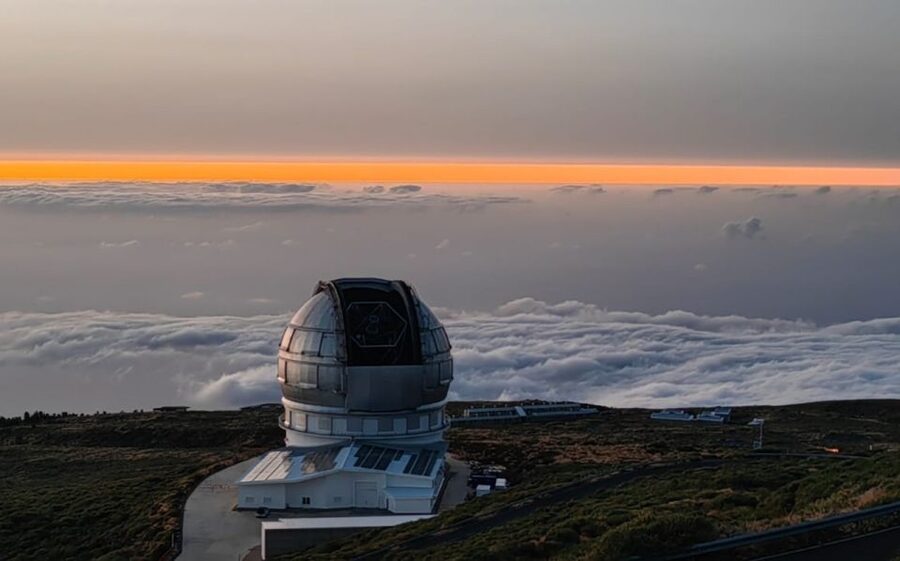
Reaching the observatory area at 2,426 metres
The first major stop is the Roque de los Muchachos viewpoint, near the highest point on La Palma. From here, you look across the island and toward the observatory installations. The height gives you a broad view, but the real prize is the sense of standing beside one of the world’s important astronomy sites.
A guide talks through the telescopes and the reasons this location was chosen. The guiding is available in English, Spanish, and German, with language groups sometimes separated during the telescope session. Stefanie has led tours in three languages and is especially strong at explaining the astronomy in clear terms.
Do not expect a long indoor visit. The observatory itself is not open at night, and you will not go inside during this experience. The time near the main observatory area can also be limited by closing hours. Plan to enjoy the viewpoint and the outside explanation, not an interior museum visit.
The high altitude changes the practical side of the stop. It can be cold even in summer, and the temperature after sunset can feel severe. A light jacket is not enough for many people. Bring warm layers, a hat, and something for your hands if you get cold easily.
Sunset wine at a separate viewpoint
After the observatory area, the bus moves to another viewpoint for sunset. You receive one glass of wine while watching the light change across the island. This is a simple touch, but it gives the evening a pleasant pause before the astronomy begins.
The wine is not the reason to book the tour. Think of it as a relaxed sunset moment within a much longer mountain outing. If you want a full meal, bring food. The tour includes one glass of wine, not dinner or a picnic.
The sunset stop may take place away from the observatory because the main area closes in the evening. That arrangement makes sense for access, but it can feel less polished if the group ends up at a roadside pull-off. The setting remains useful for the sunset, yet you should not picture a staffed terrace or a restaurant with indoor facilities.
This is also when you should eat and use a toilet if one is available before the high mountain section. Toilet access can be a real weakness. There may be no open facilities in the mountain area for the entire trip, so plan ahead and do not assume the wine stop solves the problem.
Same vines, another glass to try:
- Barcelona: Montserrat, Cogwheel, Black Madonna & Winery Tour
★ 4.8 · 5,633 reviews - Montserrat with Black Madonna & Medieval Winery with Tapas/Lunch
★ 5.0 · 5,209 reviews - Barcelona: Tapas Walking Tour with Food, Wine, and History
★ 4.8 · 4,261 reviews - Madrid Tapas & Wine Tasting Walking Tour – Small Group Local Bars
★ 5.0 · 3,644 reviews
Waiting for darkness and finding the stars
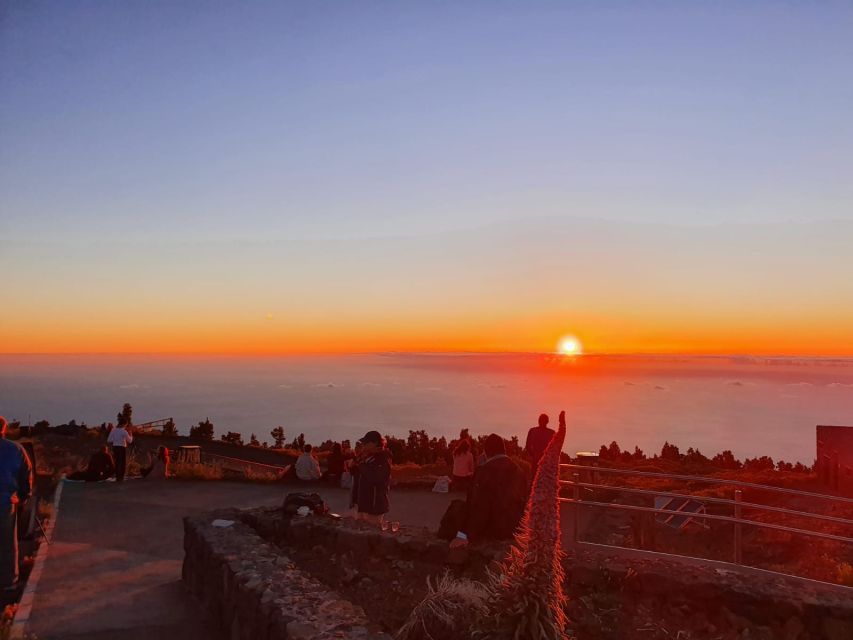
The telescope session takes place at another vantage point once the sky is dark. The guide sets up the equipment and helps you look through it. You may see planets, galaxies, nebulae, and star clusters, depending on the date, weather, and position of the objects.
The experience works best when you keep expectations realistic. Astronomy is not a fixed show. A telescope cannot guarantee Saturn on every night, and clouds can wipe out the view. But the right conditions can be remarkable. One outing revealed Saturn and three of its moons, while the Milky Way was visible without optical aid.
You may also see more with your own eyes than you expect. The telescope gives you close views of selected objects, while the unaided sky provides the bigger shock. A dark sky full of stars can be more moving than a long list of technical facts.
Your guide does the work of finding objects and explaining what you are seeing. This matters because a dark sky can be confusing at first. Without help, you might see thousands of points and know none of their names. With a guide, the sky becomes easier to read.
The group may be divided into English, Spanish, and German sections for this part. That can make the explanations clearer, though it also means the evening may have a group-tour rhythm rather than a private, unhurried feel.
Cold, darkness, and the lack of toilets
Take the warning about warm clothing seriously. Several people have found the mountain very cold, including those who arrived prepared. You are standing outside at night, often waiting between telescope views, so ordinary holiday clothing may not be enough.
Wear layers rather than one bulky item. Bring a warm coat, long trousers, closed shoes, and extra protection for your head and hands. A charged smartphone and camera are also listed as useful items, though your phone may struggle with serious night-sky photography.
Toilet planning deserves equal attention. The mountain area may have no open facilities, and the total outing can last six to seven hours. Use a toilet before leaving and limit drinks if that helps you stay comfortable. This is especially relevant if you are considering the included wine, since the glass is a pleasant extra but not worth discomfort later.
The darkness itself can be tiring for young children or anyone who dislikes waiting outdoors. There is little shelter once the group reaches the viewing point. I would choose this outing for people who enjoy quiet outdoor evenings and can handle cold, late hours.
What the $65 price really covers
At $65 per person, the price is fair if you value the transport and the guide-led telescope session. Your cost includes pickup and drop-off, the full tour, a live guide, and one glass of wine. You also avoid renting or driving on mountain roads after dark.
The value is less clear if you mainly want a sunset viewpoint. La Palma has many scenic stops, and this outing takes most of an evening. Its price makes more sense when you want the astronomy lesson, the telescope, and the chance to see the high observatory area without arranging a car.
The included driver is an important part of the calculation. The roads can feel intimidating, especially after a long day and before a late return. Paying for the ride lets you focus on the sky instead of checking the road edge.
The tour also gives you access to equipment and guidance that you might not have on your own. A camera or binoculars can add interest, but the guide’s telescope is the main tool. One participant used binoculars alongside the group telescope and found a star cluster independently, which shows how the evening can suit both beginners and curious amateurs.
Weather, moonlight, and possible cancellations
The route can be canceled for poor weather. If that happens, you can change the date during your stay or receive a full refund. This is sensible because clouds or rain can remove the main reason for the trip.
A full moon creates a different problem. The tour cannot take place under a full moon because moonlight washes out many of the stars. If your dates are flexible, avoid the full-moon period. A darker night gives you a better chance of seeing the Milky Way and faint objects.
The start time may change with sunset, so do not plan a tight dinner reservation or another evening activity around a fixed departure hour. The return time also shifts with the season, landing somewhere between 10 p.m. and 1 a.m.
You can cancel up to 24 hours ahead for a full refund, and the reserve-now, pay-later option keeps your plans flexible. Still, check the exact pickup details and weather notice before leaving your accommodation.
Who will enjoy this La Palma night most
I would choose this for a first-time stargazer, a couple seeking a memorable evening, or anyone who wants to see La Palma’s famous dark sky without driving. It also suits people who enjoy learning a little astronomy rather than simply taking photographs.
The outing is especially good for visitors who have never seen Saturn through a telescope. The guide makes the equipment approachable, and the explanations help you understand what appears in the eyepiece.
I would hesitate if you dislike cold, long bus rides, late returns, or uncertain outdoor conditions. It is also a poor match if you expect to enter an observatory or use comfortable indoor facilities. The observatory buildings are viewed from outside, and the toilet situation can be awkward.
Families should think about bedtime and patience. The experience can be exciting, but the schedule is long and the mountain is cold. The supplied information does not specify an age limit, so check the booking details if you are bringing young children.
Practical ways to prepare
Bring more clothing than you think you need. The repeated advice from this experience is clear: the summit gets cold, and the warning is not exaggerated.
Have these items ready:
- Warm coat and several layers
- Long trousers and sturdy closed shoes
- Charged smartphone
- Camera, if you want sunset photos
- Water and food, since a meal is not included
- A small bag that is easy to carry between viewpoints
Use the bathroom before the mountain section. Keep your evening free until late, and do not count on being back before 10 p.m.
If astronomy matters most to you, check the moon phase before booking. A full moon can prevent the activity, while a bright moon outside the full-moon period may still reduce the number of visible stars.
Should you book the Roque de los Muchachos stargazing tour?
Book it if you want a guided dark-sky experience with transport, not just a sunset drive. The combination of the high observatory area, wine at sunset, telescope viewing, and a safe ride home makes the $65 fee good value for many visitors.
Go in prepared for the rough edges: a long evening, possible road delays, cold temperatures, no observatory interior, and limited toilets. If you accept those limits, the sight of the Milky Way and a planet such as Saturn through the telescope can become one of your strongest memories of La Palma.
FAQ
Where does the tour pick up?
Pickup options include Fuencaliente, Los Cancajos, Santa Cruz de La Palma, and, depending on the option booked, Los Llanos. The exact meeting point may vary, and the bus carries a La Palma Transfer & Tours sign.
How long does the tour last?
The activity lasts about six to seven hours. Return times are usually between 10 p.m. and 1 a.m., depending on sunset and the time of year.
Do I enter the Roque de los Muchachos observatory?
No. The tour does not enter the observatory. You visit the viewpoint and see the telescopes from outside because the observatory area is closed at night.
What languages are available?
Live guiding is available in English, Spanish, and German. The telescope session may divide the group by language.
What happens if the weather is poor?
The route may be canceled because of weather. You can change the date during your stay or receive a full refund.
Can I take this tour during a full moon?
No. The activity cannot take place during a full moon because the moonlight reduces visibility of the other stars.
Freshly poured around Spain
- Private Bandama Caldera Volcano, Botanic Garden & Old Town★ 4.5 · 53 reviews
- Malaga: PREMIUM TAPAS TOUR Paella, Tapas, Winery & Flamenco★ 4.6 · 82 reviews
- Premium Tour: Winery 7 Tastings + Guadalest Castle | Small group★ 5.0 · 40 reviews
- PREMIUM TAPAS TOUR: Paella, Market Tastings, and Winery★ 4.7 · 27 reviews
- Pottery Workshop and Wine – Barcelona★ 4.7 · 138 reviews
- Picasso Museum and Walking Tour Plus Wine Tasting Upgrade★ 4.3 · 111 reviews
- Mallorca: Premium Wine Experience, Tasting and Fine Foods★ 4.8 · 79 reviews
- Palma Tour with Wine and Tapas Tasting★ 3.9 · 52 reviews
Spain Wine Tours, side by side.
Montserrat Half-Day Tour with Tapas and Gourmet Wines
Read our review →
Montserrat & Cogwheel Train, Gourmet Wine Tasting & Tapas/Lunch
Read our review →
Barcelona Tapas and Wine Experience Small-Group Walking Tour
Read our review →
Barcelona: Montserrat, Cogwheel, Black Madonna & Winery Tour
Read our review →
Montserrat with Black Madonna & Medieval Winery with Tapas/Lunch
Read our review →
Barcelona: Tapas Walking Tour with Food, Wine, and History
Read our review →
Madrid Tapas & Wine Tasting Walking Tour – Small Group Local Bars
Read our review →
Sevilla Food Tour: Tapas, Wine, History & Traditions
Read our review →Lists this tasting sits in