
Review · LYON
From Lyon: Beaujolais Wine Tour with Tastings
The best part of this half-day outing is the change of pace: within a short drive of Lyon, you are winding through vine-covered hills and tasting Beaujolais with the people who make it. Two family wineries give the tour a personal feel, especially when a winemaker leads you into the cellar, explains the work, and pours several bottles.
I like the small group of no more than eight, and I like the focus on wine rather than trying to squeeze in unrelated sightseeing. Guides such as François, Clotilde, Amandine, and Raphael have been praised for clear explanations and safe driving. The main drawback is time: four hours is enough for two tastings, but not enough to see Beaujolais at a slow, full-day pace.
Key points
- Two contrasting wineries: Expect different estates, winemaking styles, and tasting setups rather than the same experience twice.
- Gamay takes center stage: Learn why this grape defines Beaujolais reds and how nearby villages produce different flavors.
- Named cru villages: The route may include famous appellations such as Morgon, Moulin-à-Vent, or Fleurie.
- Small-group transport: A shared, air-conditioned minivan carries up to eight people from central Lyon.
- Scenic half-day escape: The tour combines vineyard views, cellar visits, wine education, and tastings without taking a full day.
- Practical limits: Lunch, bottled water, hotel pickup, and hotel drop-off are not included.
From Bellecour Square to the Beaujolais hills
Your meeting point is in front of the Lyon Tourist Office, in the middle of Bellecour Square. This is easy to reach if you are staying in central Lyon, but do not cut it close. You should arrive at least 10 minutes before departure, since the minivan leaves from the square and the tour runs on a tight four-hour schedule.
Once aboard, your English-speaking driver-guide takes you north toward Beaujolais. The air-conditioned minivan matters here. You are not simply being dropped at a tasting room, but driven around a hilly wine area where the views and the route between stops are part of the experience.
The group is limited to eight people. That is a useful middle ground: small enough for direct questions and conversation, but shared rather than private. Guides named in the tour feedback include François, Clotilde, Amandine, Clémence, Denis, and Raphael. The strongest praise is directed at their warmth, wine knowledge, commentary, and driving.
I would use the ride from Lyon to get oriented. Beaujolais is not one single wine style. Its villages and soils produce wines with different weight, aroma, and structure, even when Gamay is the main grape. A good guide helps you notice those differences instead of treating every red as simply Beaujolais wine.
More wine tours around France:
- Authentic Parisian Gourmet Food Tour with 10 Local Dishes & Wines
★ 5.0 · 4,754 reviews - Loire Valley Castles Day Trip from Paris with Complementary Wine
★ 4.5 · 3,907 reviews - Bordeaux: Cité du Vin Entry Ticket and Wine Tasting
★ 4.6 · 3,885 reviews
Why Beaujolais is worth a half-day from Lyon
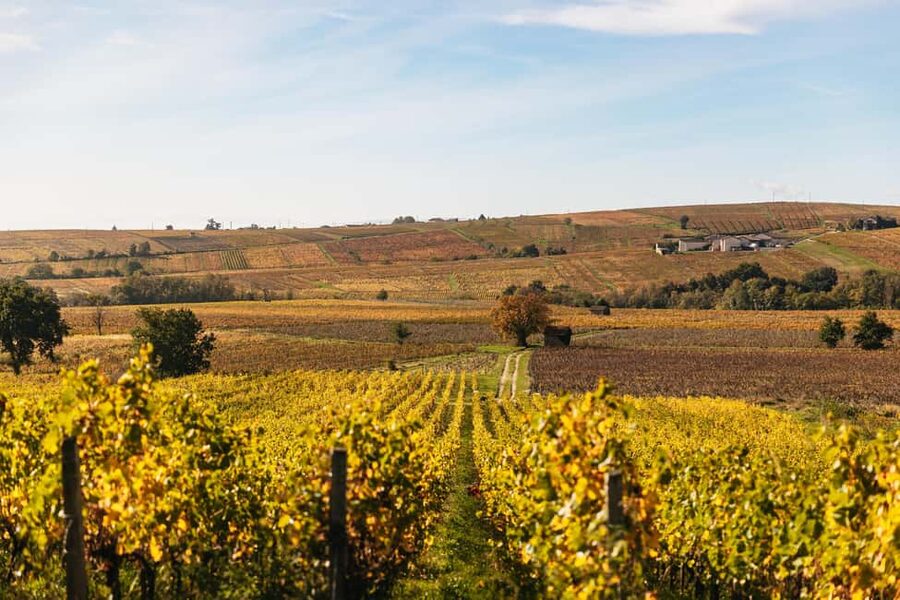
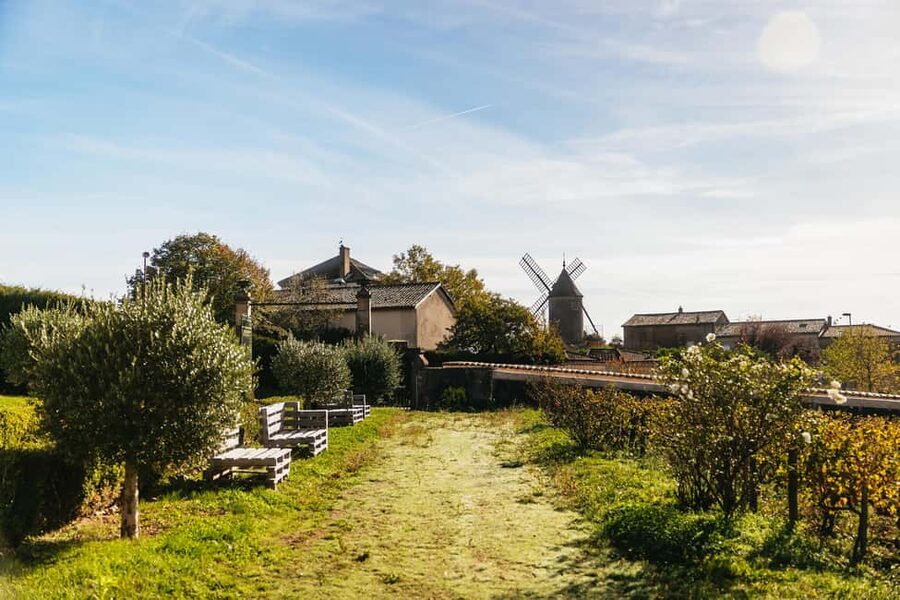
Beaujolais is close enough to Lyon for a practical country outing, yet it feels markedly different from the city. The route follows the celebrated Wine Route through rolling vineyards, stone villages, and named appellations. You may pass through or taste wines connected with Morgon, Moulin-à-Vent, and Fleurie, all well-known parts of the region.
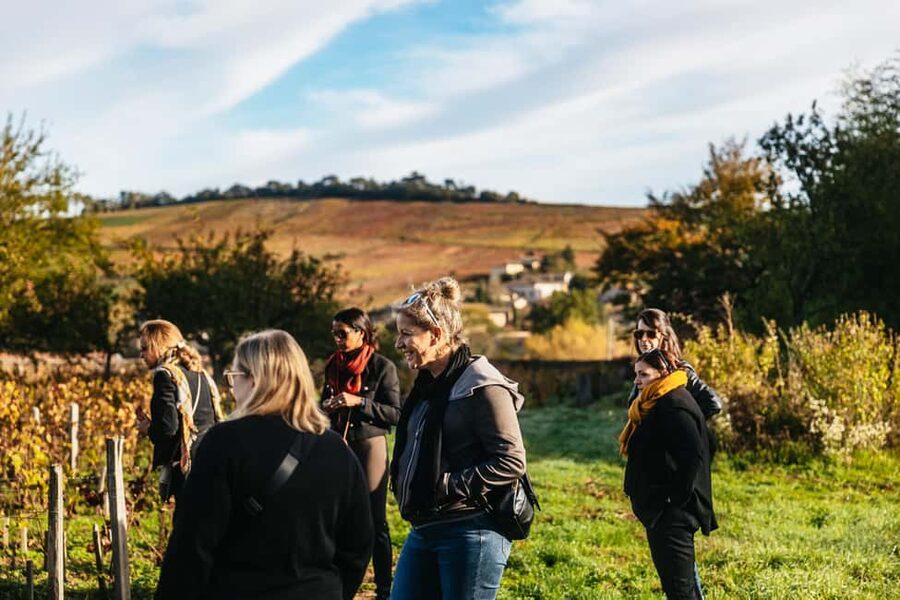
The scenery is not filler between tastings. Vineyards climb and fold over the hills, with views that change as the minivan turns through the countryside. Several visitors particularly enjoyed the views from the vineyards, and that is one reason I would choose this tour over a tasting in Lyon itself.
The geology is also central to the story. The tour explains the idea of terroir, the way soil, slope, climate, and local practice shape the wine. You do not need to arrive with technical wine knowledge. The useful question is simple: how can two vineyards only a few kilometers apart produce noticeably different bottles?
That question becomes easier to answer once you visit the estates. Instead of hearing only a general lecture, you can connect the explanation to a particular cellar, vineyard, or bottle. This makes the outing suitable for curious beginners as well as people who already know their French appellations.
The first winery: where the working estate comes alive
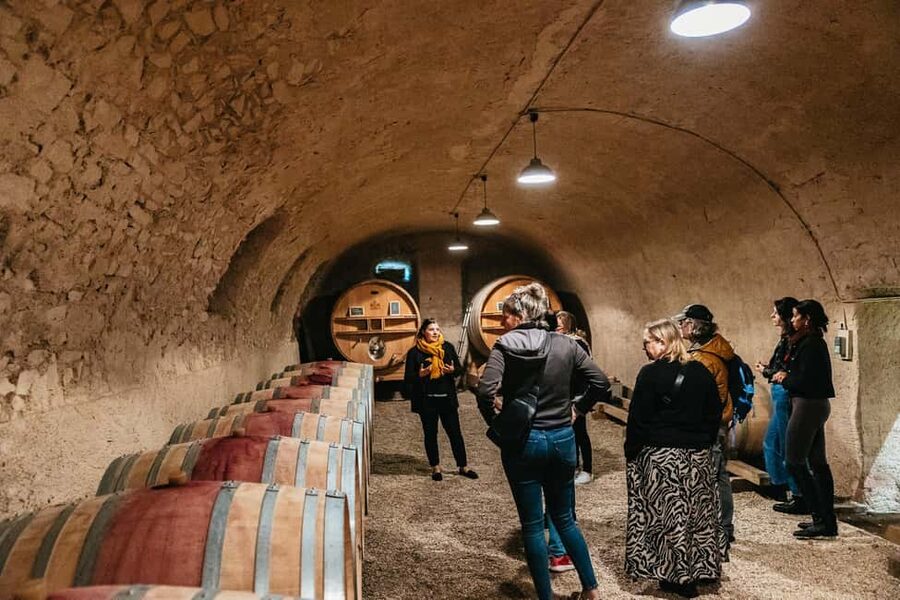
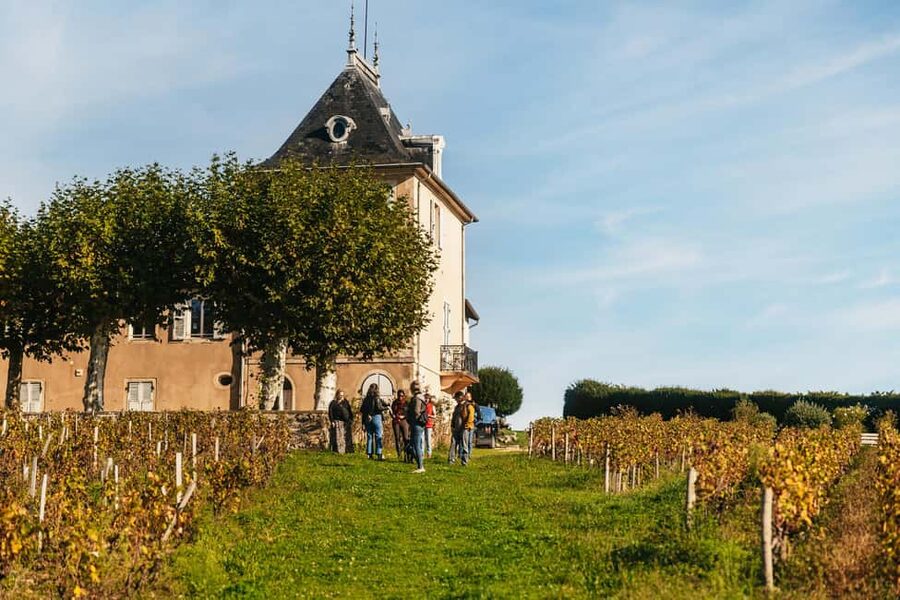
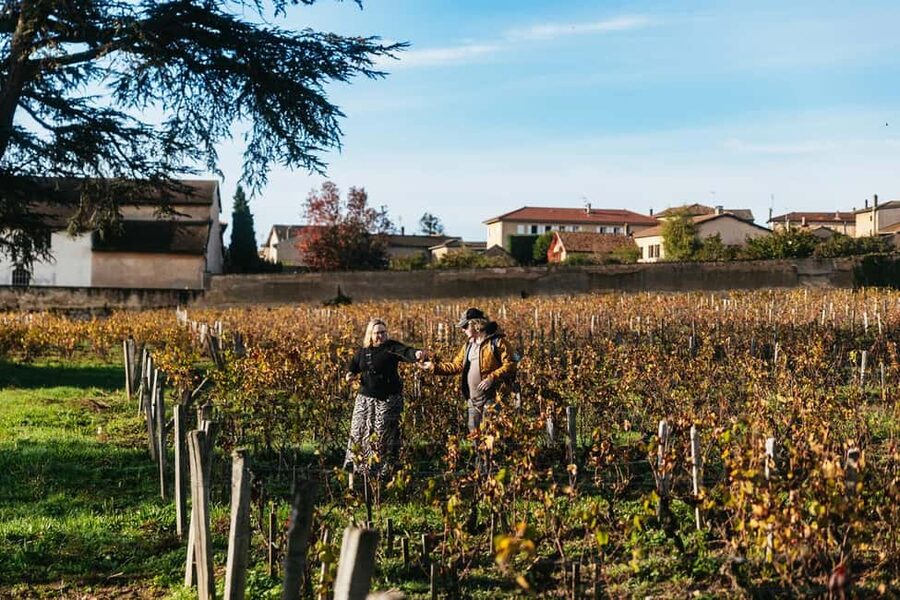
The first estate is often the more detailed stop. Depending on the day, you may walk among the vines, see the cellar, and hear the owner explain the family’s work and methods. The exact winery can vary, but the repeated pattern is clear: you meet a producer rather than only a tasting-room employee.
That personal contact is a major strength. At one visit, Denis of Château Portier led the group to the vines, into the cellar, and through a substantial tasting. The experience included meeting the family’s dog and cat, small details that made the estate feel like a working home as well as a business.
Another first stop included a vineyard and cellar tour followed by a snack plate with the tasting. You should not count on a food pairing every time, since lunch is not part of the listed price, but a small accompaniment may appear at some estates.
This stop is where the tour earns its price. You are not merely handed a glass and told the name of the bottle. The winemaker can explain the work, family tradition, production choices, and view of the region. That creates a better understanding of why a family estate may taste different from a large commercial producer.
The pace can vary. Some winery visits are detailed and hands-on, while another may be closer to a traditional tasting session. I see that as a benefit rather than a flaw, because the contrast shows that there is no single Beaujolais experience.
The second stop: compare villages, bottles, and styles
The second winery gives the tour its comparison. The selected producers are connected with different appellations, so you can taste how the same broad region changes from one place to another.
Moulin-à-Vent and Fleurie may appear on the route, along with Morgon or another Beaujolais village. The exact sequence is not guaranteed, but the tour is designed around this idea of contrast. One estate might focus on the family story and cellar work, while the next gives a more direct tasting of several wines.
At a Moulin-à-Vent visit, the owner made a strong impression by welcoming the group and presenting the wines personally. At Fleurie, the combination of the village, vineyard setting, and tasting helped show why the appellation has such appeal. These are not identical stops repeated for convenience. The point is to place different wines and producers side by side.
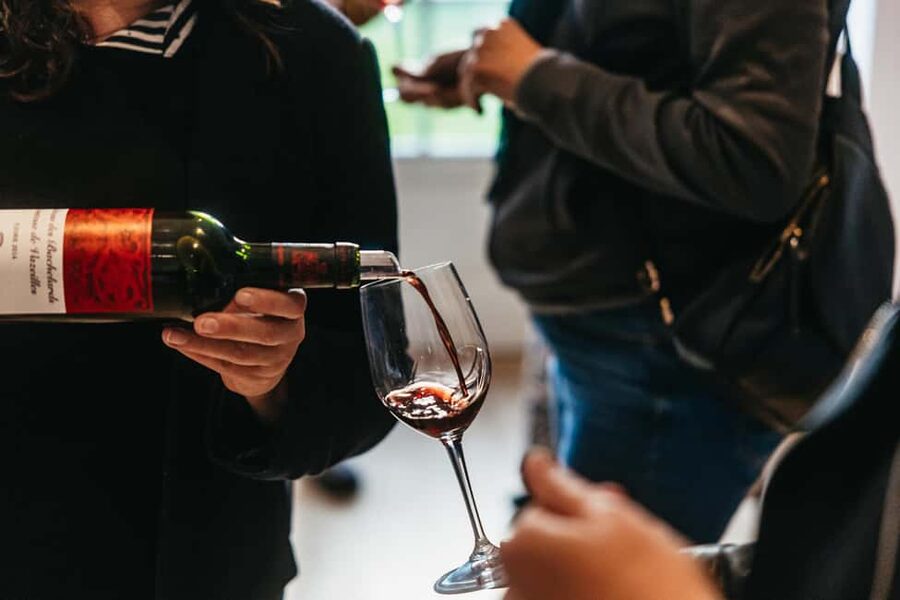
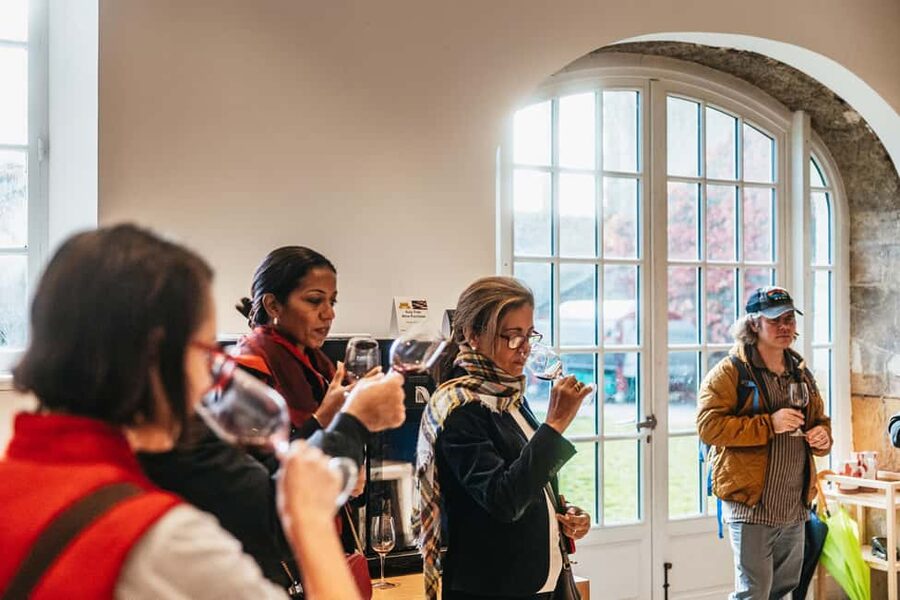
Expect several pours across the two estates. One earlier version of the outing included five wines at a winery, while another featured a white wine with food before a Beaujolais tasting. Since the stops can vary, I would treat the number and exact selection of wines as flexible rather than promised.
The tasting itself is not just about finding a bottle you like. Pay attention to aroma, acidity, body, and finish, then ask the guide how the soil or village affects the result. The English-speaking guides are there to translate both language and wine vocabulary into something useful.
Same vines, another glass to try:
- Bordeaux: River Garonne Cruise with Glass of Wine and Canelé
★ 4.5 · 3,630 reviews - Montmartre Hill French Gourmet Food and Wine Tasting Walking Tour
★ 5.0 · 2,588 reviews - Paris: Montmartre Cheese, Wine & Pastry Guided Walking Tour
★ 4.8 · 2,255 reviews - From Paris: Loire Valley Castles Day Trip With Wine Tasting
★ 4.6 · 1,727 reviews
What $116 buys you
At $116 per person, this is not the cheapest way to taste Beaujolais. It is, however, a fair price if you value transport, a small group, two winery visits, and a guide who can explain what you are drinking.
Driving yourself would require a designated driver, route planning, and the effort of finding estates that welcome visitors at suitable times. Public transport would not give you the same easy access to two family wineries in a four-hour window. The minivan also lets you enjoy the tastings without worrying about the road back to Lyon.
The price includes wine tastings, an English-speaking professional driver-guide, and air-conditioned transport. It does not include lunch, bottled water, or hotel pickup and drop-off. You meet in Bellecour Square and return there, so add the time and cost of reaching the square from your accommodation.
Food is the clearest extra expense. One experience included a generous charcuterie board, but that is not part of the standard inclusions. Eat something before you leave, or carry food for before or after the tour, since food is not allowed in the vehicle and lunch is not supplied.
Bring water with you for the day, though you cannot drink it in the vehicle if the operator’s rules are applied to all drinks. One hot-weather outing prompted a specific request for water to be included, so this is worth planning around. Comfortable shoes are also important for vineyard paths and cellar visits.
Why the four-hour schedule works, and where it falls short
Four hours is a good fit if you want a taste of the region without giving up most of your day in Lyon. A morning departure can leave your afternoon free for museums, the old town, or a long lunch. The tour also runs twice daily according to the information provided, so check the available start times when booking.
The schedule is efficient. You travel from Bellecour, receive commentary on the way, visit two wineries, taste several wines, and return to Lyon. There is little wasted time, which is useful for a short city break.
Still, I would not choose this if your main goal is to explore Beaujolais slowly. You will see vineyards and meet producers, but you will not have time for a long village lunch, an extended walk, or several extra estates. One participant wished the trip lasted longer, and that is a reasonable criticism.
The four-hour format is best understood as an introduction. It gives you enough context to decide if you want to return for a full day or visit more villages on another trip. If you already have a serious interest in Beaujolais, a longer private itinerary may offer more depth.
The guides make the difference
The driver-guide is a central part of the experience. You are relying on that person not only to drive the minivan, but also to explain the region, connect the two wineries, answer questions, and keep the schedule moving.
François is repeatedly praised for his friendly manner and clear explanations of Beaujolais and winemaking. Clotilde is noted for energy, passion, safe driving, and an ability to make the subject approachable. Amandine and Clotilde were also praised for explaining terroir and the differences between crus with warmth and care.
Raphael is described as energetic and well informed, while Clémence helped make the outing lively and easy to follow. Individual styles will vary. One guide was described as less chatty, but still helpful and ready to answer questions. That is worth keeping in mind if you want constant conversation throughout the drive.
I would bring a few questions of your own. Ask which village the wine comes from, why the producer chose a particular method, and what food would suit the bottle. A small group makes this much easier than a large coach tour.
Who should book this Beaujolais tour?
I would recommend it most strongly to:
- Wine drinkers who want to understand Beaujolais beyond a familiar bottle of young red wine.
- First-time visitors to Lyon who want a countryside outing without arranging a car.
- Couples, families with adult children, and small groups who appreciate a personal visit.
- Beginners who prefer clear explanations instead of a technical wine lecture.
- People with only half a day available.
It is also a good choice if you value meeting producers. The family estates are not just backdrops for photographs. They give you a chance to hear how wine is made, see where it is produced, and understand the human side of the business.
I would be more cautious if you need wheelchair access. The tour is not suitable for wheelchair users, and the combination of minivan travel, vineyard paths, and cellar visits may not work for every mobility level. Baby strollers are not allowed, and electric wheelchairs are also excluded.
Pets are not allowed, though assistance dogs are permitted. Smoking, food, drinks, and alcoholic drinks are not allowed in the vehicle. These rules are easy to follow, but they make it even more important to eat and hydrate before departure.
Booking, cancellation, and small practical details
You can cancel up to 24 hours before departure for a full refund. The reserve-now, pay-later option helps if your Lyon plans are still shifting, though you should still check the available start time before committing.
The tour is in English and shared with a maximum of eight participants. It begins at the Tourist Office in Bellecour Square, not at your hotel, so plan your route and arrive 10 minutes early.
Wear shoes you can walk in comfortably. The tour is not a mountain hike, but vineyards and cellars are working places, not polished city streets.
Should you book it?
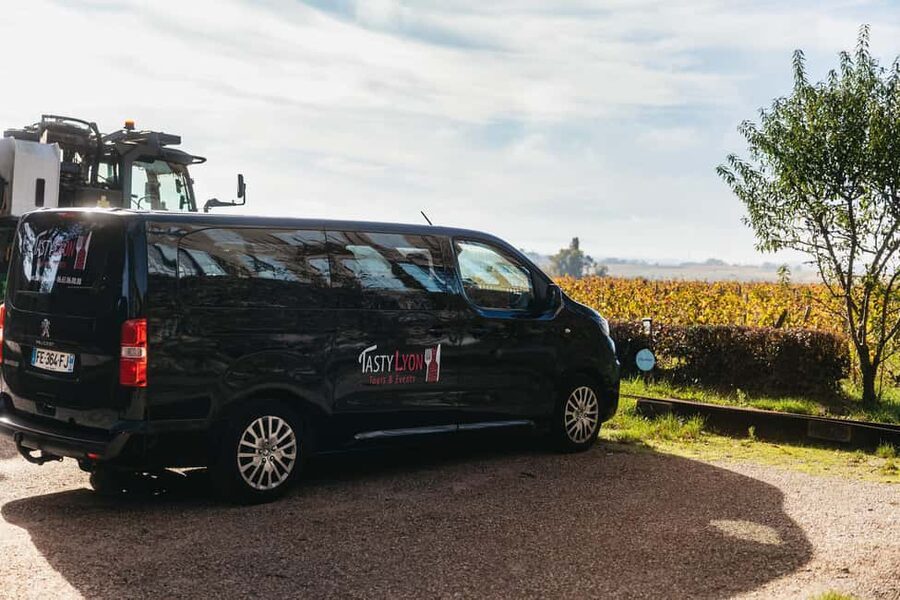
Book this tour if you want an easy, well-organized introduction to Beaujolais with real producers, several tastings, and beautiful hills close to Lyon. The small group, air-conditioned minivan, and strong guide lineup make the $116 price reasonable for a half-day outing.
Skip it if you want a full day in the wine country, a guaranteed meal, or a highly customized private route. For most visitors with limited time, though, this is a smart way to get beyond Lyon’s city center and taste the region where Gamay comes to life.
FAQ
Where does the Beaujolais wine tour meet?
The meeting point is in front of the Lyon Tourist Office, in the middle of Bellecour Square.
How early should I arrive?
You should be at the meeting point 10 minutes before departure.
How long does the tour last?
The tour lasts four hours.
What language is the tour conducted in?
The live tour guide speaks English.
How many people are in the group?
The shared tour is limited to eight participants.
Is transportation included?
Yes. Transport is provided in an air-conditioned minivan with a professional driver-guide.
Which wines and appellations might I taste?
The route may include wines from Beaujolais appellations such as Morgon, Moulin-à-Vent, and Fleurie. Tastings focus on the region’s Gamay-based wines, with selections varying by winery.
Are winery visits included?
Yes. The tour includes visits to two wineries, where you can meet winemakers, learn about their methods, and taste their wines.
Is lunch included?
No. Lunch is not included. Bottled water is also not included.
Can I cancel for a refund?
Yes. You can cancel up to 24 hours in advance for a full refund.
Freshly poured around France
- Private Tasting in Beaune : The Best of Burgundy Wines★ 4.9 · 66 reviews
- Semi Private Solar Boat Cruise in Champagne★ 4.9 · 32 reviews
- Private tour of Paris by Night with Champagne★ 4.7 · 323 reviews
- Montpellier: Pic Saint-Loup Wine Tour★ 4.9 · 290 reviews
- Passy-Grigny: Chocolate and Champagne Tasting Tour★ 4.8 · 284 reviews
- Paris: Wine Tasting Experience with 6 Wines and Cheese Board★ 4.9 · 80 reviews
- Paris: Wine and Cheese Tasting with a Chef Sommelier★ 4.7 · 277 reviews
- Paris: Wine and Cheese Tasting★ 4.6 · 91 reviews
Lyon Wine Tours, side by side.
Lyon Old Town Food Tour with 6 French Delicacies & Fine Wine
Read our review →
From Lyon: Golden Stones Beaujolais Wine Tasting Tour
Read our review →
Taste Wine in Lyon: Burgundy, Beaujolais, Rhône, and more
Read our review →
Lyon: Old Town Food Tour with 6 French Food Tastings & Wine
Read our review →
From Lyon: Beaujolais Wine Route Half-Day Tour
Read our review →
Lyon Old Town Food Tour: Full French Meal with Wine
Read our review →
Lyon: City Cruise with Charcuterie, Cheese, and Wine
Read our review →
Lists this tasting sits in