
Review · FLORENCE
Florence: Handmade Pasta & Dessert Class with Unlimited Wine
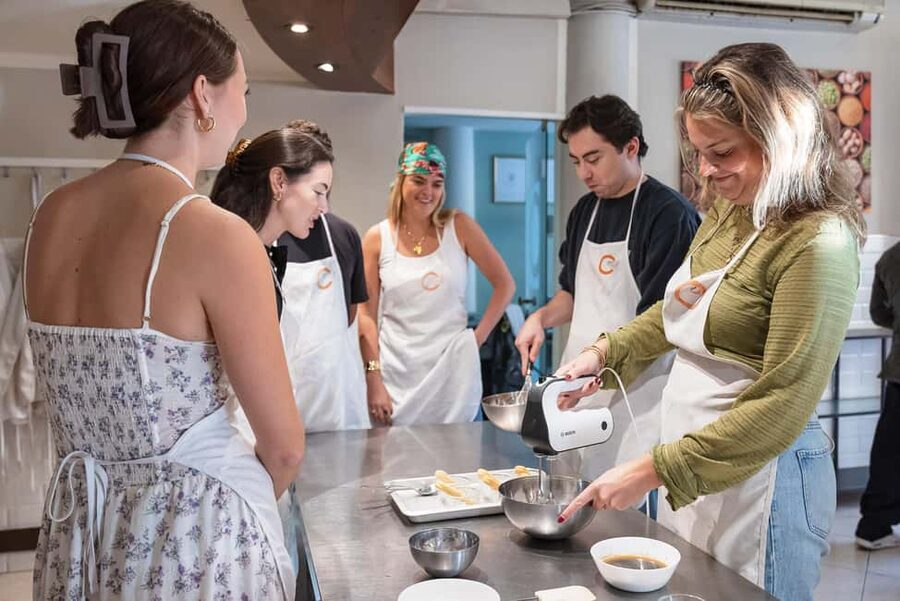
Florence is a fine place to learn pasta because the lesson quickly moves from flour and eggs to a full Italian meal. You make three kinds of pasta and three sauces, then sit down to eat them with dessert, water, and unlimited Tuscan wine. Guides such as Francesco, Catarina, Noemi, and Giacomo have been praised for clear demonstrations, humor, and patient help.
I like the generous amount of food and the recipe booklet you take home. I also like the class setup, with roughly one chef for every 15 people, which gives you real time at the table instead of watching from the back. The main thing to consider is the pace: you must arrive on time, and standing for much of the class can be tiring.
What makes this Florence pasta class worth your time
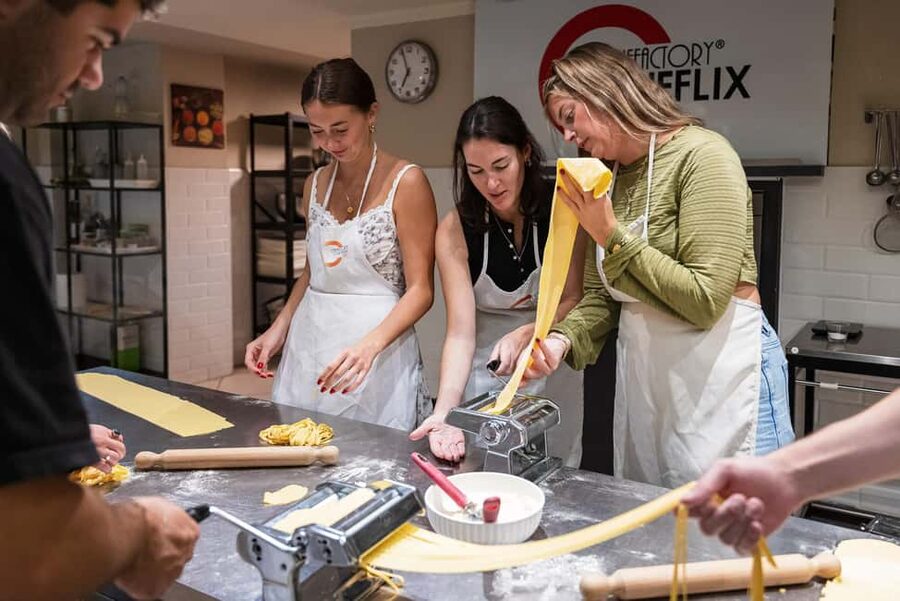
- Three pasta shapes in one lesson: Make dishes such as fettuccine, spinach and ricotta ravioli, and gnocchi.
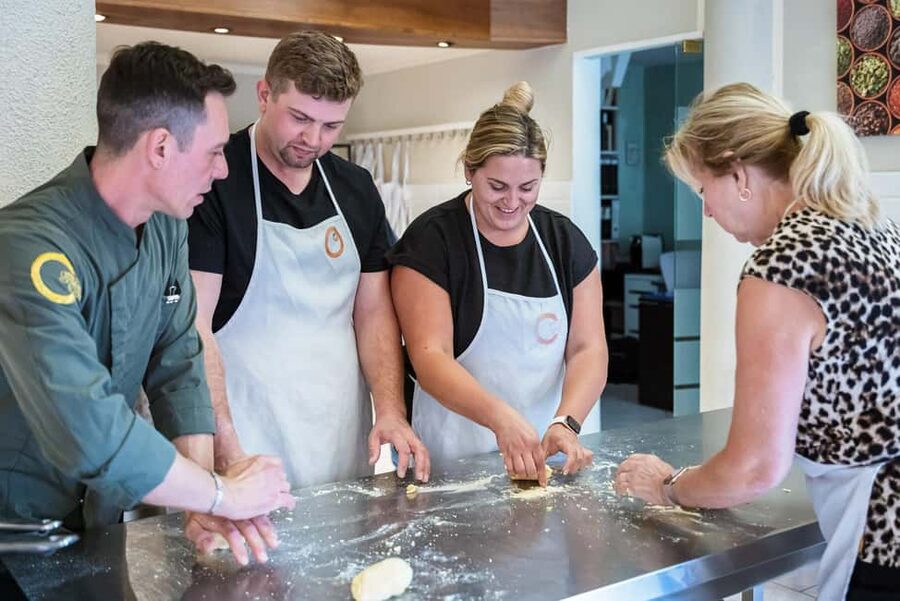
- Hands-on from start to finish: Knead, roll, fill, cut, and shape the pasta yourself, using both a rolling pin and a pasta machine.
- A full meal after the work: Eat the pasta and sauces you prepared, along with dessert and unlimited Tuscan wine and water.
- Friendly multilingual teaching: Instruction is available in English, German, Italian, and Spanish. From November through March, the class is offered only in English.
- A recipe booklet for home: You leave with the recipes and practical pasta-making tips, so the lesson can continue in your own kitchen.
- Optional street-food extension: The full-day choice adds an afternoon tour of Florence specialties, including trippa and lampredotto.
Arriving at the Florence cooking school
The class meets at a cooking school in Florence city center, with staff available at the meeting point. Hotel pickup and drop-off are not included, so you need to make your own way there and allow extra time to find the school.
That last point matters. One participant found that the walk from the meeting point to the cooking location, combined with waiting for the meal, made the total outing closer to four hours rather than three and a half. The advertised cooking time is three hours, but your day may stretch beyond that.
Do not cut it close. If you arrive late, you cannot join the group, receive a refund, or reschedule. Comfortable shoes are required, and they are a sensible choice since you will spend much of the session standing and moving around the worktable.
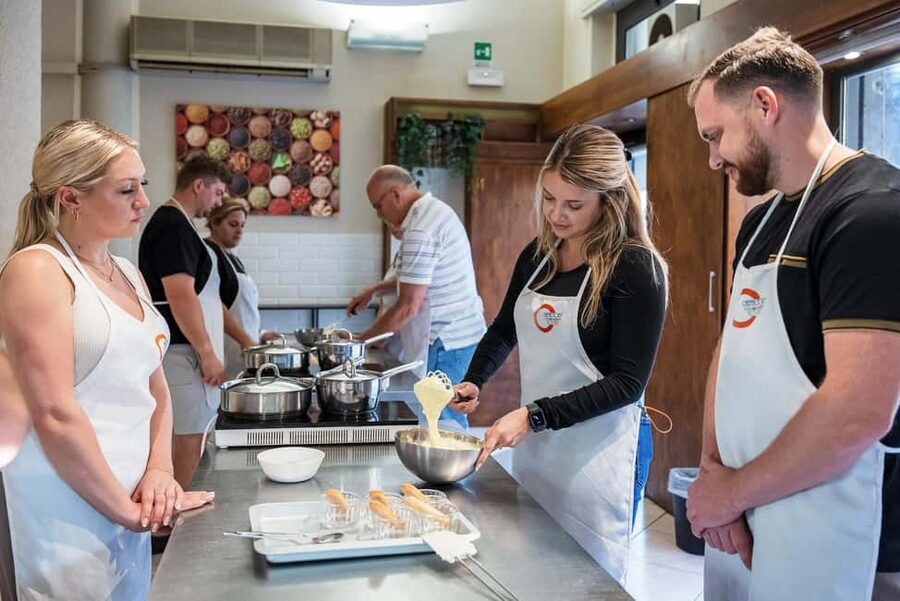
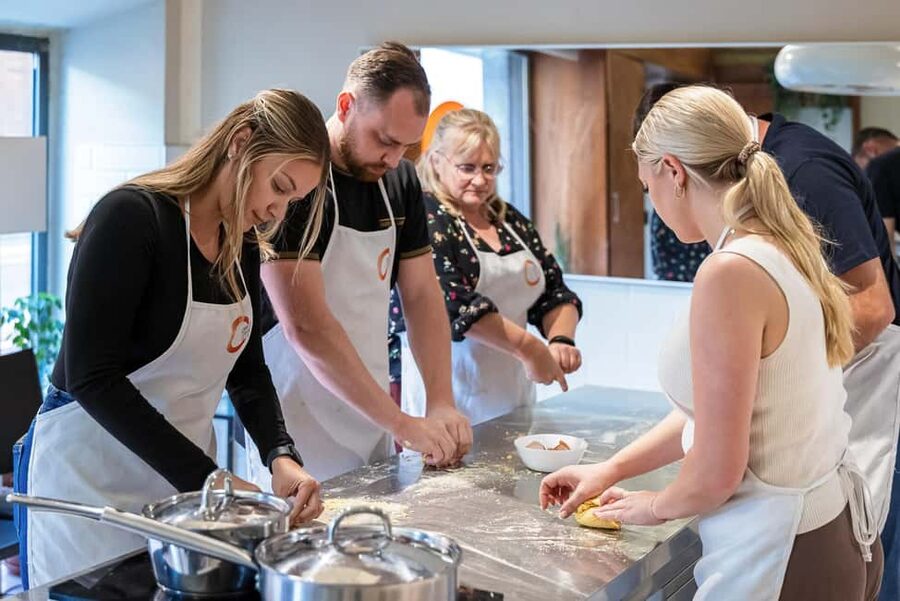
The class is designed for small groups, though the total group can be around 20 people, split among several tables. The practical advantage is the table-level help. A chef for about every 15 participants means you should have someone nearby when your dough feels too dry, your ravioli filling escapes, or your gnocchi needs a little more flour.
More wine tours around Florence:
- Tuscany Day Trip from Florence: Siena, San Gimignano, Pisa and Lunch at a Winery
★ 5.0 · 21,634 reviews - Florence: Pasta Cooking Class with Unlimited Wine
★ 4.9 · 10,285 reviews - Florence: Chianti Wineries Tour with Wine Tasting
★ 4.5 · 10,071 reviews
Mixing, kneading, and rolling fresh pasta
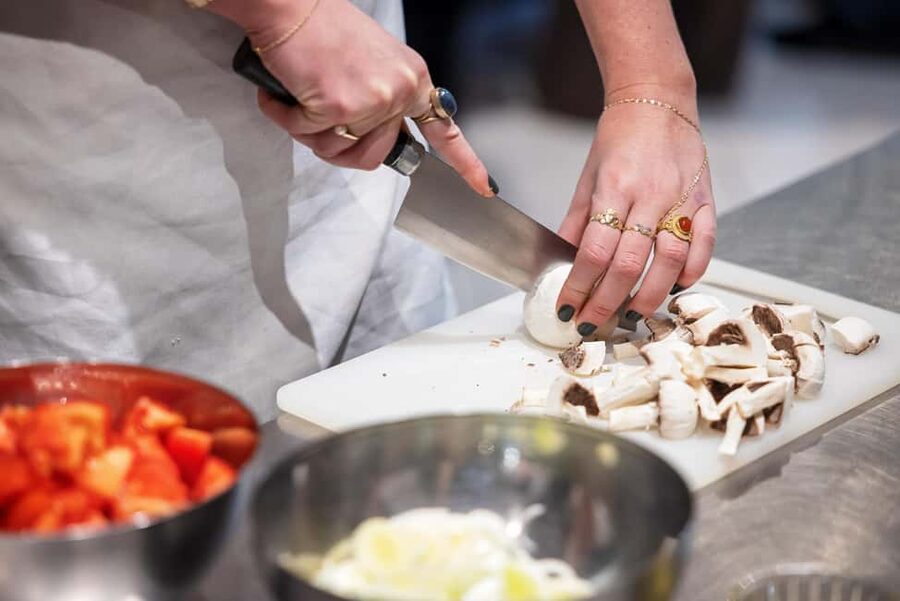
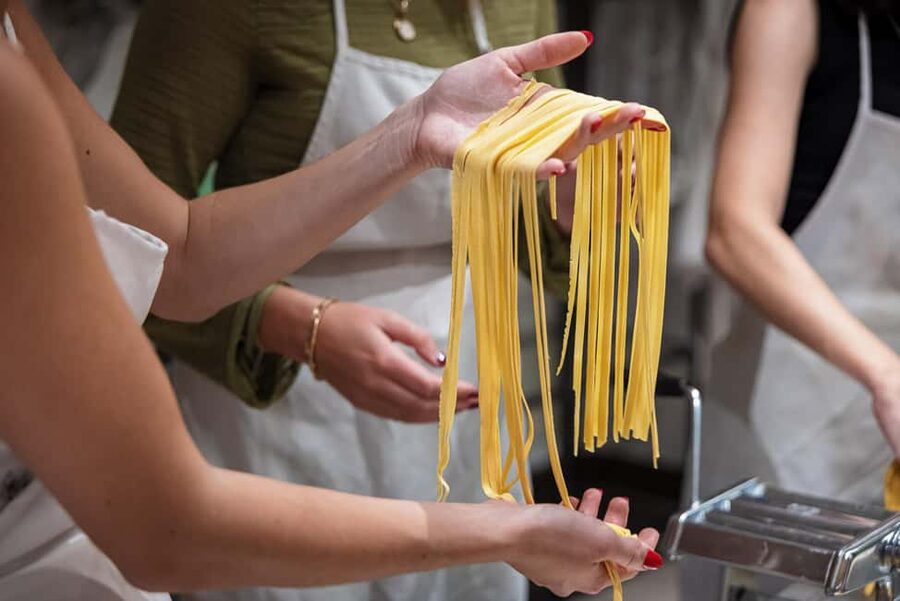
The heart of the class is the pasta dough. You work with traditional methods rather than simply watching a chef prepare a finished dish. The instruction covers rolling with a pin and using a pasta machine, which gives you two useful techniques to repeat at home.
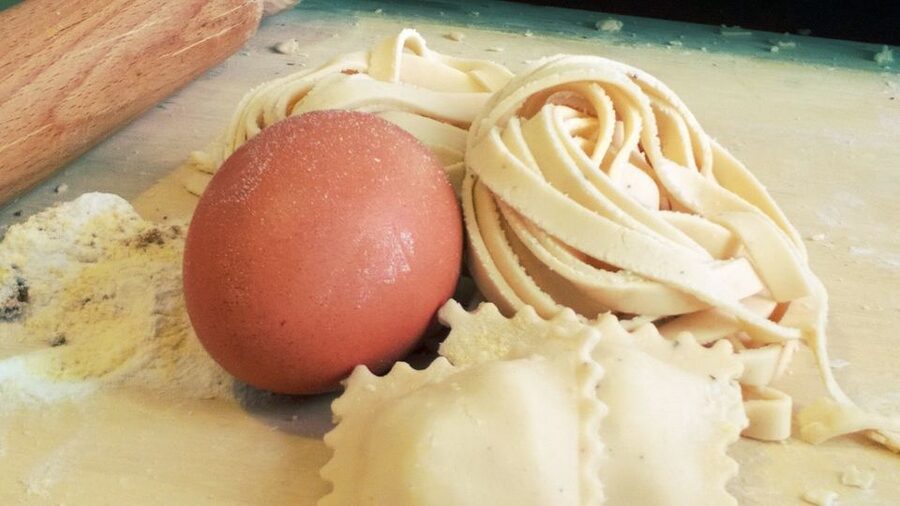
The order and exact recipes can vary, but the class commonly includes fettuccine, ravioli, and gnocchi. Several participants specifically worked with spinach and ricotta ravioli, fettuccine, and gnocchi with ragù. That combination gives you a good range of Italian pasta skills: cutting long pasta, filling and sealing pasta, and handling a potato-based dough.
Each shape has its own small lesson. Fettuccine teaches you to roll and cut evenly. Ravioli rewards careful filling and sealing, since too much moisture or trapped air can split the pasta. Gnocchi has a different feel altogether, and learning when the dough is ready is one of the most useful parts for a home cook.
You are not expected to arrive with pasta-making experience. The chef demonstrates each stage before you try it. Guides including Francesco and Catarina have been singled out for making the process easy to follow while keeping the room lively. The approach is practical, with cooking tips you can use later rather than a long lecture about Italian food.
The class also has a social side. You work at a shared table with people from different countries, and cooking gives you an easy reason to talk. Solo participants are placed with other small groups, while families and friends can work together. It is a good change of pace after several hours of museums and churches.
Three sauces turn the lesson into dinner
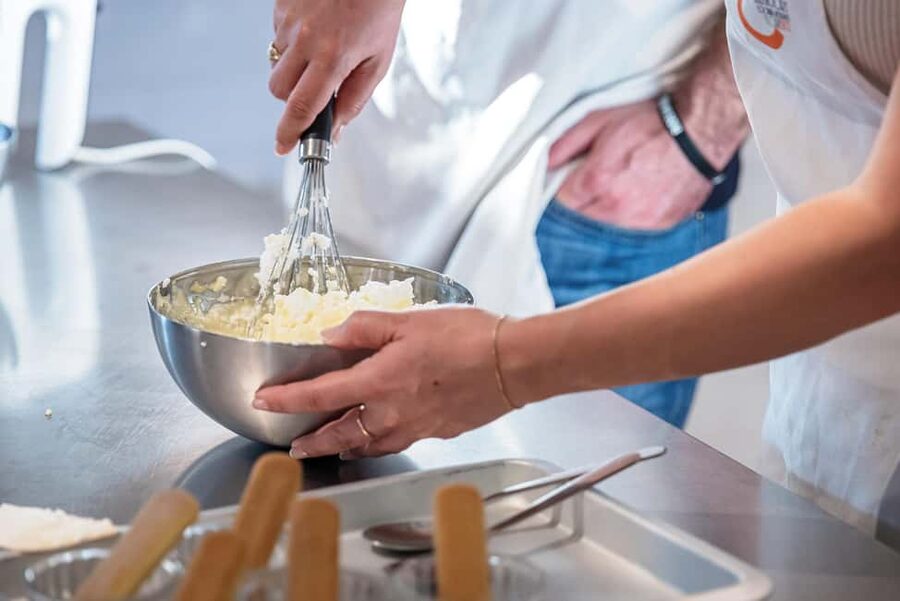
Making pasta is only half the useful part of this experience. You also help prepare three sauces, then taste how each one changes the pasta.
The dishes described by participants have included ragù with gnocchi, a beef and pork ragù with fettuccine, and sauces for spinach and ricotta ravioli. The exact menu is not fixed in the supplied details, so you should think of the class as a set of traditional pasta and sauce lessons rather than a guaranteed restaurant menu.
This variety adds value. You learn that fresh pasta is not just one recipe repeated three times. A sauce for long strands needs a different balance from one served with filled pasta, while gnocchi calls for a sauce that coats its soft, ridged pieces. The chef can also explain small choices that affect the final dish, such as dough texture, pasta thickness, and how to combine sauce and pasta.
Vegetarian needs can sometimes be handled. One class prepared a separate sauce for a vegetarian participant when one of the sauces contained meat. Still, you should confirm your needs when booking rather than assume every dietary request can be accommodated.
People with severe and contact celiac disease cannot attend because of the risk of contamination. This is an important restriction, not a minor menu adjustment. If you have another allergy or dietary concern, ask before booking.
Dessert and the meal you helped create
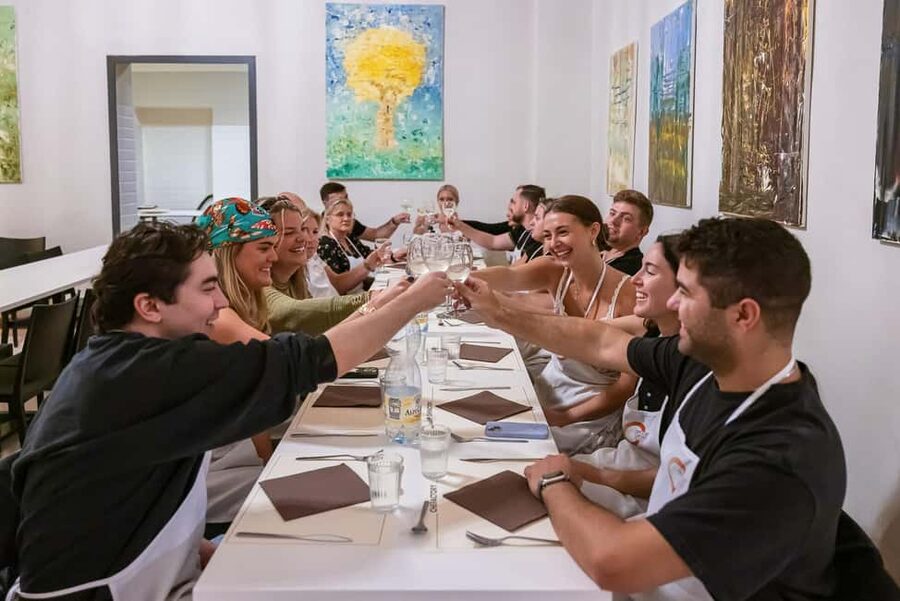
Once the pasta is prepared, the class becomes a meal. You sit down to eat the dishes made during the lesson, along with an Italian dessert. Panna cotta with red berry topping has appeared on the menu, though the dessert may change.
The dessert is not the main reason to book. One participant found it less impressive than the pasta, while the pasta dishes received the strongest praise. Still, it rounds out the experience and lets you finish with something sweet without finding another restaurant afterward.
Portions are generous. Several people left very full, and the meal can be a substantial lunch or dinner rather than a small tasting. That makes the $74 price easier to assess. You are paying for a three-hour lesson, ingredients, equipment, an apron, a chef, a recipe booklet, a full meal, and unlimited wine and water. Compared with a simple pasta dinner, it costs more. Compared with a cooking lesson followed by a full meal and drinks, it is a solid value.
The wine is part of the atmosphere, not a separate tasting course. You can drink Tuscan wine throughout the meal, with water also provided. The setup suits a relaxed group dinner, though anyone hoping for a quiet, formal meal should choose a restaurant instead.
Same vines, another glass to try:
- Small-Group Wine Tasting Experience in the Tuscan Countryside
★ 5.0 · 7,392 reviews - Florence: Pasta & Tiramisu Cooking Class with Unlimited Wine
★ 4.9 · 6,708 reviews - Florence: Pasta Cooking Class with Unlimited Wine
★ 5.0 · 6,413 reviews - Pisa, Siena and San Gimignano Day Trip with Lunch & Wine Pairing
★ 4.5 · 6,006 reviews
The chefs make a real difference
The quality of a group cooking class depends heavily on the person leading it. Here, the teaching style appears to be a major strength.
Francesco is described as engaging, funny, and clear. Catarina has been praised for answering questions and keeping the table involved. Noemi led a class that included spinach and ricotta ravioli, gnocchi, fettuccine, two meat-based ragù preparations, and panna cotta. Other names include Giacomo, Floura, Jack, Franchesca, and Romina.
Because the teaching team changes, you should not book on the promise of one particular chef unless the operator confirms that person will lead your session. What you can reasonably expect is a multilingual local chef who demonstrates each step, helps at the tables, and keeps the class moving.
The humor matters more than it may sound. Dough work can become messy, and a group can lose confidence when the first ravioli looks uneven. A relaxed teacher helps you keep going. You are there to learn and eat, not produce competition-level pasta.
Choosing lunch, dinner, or the full-day option
The schedule depends on the option and day selected. Monday through Friday courses include dinner, while Tuesday, Thursday, and Saturday options include lunch. Check the exact starting time and meal arrangement before paying, especially if you have museum reservations or a train to catch.
A lunch class can fit nicely between sightseeing plans, but allow more than the stated three hours for the class, eating, and the walk from the meeting point. A dinner class may be easier to enjoy without watching the clock, though it takes up a full evening.
The full-day choice adds an afternoon guided street-food tour after the morning cooking class. This is aimed at people who want a food-centered day rather than a short lesson. The street-food portion includes local specialties and the chance to try trippa or lampredotto, two Florence classics that are far more specific to the city than another plate of pasta.
Lampredotto is made from the fourth stomach of a cow and is one of Florence’s best-known street foods. Trippa is also a traditional tripe dish. Neither is an automatic crowd-pleaser, but the tour gives you a guided way to try them. If offal is not for you, check what alternatives are available before choosing the extension.
The full-day option also requires more energy. You will already have been standing, cooking, and eating in the morning. Choose it if food is one of your main reasons for visiting Florence, not simply because it looks like a bargain add-on.
Who should book this class?
This is a strong choice for families with children eight and older, couples, friends, and solo visitors who enjoy meeting people over food. Teenagers have done well with the hands-on format, and adults ranging from young adults to older parents can share the work at the table.
It suits beginners especially well. You do not need a pasta machine at home, since you use one during the class, and you also learn the rolling-pin method. The recipe booklet gives you a useful starting point once you return home.
It is less suitable if you have trouble standing for long periods. The experience is not wheelchair accessible, children under eight cannot attend, and pets are not allowed. People with severe or contact celiac disease should not book because of cross-contamination risk.
You should also consider your attitude toward group activities. This is not a private chef lesson. You will share equipment, coordinate tasks, and eat with other people. That is part of the appeal for many participants, but it can feel busy if you want one-on-one instruction or complete control of the menu.
Practical value at $74 per person
At $74, this class is not the cheapest way to eat pasta in Florence. It is priced as a combined activity and meal, with unlimited wine and water included.
The value is strongest if you care about learning a repeatable skill. You get hands-on time with three pasta styles, three sauces, a dessert, ingredients, tools, an apron, chef instruction, and recipes to take home. You also avoid paying separately for a lunch or dinner after the class.
I would not book it only for the wine. Nor would I choose it if the sole goal is sampling rare Tuscan dishes. Book it because you want to cook, eat a large meal, and spend several social hours away from the usual sightseeing circuit.
Free cancellation is available up to 24 hours before the activity, and you can reserve now and pay later. Those policies help if your Florence schedule is still changing, but they do not protect you from arriving late. The no-late-entry rule is firm.
Should you book the Florence pasta class?
Book this experience if you want a practical cooking lesson with a generous meal and a friendly group setting. The strongest reasons are the hands-on work, the range of pasta shapes, the recipes to take home, and the chance to eat what you make.
Choose a different activity if you need wheelchair access, cannot stand for long, require a strict celiac-safe kitchen, or dislike shared classes. Also skip the full-day option if you want a light morning rather than several hours of cooking followed by street food.
For most food-focused visitors, the $74 price is fair. You get more than a demonstration and more than a plate of pasta. You leave with techniques, recipes, a full stomach, and a better feel for how Italian home cooking comes together.
FAQ
How long does the Florence pasta class last?
The cooking class lasts three hours. Depending on the meal service and the walk from the meeting point to the cooking location, you should allow extra time.
What types of pasta will I make?
The class teaches three types of pasta. Common examples include fettuccine, spinach and ricotta ravioli, and gnocchi. The exact recipes may vary by session.
Is wine included in the price?
Yes. Unlimited Tuscan wine and water are included with the lunch or dinner.
What languages are available?
The chefs can teach in English, German, Italian, and Spanish. From November 1 through March 31, the cooking class is available only in English.
Can children attend the class?
Children under eight cannot attend. The class is suitable for older children and teenagers, though everyone should be comfortable standing and taking part in a group cooking activity.
Is the class suitable for someone with celiac disease?
People with severe or contact celiac disease cannot attend because of probable contamination. Ask about other dietary needs before booking, since some meat sauces may be replaced for vegetarian participants.
Freshly poured around Florence
- Private Flavors of Florence Walking Tour(Food&Wine Included)★ 4.8 · 46 reviews
- Florence: Val d’Orcia Wine Tasting & Lunch Small Group Tour★ 4.3 · 352 reviews
- From Florence: Ultimate Tuscany Day Trip with Wine & Lunch★ 4.8 · 221 reviews
- From Florence: Tuscany Vespa Tour with Lunch & Wine★ 4.8 · 54 reviews
- From Florence: Horse Ride and Wine Tour at Estate with Lunch★ 4.9 · 42 reviews
- From Florence: Tuscany, Siena, San Gimignano & Winery Lunch★ 4.7 · 184 reviews
- From Florence: Chianti Hills Half-Day Tour with Wine Tasting★ 4.5 · 703 reviews
- From Florence: Wine Tasting and Dinner in Chianti Vineyards★ 4.6 · 192 reviews
Florence Wine Tours, side by side.
Tuscany Day Trip from Florence: Siena, San Gimignano, Pisa and Lunch at a Winery
Read our review →
Florence: Pasta Cooking Class with Unlimited Wine
Read our review →
Florence: Chianti Wineries Tour with Wine Tasting
Read our review →
Small-Group Wine Tasting Experience in the Tuscan Countryside
Read our review →
Pisa, Siena and San Gimignano Day Trip with Lunch & Wine Pairing
Read our review →
SMALL-GROUP Wine Safaris: Tuscan Wine Tasting Tours from Florence
Read our review →
Winner 2025 Florence Sunset Food & Wine Tour by Eating Europe
Read our review →
From Florence: Siena, San Gimignano, Pisa & Lunch at Winery
Read our review →Lists this tasting sits in