
Review · BRATISLAVA REGION, SLOVAKIA
Bratislava: Wine Tasting with Sommelier
Slovakia’s best wines are waiting below a historic Bratislava cellar, not in a far-off vineyard. At the Slovak National Collection of Wines, you can sample bottles selected from the country’s six wine-growing areas while an English-speaking sommelier explains what is in your glass. The cellar is part of the Museum of Viticulture and Enology in Apponny Palace, right in the city center.
I like the personal wine selection, since the sommelier can steer you toward dry, sweet, white, rosé, or red wines that fit your taste. I also like the value: the $22 price includes a choice of three or five generous samples, while longer programs let you explore far more of Slovakia’s top 100 wines. The main drawback is that the tasting can feel brief or slightly awkward if you are alone, and there are no snacks.
Key points at a glance
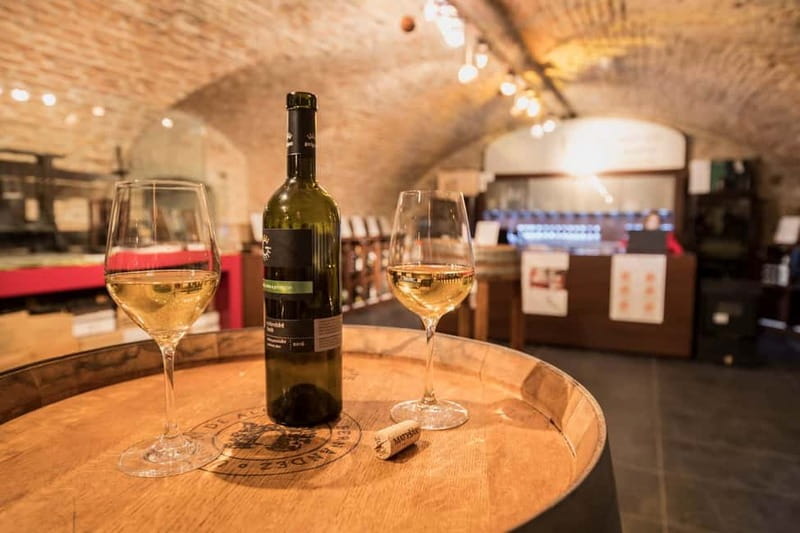
- Six Slovak wine-growing areas: Taste wines from across Slovakia without leaving central Bratislava.
- A real cellar setting: The tasting takes place underground in the Museum of Viticulture and Enology at Apponny Palace.
- Three tasting levels: Choose three wines, five wines, or a longer session with up to 72 wines available.
- A sommelier-led experience: English-speaking hosts explain grapes, regions, aromas, and flavor notes.
- Generous value at $22: The price is especially attractive for the five-wine option, according to the supplied booking information.
- No food included: Eat before or after, since this is a wine tasting rather than a wine-and-cheese pairing.
What you are really getting for $22
At $22 per person, this is one of the easier Bratislava activities to fit into a sightseeing day. You are paying for wine, the cellar setting, and personal guidance rather than for a long formal tour. That distinction matters.
The basic program lasts about 30 minutes and includes three samples. A five-wine session lasts around 45 minutes, while the longest option can run to 100 minutes. Exact timing depends on the program you select and current availability.
I see the five-wine option as the sweet spot for most visitors. Three wines give you a quick introduction, but five allow a clearer comparison between styles and regions. The longer session is better for anyone with a serious interest in Slovak wine, though you do not need to taste all 72 available bottles. The selection is there to give the sommelier room to build a tasting around your preferences.
The samples are not described as tiny sips. Several people found the pours generous, which helps explain why the five-wine program feels like good value. One practical note: snacks are not included, so do not arrive expecting bread, cheese, or a full pairing menu.
More Sommelier-Led Tastings in the world:
- Private Wine Tour with Wine Expert to Stellenbosch-Franschhoek Wine Regions
★ 5.0 · 693 reviews - Paris: French Wine Tasting Class with Sommelier
★ 4.8 · 550 reviews - Porto: Douro Valley Wine Tour with a Sommelier & Boat Trip
★ 5.0 · 463 reviews
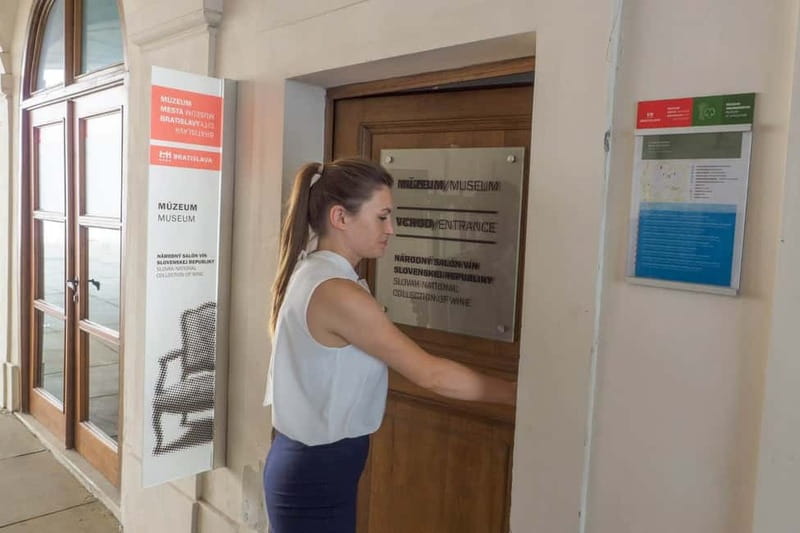
Entering the cellar at Apponny Palace
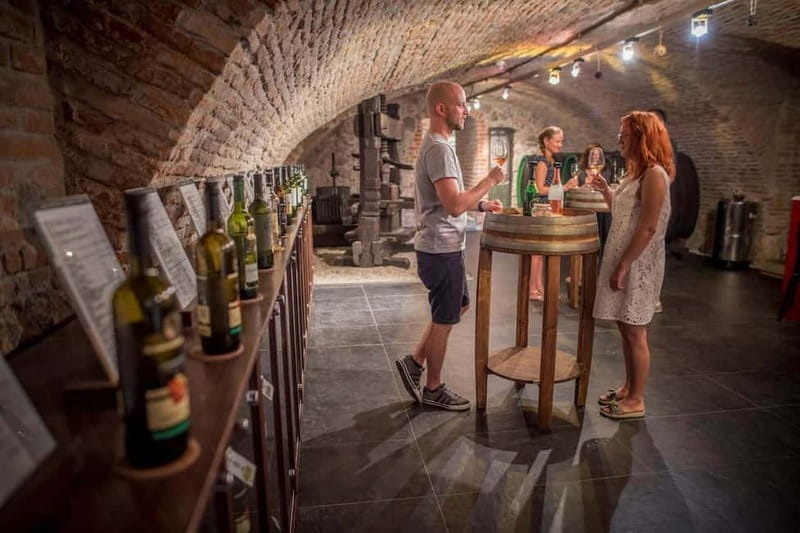
The venue is part of the Museum of Viticulture and Enology in Apponny Palace. You meet in a stylish historic cellar, surrounded by Slovak wine rather than sitting in a modern bar designed for tourists. The underground setting gives the experience a sense of place, especially if you have spent the day seeing Bratislava’s streets and palaces above ground.
The cellar is one of the strongest parts of the activity. It is attractive without needing much decoration, with barrels and bottles helping set the mood. One person described the room as pretty and well decorated, while another appreciated learning about the tunnels and cellars beneath the city and how they were used during periods of occupation.
Finding the entrance may take a moment. The location is central, but it is not necessarily obvious at first glance. Give yourself a little extra time rather than arriving at the last minute. Once inside, the atmosphere is calm and removed from the traffic of central Bratislava.
There is one comfort issue to keep in mind. The tasting may take place standing beside a barrel, and seating is not guaranteed. For a short three-wine session, this is minor. For a longer program, standing could become tiresome.
How the wine tasting unfolds
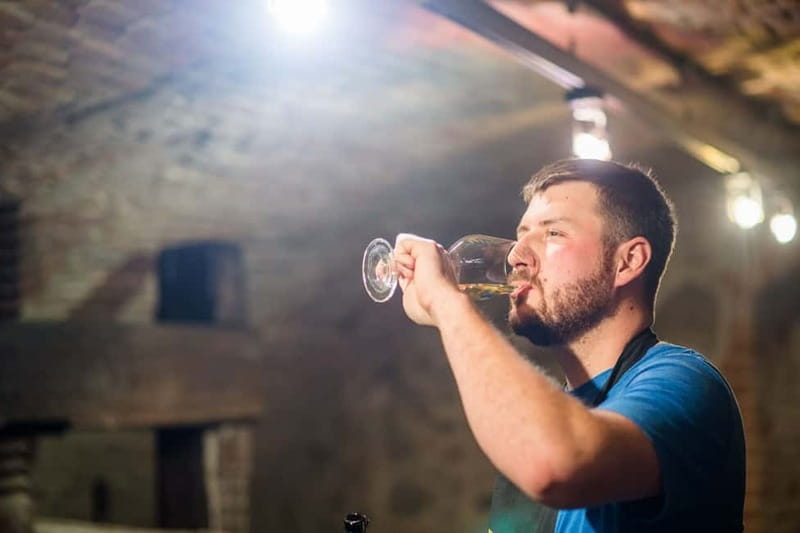
The sommelier begins by asking what you like. That simple question shapes the session. If you usually drink crisp whites, fuller reds, sweeter wines, or something lighter and fruitier, say so. The selection is not meant to be identical for every person.
You then taste wines from Slovakia’s national collection. The wines have been selected by oenologists, sommeliers, winemakers, and the National Wine Salon of the Slovak Republic. The collection presents the top 100 Slovak wines, with choices representing six wine-growing areas.
Before each pour, the sommelier explains the wine’s grape, region, and expected character. You may hear about its sensory qualities, including aroma, body, sweetness, acidity, and finish. The point is not to test your wine vocabulary. It is to give you a useful way to notice what is in the glass.
The best hosts keep the talk friendly and clear. Simon and Peter are two names associated with particularly strong sessions, and the English-language explanations are a major part of the experience. One host helped a visitor who rarely drinks wine understand the tasting process, while another was praised for adjusting the choices closely to personal preferences.
This is not a fixed speech delivered to a large crowd. The supplied details indicate that some sessions feel almost private, with the sommelier giving direct attention to the people at the table or barrel. That can be a real advantage if you want to ask questions or admit that you know very little about wine.
Choosing three, five, or more wines
The three-wine program is the quick introduction. It works well after a morning river cruise, before dinner, or during a compact afternoon in Bratislava. You still get a look at Slovak wine, but the explanations may be brief. If your main goal is simply to try local wine in a handsome setting, three samples may be enough.
The five-wine program gives you more range. A common selection can include whites, rosé, and red wine, though the exact wines depend on your preferences and the sommelier’s choices. Five wines provide a better sense of the country’s variety without making the activity take over your day.
The longest program gives you access to a much larger portion of the collection, with up to 72 Slovak wines to choose from. That does not mean you must drink 72 samples. The number describes the available selection, allowing the sommelier to create a longer and more focused tasting. This is the choice for wine fans, curious return visitors, or anyone who wants to compare several regions and grape styles.
Take your time if the schedule allows. One person felt that several wines were poured too quickly during a five-wine session, leaving little time to smell, taste, and think before the next glass arrived. The experience is better when you treat each sample as a small lesson rather than trying to finish the glass at once.
More Wine Tastings in the world:
- From Porto: Douro Valley w/ Boat Tour, Wine Tasting & Lunch
★ 4.7 · 19,061 reviews - Complete Douro Valley Wine Tour with Lunch, Wine Tastings and River Cruise
★ 5.0 · 12,920 reviews - Florence: Chianti Wineries Tour with Wine Tasting
★ 4.5 · 10,071 reviews - From Split: Krka Waterfalls, Food & Wine Tasting Tour
★ 5.0 · 9,326 reviews
Why Slovak wine makes this worth doing
Slovak wine is less familiar internationally than wine from neighboring Austria, Hungary, or the Czech Republic. That is part of the appeal. You may not see many of these bottles outside Slovakia, and one visitor specifically liked the chance to try wines that are not widely exported.
The national collection gives you a shortcut. Rather than trying to choose an unfamiliar bottle from a shop shelf, you can taste several styles and ask the sommelier what makes them different. You may leave with a clearer idea of which Slovak grapes and regions suit you.
The six wine-growing areas also add useful context. You are not tasting a random group of bottles. The session is designed to show some of the range within Slovak viticulture, from lighter wines to fuller reds and other styles selected for the national collection.
This is especially helpful if you do not normally drink wine. The experience does not require specialist knowledge, and the explanation can make wine less intimidating. You can ask basic questions, describe what you like in ordinary language, and let the sommelier translate that into a few sensible choices.
The strongest part is the sommelier
The cellar is attractive, but the sommelier makes the activity work. A good host turns a line of glasses into a story about grapes, soil, local production, and taste. The strongest feedback focused on hosts who were passionate, friendly, and able to explain tasting notes in clear English.
You should expect a conversational approach rather than a lecture. The sommelier may ask about your usual wine choices, then adjust the pours. That personal attention is useful for couples and small groups, especially when one person prefers dry whites and another prefers reds.
The activity can also suit beginners. One participant who does not usually drink wine still found the session educational, while others appreciated that the tone was informative without becoming too intense. You do not need to know the difference between a grape variety and a wine region before arriving.
The private feel has a small downside. If you are alone and no other booking joins your time, standing by yourself with the sommelier can feel a little formal or awkward. Couples and friends will probably find the format more natural, but solo visitors should know that this is not a lively communal tasting with a large table of strangers.
What could be improved
The main weakness is inconsistency in pace. A short tasting may be exactly what you want, but the five-wine program deserves enough time for each glass. If the pours come quickly, ask the sommelier to slow down. There is no reason to rush through wines you paid to taste.
The lack of seating is another consideration. The cellar looks good, but standing beside a barrel for the full session may not suit everyone. This matters most if you book the longest program or have mobility concerns. The supplied information does not promise seating or specific accessibility arrangements, so ask before booking if that is important for you.
There is also no food. Wine without snacks can be fine for a 30-minute visit, but a longer tasting is more comfortable if you eat beforehand. Do not count on buying or shipping bottles at the venue either. One person would have purchased wine but could not arrange shipping, and hand luggage made carrying bottles impractical.
Finally, the cellar may be quiet rather than lively. One person wished for music or more atmosphere. I would call this a matter of taste: the calm suits a serious tasting, but it may feel subdued if you want a social night out.
When to fit it into your Bratislava day
This tasting works well in the afternoon, especially after a river cruise or a morning spent walking through the old center. The cellar is in central Bratislava and close to the river dock, making it easy to combine with other sightseeing.
A three-wine session fits neatly between major sights. Choose five wines if you want the activity to be a proper part of your day rather than a quick stop. The longer option needs more commitment and is best reserved for a day when wine is one of your main interests.
The activity runs year-round, which makes it useful in cold or wet weather. You get an indoor cultural experience without leaving the city for a vineyard. It also offers a different side of Slovakia than castles, churches, and city viewpoints.
Book ahead if you have a preferred time, but the booking terms are flexible. You can cancel up to 24 hours before the activity for a full refund, and the reserve-now, pay-later option lets you keep your schedule open. Starting times vary, so check availability for your date.
Who should book this tasting
I would recommend it to couples, small groups, curious food and drink fans, and anyone looking for a distinctly Slovak activity in central Bratislava. It is also a good choice for beginners because the sommelier explains the wines without requiring prior knowledge.
It suits you particularly well if you enjoy trying local products that are not common at home. The national collection offers a chance to taste wines you may never encounter in an ordinary international wine bar.
I would be more cautious if you dislike standing, need a guaranteed seat, want food with your wine, or prefer a noisy social setting. Solo visitors can still enjoy it, but the private format may feel less relaxed when no one else is booked at the same time.
Should you book the Slovak National Collection tasting?
Yes, if you want an affordable introduction to Slovak wine without taking a day trip outside Bratislava. The historic cellar, central location, flexible tasting size, and personal English-language guidance make this a strong-value experience.
Choose three wines for a quick sample, five for the best balance, and the longest option only if you are genuinely interested in comparing many Slovak wines. Eat first, allow time to find the entrance, and ask for a slower pace if the pours arrive too fast.
For $22, this gives you more than a few glasses. You get a useful introduction to Slovakia’s wine regions and a chance to discover bottles that may be difficult to find elsewhere. That is a good deal, even if the room could use more seating and the tasting does not include snacks.
FAQ
Where does the wine tasting take place?
It takes place in the historic cellar of the Museum of Viticulture and Enology in Apponny Palace, in central Bratislava.
How much does the experience cost?
The listed price is $22 per person.
How long does the tasting last?
The available programs last from about 30 to 100 minutes. Check the available starting times and program length when booking.
How many wines can I taste?
You can choose a program with three samples, five samples, or a longer tasting with up to 72 Slovak wines available to choose from.
Are the wines all from Slovakia?
Yes. The experience focuses on Slovak wines from six Slovak wine-growing areas.
Is a sommelier included?
Yes. An English-speaking sommelier manages the tasting and explains the wines, including their sensory qualities and regional interest.
Is the tasting private?
The format can feel very personal, with the sommelier giving direct attention to your group. The supplied information does not promise a fully private booking for every time slot.
Are snacks included?
No. Snacks are not included in the activity.
Can I cancel my booking?
You can cancel up to 24 hours in advance for a full refund.
Can I reserve now and pay later?
Yes. The booking option allows you to reserve your place and pay later, helping you keep your plans flexible.
Freshly poured around the world
- Private Tasting in Beaune : The Best of Burgundy Wines★ 4.9 · 66 reviews
- Private tour of Paris by Night with Champagne★ 4.7 · 323 reviews
- Semi Private Solar Boat Cruise in Champagne★ 4.9 · 32 reviews
- Private Group Visit to Akrotiri & 3 Wineries with Tastings★ 4.2 · 42 reviews
- Private Flavors of Florence Walking Tour(Food&Wine Included)★ 4.8 · 46 reviews
- Pizza-Making Workshop by night with glass of wine★ 4.9 · 45 reviews
- Malaga: PREMIUM TAPAS TOUR Paella, Tapas, Winery & Flamenco★ 4.6 · 82 reviews
- Mendoza: Premium Wine Tasting★ 4.4 · 48 reviews