
Review · LISBON
Eat & Walk Through Lisbon: A Local Food & Wine Experience
Lisbon’s best food stories are often told in small taverns, pastry shops, and street stalls rather than in grand dining rooms. This three-hour walk takes you through Baixa for eight food tastings and four Portuguese drinks, pairing local bites with stories about the city’s rebuilding after the 1755 earthquake.
I like the way the route keeps you on flat streets, making it easier than many Lisbon walks. I also like the mix of food and place: you are not simply eating in one restaurant, but moving from the Tagus River through squares, old streets, and stops such as Ginjinha Sem Rival. The main consideration is dietary: vegetarian choices exist but include fewer tastings, while vegan, celiac, and some serious allergy needs cannot be handled.
The essential details at a glance
- Eight tastes in three hours: Expect traditional Portuguese food, street food, seafood, petiscos, a main savory bite, and dessert.
- Four local drinks: The experience includes Vinho Verde, Portuguese beer, and Ginjinha, with alcohol-free choices available.
- A flat Baixa route: This is one of Lisbon’s easier walking tours, with a route designed to be accessible.
- Food with city stories: Your guide connects each stop to Lisbon’s culture, architecture, and rebuilding after the 1755 earthquake.
- Guide personalities matter: Bruno, Joanna, Maya, Rodrigo, André, Kate, Margarita, and Zé have all led this experience, with humor and storytelling often shaping the evening.
- Good first-night timing: The tour gives you a useful introduction to Portuguese food and helps you decide what to order later in your trip.
Starting under the Portuguese flag
The meeting point is in front of the Supremo Tribunal de Justiça, under the portico with the large Portuguese flag. Look for a yellow Carpe Diem Tours flag or sign, and arrive about 10 minutes early.
The supplied meeting information also identifies Praça do Comércio 744 as the starting location. In practical terms, pay close attention to the final meeting instructions when you book, since the guide waits by the court building rather than simply somewhere in the middle of Praça do Comércio.
This is a central start in Baixa, the part of Lisbon laid out in a more orderly grid after the 1755 earthquake. The area is unusually flat for Lisbon, a useful fact when you are already planning to tackle the city’s famous hills, trams, and viewpoints elsewhere.
The tour is conducted in English. A private group option is available, but the standard experience brings you together with other food lovers. That shared format can add to the evening, especially if you enjoy comparing first reactions to unfamiliar dishes and meeting people from different countries.
More wine tours around Lisbon:
- Winner 2025 Undiscovered Lisbon Food & Wine Tour by Eating Europe
★ 5.0 · 6,390 reviews - Lisbon: Live Fado Show with Port Wine at Lisboa em Fado
★ 4.7 · 5,097 reviews - Lisbon: Food and Wine Small Group Walking Tour
★ 4.9 · 4,082 reviews
Praça do Comércio and the story of the new Lisbon
The route begins near the Tagus River, at Praça do Comércio, one of Lisbon’s grandest open spaces. From here, your guide sets the scene for Baixa and explains how the city was rebuilt after the earthquake, fire, and tidal wave of 1755.
That context is useful because the streets around you were not shaped by accident. The broad squares and straight avenues reflect a planned reconstruction, quite different from the twisting lanes found in Alfama. The walk uses these streets as a living map, so the history does not feel detached from the food.
You should expect the guide to do more than point out monuments. Bruno, Joanna, Maya, Rodrigo, André, Kate, Margarita, and Zé have each been praised for adding humor, food background, and local details to the walk. The tone can vary by guide, but the strongest part of the experience is the connection between what is on your plate and what happened in the city around you.
Supremo Tribunal de Justiça and the first food stories
The stop at the Supremo Tribunal de Justiça is listed as a short guided visit of about 10 minutes. It works mainly as an orientation point and a chance to begin learning how Baixa fits into Lisbon’s civic and architectural story.
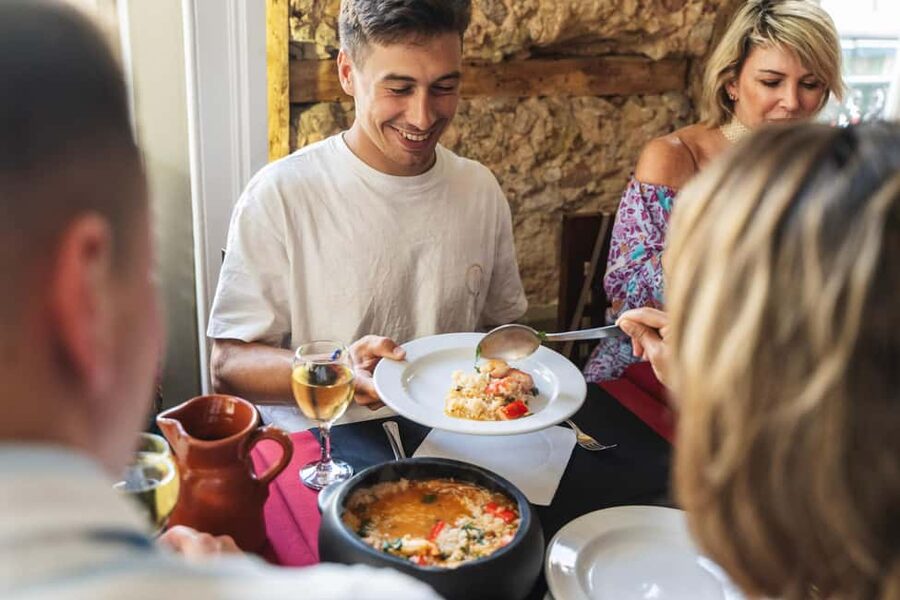
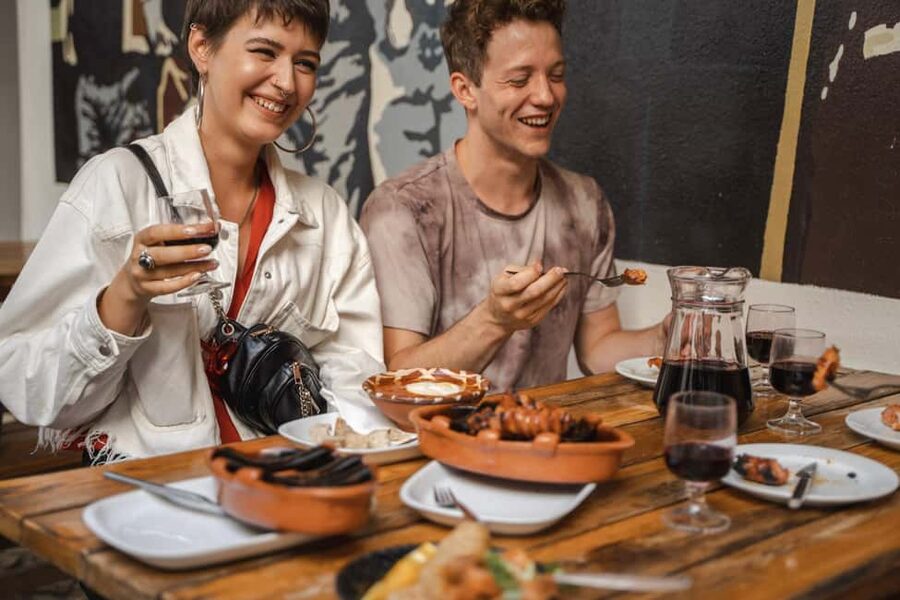
The food begins as the walk moves through nearby streets and eateries. The exact dishes can vary by stop, but the experience is built around familiar Portuguese staples rather than international restaurant fare. You might encounter petiscos, seafood, a bifana, sausage, codfish rice, or other small dishes associated with everyday Portuguese eating.
That variety is one of the tour’s strengths. A full meal in one restaurant would give you only one view of Portuguese cooking. Small portions let you try several flavors without committing to a large plate of something you may not enjoy.
You should still arrive hungry. Eight tastings plus four drinks can add up to a substantial evening, even if each serving is designed to be part of a progressive meal rather than a single large dinner.
Rua dos Fanqueiros: Baixa between meals

The route continues along Rua dos Fanqueiros, with about 20 minutes of guided walking. This stretch gives you time to digest the first tastes and hear more about the commercial side of central Lisbon.
The walk is not a food stop every few minutes. That is a good thing. You need some space between tastings, and the street sections allow your guide to explain how the neighborhood developed. You also get to see ordinary Baixa streets rather than being moved directly from one dining room to another.
Your guide may point out details you would otherwise pass without noticing, from building façades to the way the streets lead toward the larger squares. The tour’s value comes partly from this pacing. Food gives you a reason to stop, while the walk gives each dish a setting.
For anyone nervous about Lisbon’s slopes, this section should be reassuring. The route is described as flat and fully accessible, and one wheelchair user reported that the guide took extra care to make participation possible. Accessibility can still depend on the individual venue and conditions on the day, so it is sensible to discuss your needs in advance.
Same vines, another glass to try:
- Lisbon Small-Group Portuguese Food and Wine Tour
★ 5.0 · 3,972 reviews - Lisbon: Fado Show and Wine inside Medieval Walls
★ 4.8 · 3,819 reviews - 2 Hour Lisbon Sunset and Wine Sailing Tour
★ 5.0 · 2,680 reviews - 2-Hour Lisbon Traditional Boats Sunset Cruise with White Wine
★ 4.5 · 2,091 reviews
Rua da Vitória and the main tasting sequence

Rua da Vitória receives about 30 minutes of guided attention, making it one of the longer sections of the route. This is where the experience gathers much of its character, with food, street life, and local explanation working together.
The stops include taverns, family-run restaurants, and street-food locations. Pre-booked tables and priority service mean you spend less time waiting and more time eating, an important advantage in central Lisbon, where popular places can be crowded at meal times.
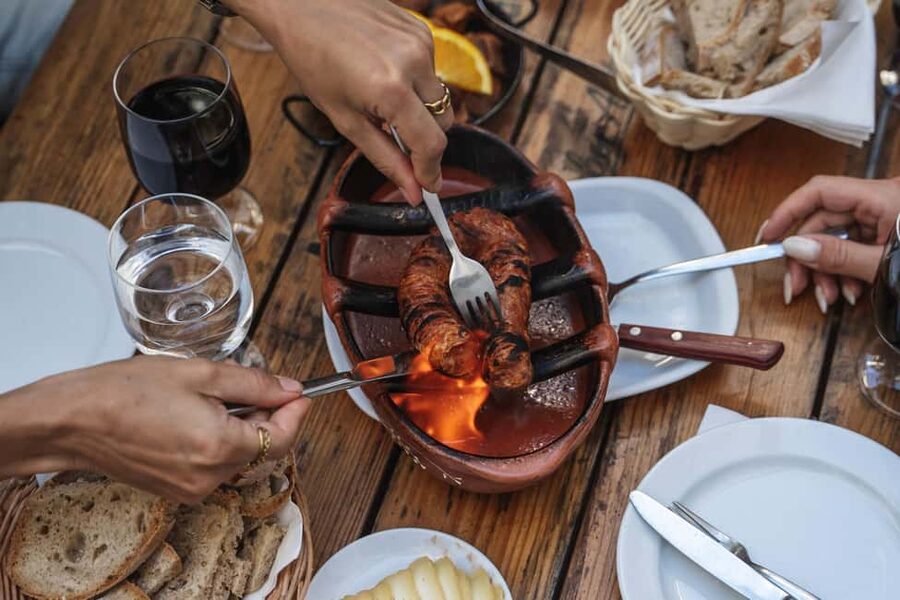
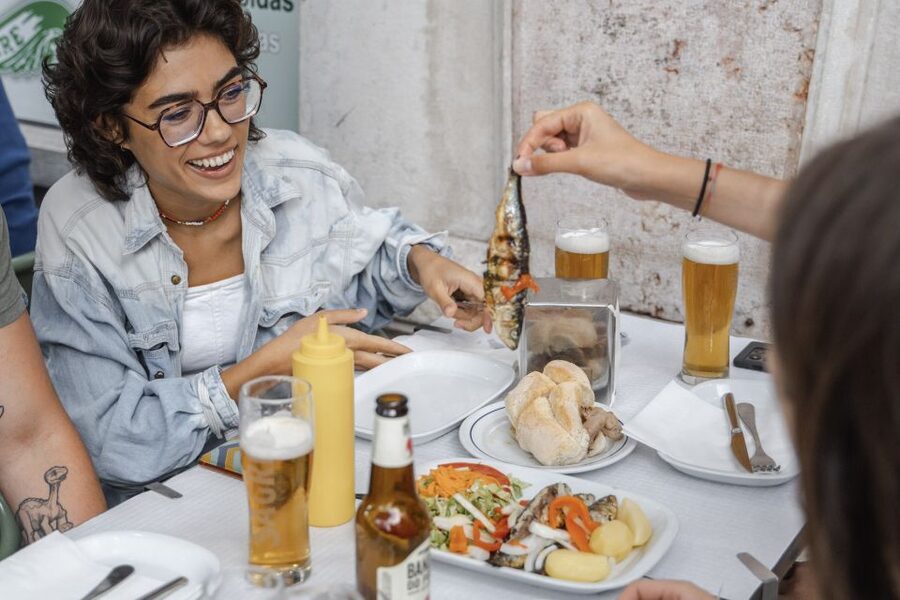
The tasting list is designed to cover several sides of Portuguese food. Seafood appears often in the examples from this experience, including seafood rice and sardines. Codfish rice and grilled sausage have also featured, along with the bifana, a simple pork sandwich that is one of Lisbon’s classic quick meals.
The bifana is a good example of why a food tour helps. It is easy to overlook a modest sandwich when menus are full of polished descriptions, but the point is to see how an everyday local bite fits into Portuguese life. The same applies to sardines. If you have never tried one in Portugal, this is a low-risk way to do so as part of a wider meal.
Do not expect a fine-dining tasting menu. The appeal is the range of ordinary and traditional food, served in places chosen for their local feel. Some stops may seem plain compared with a fashionable restaurant, but that is part of the point.
Rua da Madalena and the drinks that shape the evening
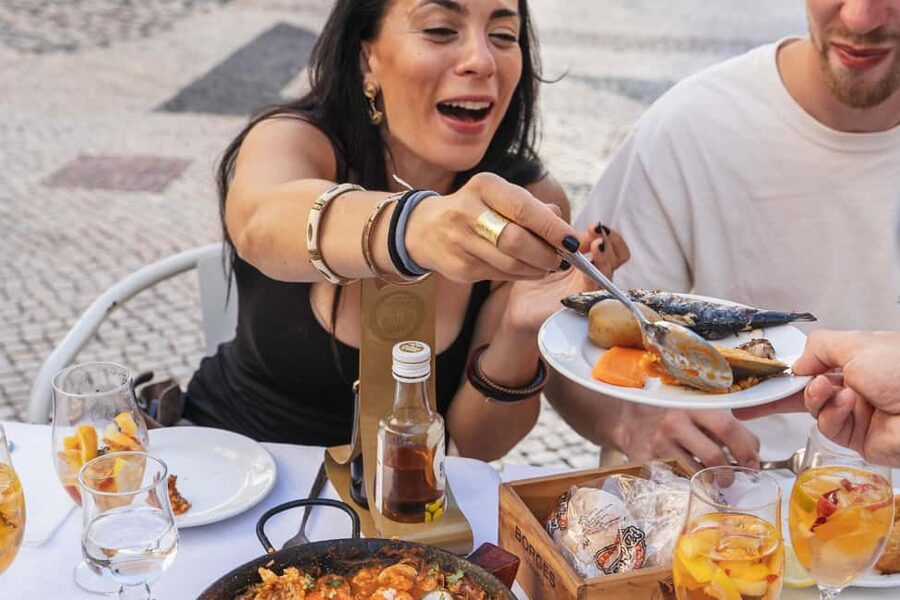
The route then follows Rua da Madalena for about 20 minutes. This is another walking and storytelling section, with more chances to see how Baixa changes from grand civic spaces to smaller commercial streets.
Four local drinks are included. The named choices are Vinho Verde, Portuguese beer, and Ginjinha, with alcohol-free options available at every stop.
Vinho Verde is especially useful for visitors who know little about Portuguese wine. It is generally light and fresh, and several people particularly enjoyed its slightly sparkling character. Ginjinha offers a different experience altogether: a cherry liqueur traditionally served in a small measure. It is sweet, strong, and closely tied to Lisbon’s drinking culture.
The included beer gives you a familiar reference point between the wine and liqueur. If you do not drink alcohol, you can still take part, though you will receive alcohol-free alternatives rather than the standard pours.
The drink pairing adds real value at $100 per person, but the value depends on how much you eat and drink. If you would happily spend an evening ordering several small dishes, a dessert, wine, beer, and Ginjinha on your own, the fixed price may feel reasonable. If you are a light eater or do not drink, the cost is harder to justify, even with the guide and pre-arranged stops included.
Ginjinha Sem Rival and the sweet finish
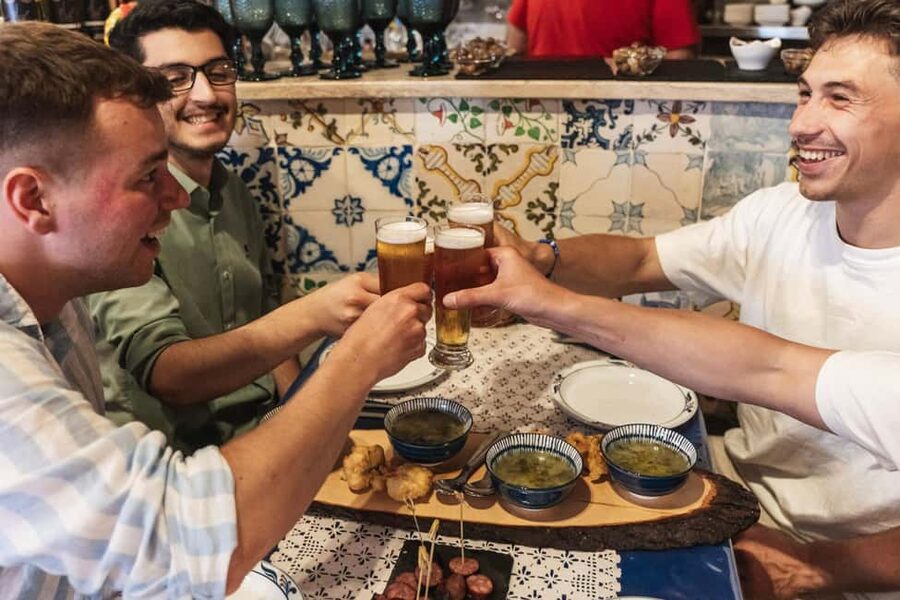
Ginjinha Sem Rival is listed as a 10-minute guided stop. The name signals the focus: Ginjinha, Lisbon’s cherry liqueur, in a setting dedicated to this local tradition.
This is one of the most distinctive parts of the route because it is not simply another restaurant visit. You get a drink with a strong sense of place, and your guide can explain how it fits into Lisbon’s casual food and drink habits.
The final tasting is dessert. A traditional Portuguese sweet, often represented on this experience by a custard tart, brings the evening to a clear finish. The custard tart is familiar to many visitors, but tasting one after savory dishes and local drinks gives it a different role. It is not just a snack from a bakery window. It becomes the closing note of a broader introduction to Portuguese eating.
You finish at Praça dos Restauradores, near the northern end of central Baixa. This is a useful location for continuing your evening, though the experience does not include onward transportation or a separate dinner reservation after the tour.
How good is the food selection?
The food selection is the main reason to book. You get a broad introduction rather than one signature dish, and the tasting format lets you sample seafood, meat, street food, petiscos, and dessert in one sitting.
The strongest food examples include codfish rice, seafood rice, grilled sausage, sardines, bifana, and custard tart. These dishes cover several important Portuguese food traditions without asking you to spend three hours at a single table.
The tour also helps with portion control. You can try food you might not order alone, and you are not left with a full plate if one flavor does not suit you. That matters with sardines, strong liqueurs, or unfamiliar seafood.
There are limits. The menu is not suitable for vegans, and people with celiac disease or serious food allergies should not rely on the tour to meet their needs. Vegetarian food is available, but there are fewer tastings than on the regular menu. Tell the provider about restrictions in advance so they can explain what is possible.
What the guides add
The food would be less useful without a good guide, and this experience places a lot of weight on the person leading it. Bruno appears frequently among the guides, with Zé, Joanna, Kate, Maya, Margarita, Rodrigo, André, Moka, and others also leading groups.
The consistent strengths are humor, local food explanations, and stories about Lisbon. Bruno is described as funny and engaging, while Kate is praised for explaining the history of food and wine. Zé has led especially personal tours for small groups, and Moka made a point of helping a wheelchair user stay comfortable and involved.
You should not expect every guide to have the same style. Some may lean toward jokes, some toward architecture and history, and others toward food details. That variety is normal on a guided experience, but the repeated emphasis on clear explanations and friendly group interaction suggests that the guide is more than a person who walks you between restaurants.
Is $100 a fair price?
At $100 per person, this is not a cheap way to grab dinner in Lisbon. You are paying for more than the food itself: three hours of guiding, eight tastings, four drinks, pre-booked tables, priority service, and a planned route through central Lisbon.
The price makes the most sense if you are visiting for a short stay, want a structured introduction, or feel unsure about ordering Portuguese food on your own. It also has good value as a first-night activity because you can use the guide’s recommendations during the rest of your visit.
It is less compelling for a confident diner who already knows Lisbon’s restaurants, does not drink alcohol, or wants a long sit-down meal. You are buying variety, context, and convenience rather than a large restaurant dinner.
The free cancellation up to 24 hours before the start and the reserve-now, pay-later option add useful flexibility. They do not change the price, but they make it easier to fit the tour into a changing Lisbon schedule.
Who should book this Baixa food walk?
I would recommend it to first-time visitors, couples, small groups, solo visitors who enjoy meeting people, and anyone who wants a clear introduction to Portuguese food without researching every stop.
It is also a good fit for visitors who want a flat walking route. You still walk for three hours, but the route avoids the steep hills that shape much of Lisbon. Wear comfortable shoes and arrive ready to eat, but you do not need to prepare for a strenuous hike.
Families and mixed groups may also find the format useful, provided everyone is comfortable with the listed food and drink. Alcohol-free choices are available at each stop, though the main menu is built around Portuguese drinks as well as food.
I would not book it if you need a vegan or celiac-safe menu, or if you have severe allergies that require strict kitchen controls. The vegetarian option is helpful, but it is not the same menu with simple substitutions.
Should you book Eat & Walk Through Lisbon?
Book it if you want a social, food-first introduction to Baixa with enough history to explain the streets around you. The best reasons are the range of dishes, the four local drinks, the flat route, and guides such as Bruno, Joanna, Maya, and Zé who bring humor and personal detail to the walk.
Skip it if you prefer to choose your own restaurants, need a fully flexible diet, or would rather spend $100 on one long meal. For most first visits, though, the tour offers a practical way to get your bearings, taste classic foods, and leave with a better idea of what to order next.
FAQ
Where does the tour meet?
The guide waits in front of the Supremo Tribunal de Justiça, under the portico with the large Portuguese flag. Look for a yellow Carpe Diem Tours flag or sign, and arrive 10 minutes early.
Where does the tour finish?
The walk finishes at Praça dos Restauradores 62, 1250-001 Lisboa, Portugal.
How long does the experience last?
The tour lasts three hours.
What food is included?
Eight tastings of traditional Portuguese cuisine, street food, and dessert are included. Examples associated with the experience include petiscos, seafood dishes, bifana, codfish rice, grilled sausage, sardines, and custard tart.
Which drinks are included?
Four local drinks are included. The named examples are Ginjinha, Portuguese beer, and Vinho Verde. Alcohol-free options are available at every stop.
Are vegetarian options available?
Yes. Vegetarian options are offered, but there are fewer tastings than on the regular menu. Vegan diets, celiac disease, and some other serious restrictions cannot be accommodated.
Is the route accessible?
The tour follows a flat route and is described as fully accessible. A wheelchair user received additional help from the guide, but you should share specific access needs in advance.
Freshly poured around Lisbon
- Lisbon: Sunset Sailing with Portuguese Wine and History★ 5.0 · 270 reviews
- Lisbon: Sunset Sailing Boat Cruise with Wine★ 5.0 · 75 reviews
- Lisbon Small-Group Food & Wine Tour Eat & Drink like a Local★ 4.9 · 77 reviews
- Lisbon: Sintra, Pena Palace & Wine Tasting Small-Group Tour★ 4.9 · 156 reviews
- Lisbon: Sailboat Tour w/ Local Guide and Open Bar Green Wine★ 4.9 · 625 reviews
- Lisbon Private Setúbal Region Wine Tasting Tour★ 4.9 · 149 reviews
- Lisbon: Private Sunset Sailing Tour with Champagne★ 5.0 · 114 reviews
- Lisbon: Boat Tour with Champagne★ 4.8 · 79 reviews
Lisbon Wine Tours, side by side.
Winner 2025 Undiscovered Lisbon Food & Wine Tour by Eating Europe
Read our review →
Lisbon: Live Fado Show with Port Wine at Lisboa em Fado
Read our review →
Lisbon: Food and Wine Small Group Walking Tour
Read our review →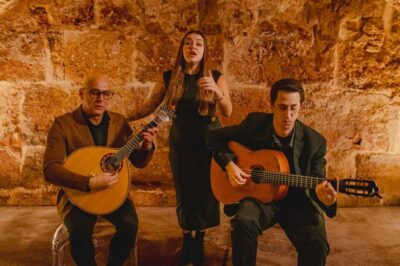
Lisbon: Fado Show and Wine inside Medieval Walls
Read our review →
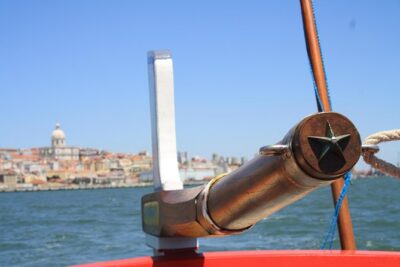
2-Hour Lisbon Traditional Boats Sunset Cruise with White Wine
Read our review →
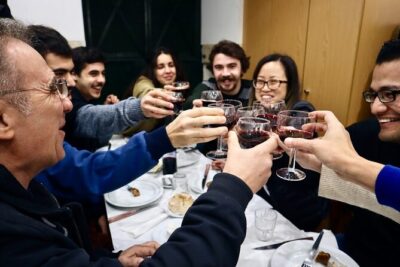
Lisbon Food Tour with 10+ Tastings of Local Delicacies & Wines
Read our review →Lists this tasting sits in