
Review · CHIANTI
Chianti Grand Tasting: Wines, Oils & Balsamics in the Cellar
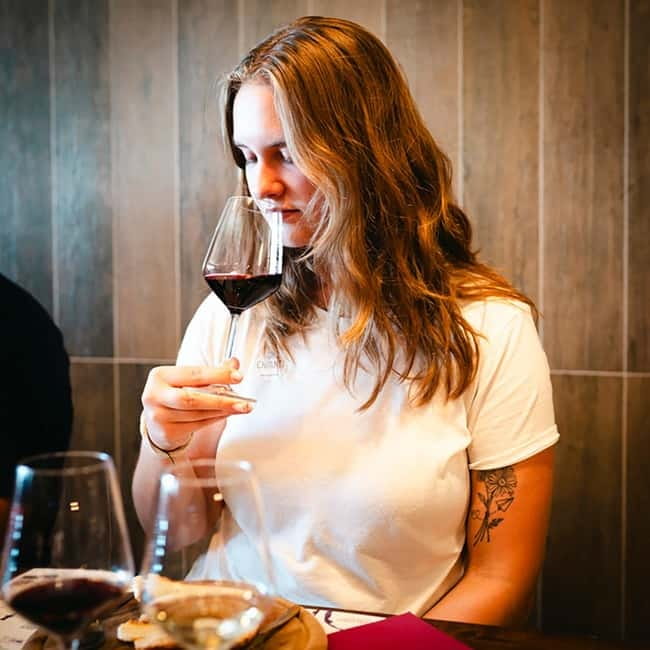
Poggio ai Laghi’s tasting is less about rushing from glass to glass and more about understanding how Tuscan wine, oil, vinegar, cheese, and cured meat work together. In a quiet cellar with stone walls and soft lighting, you taste the estate’s wines alongside its oils and balsamics, with stories about the women behind the labels.
I like the private setting, which gives the 90 minutes a calm, personal feel. I also like the generous food pairing: finocchiona, prosciutto, pecorino, tomato bruschetta, and toasted bread help turn this from a simple wine flight into a small Tuscan meal.
The main consideration is that the experience does not include a vineyard, estate, or winery tour. Also, French, Spanish, and German support is available, but one French-speaking visitor found that the main presentation still relied on English or Italian.
Key points at a glance
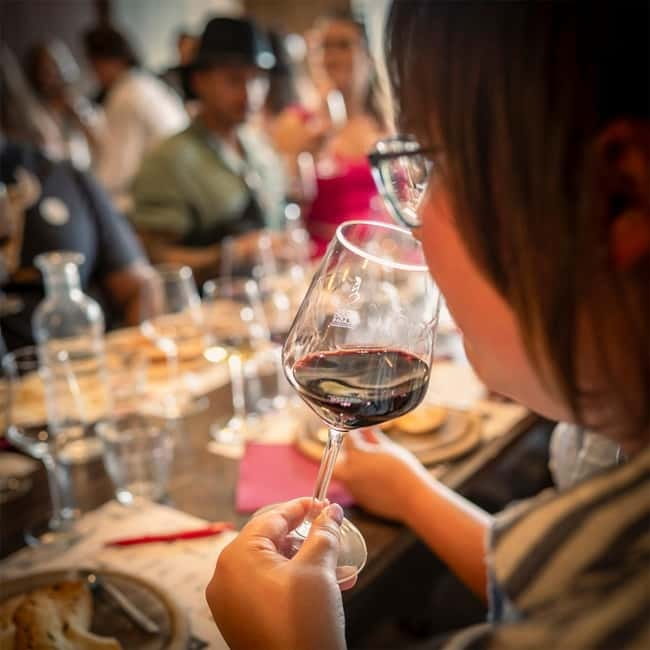
- Six featured wines: Taste two sparkling wines and four reds, including Chianti DOCG, Chianti Classico DOCG, Riserva, and Super Tuscan selections.
- Oil and vinegar tasting: Try classic extra virgin olive oil, white truffle oil, chili oil, Modena balsamic, and red onion balsamic.
- A real Tuscan snack board: Salami, finocchiona, prosciutto, pecorino, bruschetta, and toasted bread accompany the tasting.
- Story-led presentation: Your guide explains the estate, local traditions, art, and the legend of Donna Ava and her seven handmaidens.
- Quiet cellar atmosphere: Stone walls and gentle lighting make this a good choice when you want a slower, more intimate tasting.
- Useful flexibility: The price is $58 per person, cancellation is free up to 24 hours before the activity, and you can reserve now and pay later.
Entering Poggio ai Laghi’s private cellar
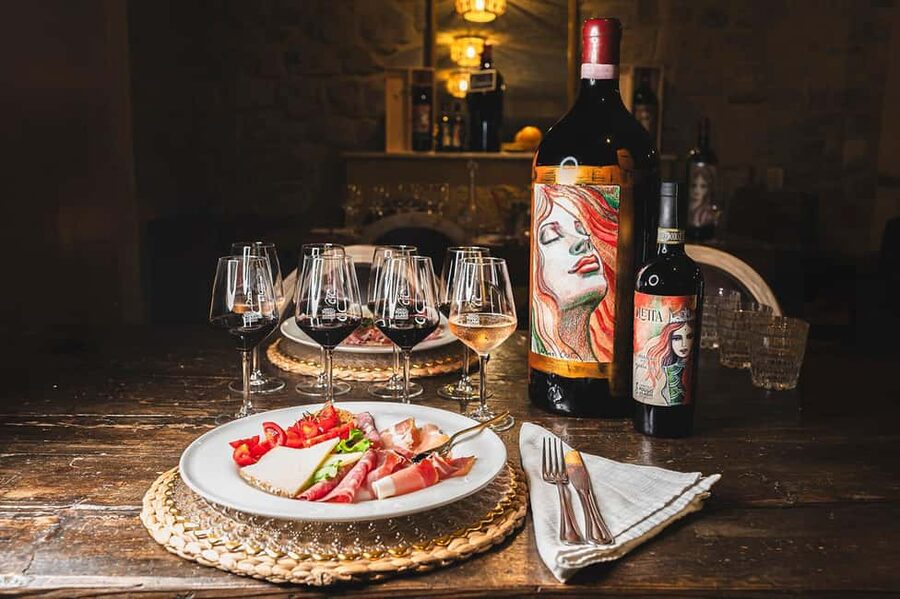
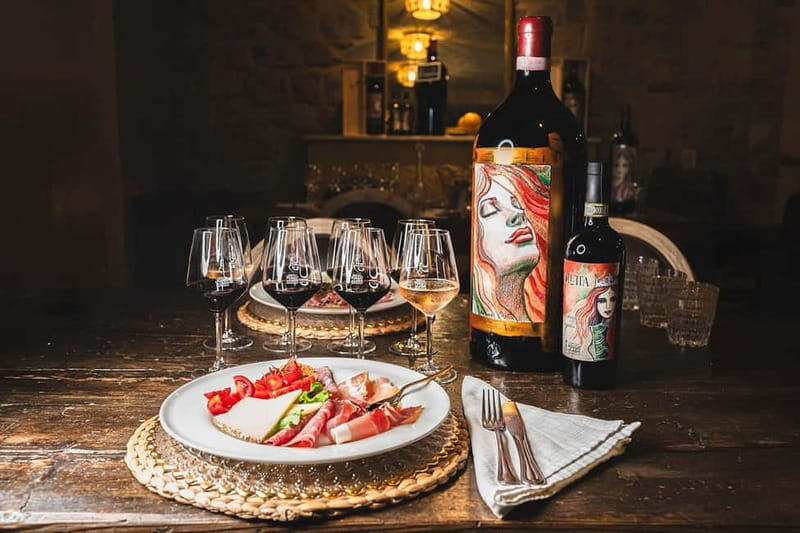
The appeal begins with the setting. Rather than sitting in a busy public bar, you enter a secluded tasting room in the private heart of the Poggio ai Laghi estate. Stone walls and soft lighting give the space a comfortable, old-world feel without making the tasting formal or stiff.
This matters because wine tasting can easily become a production line. Here, the 90-minute schedule leaves room for explanation, questions, and food. Guides such as Valentino, Stefano, and Bledar have been praised for being attentive, friendly, and clear. Bledar has led tastings in German, while Valentino took time to explain the products and the traditions around the winery.
The experience is designed around the estate’s own products. That gives the tasting a clear focus, but it also means you are not comparing a broad selection of unrelated Tuscan producers. You are learning the Poggio ai Laghi style from bottle to bottle.
More Chianti wine tours around Italy:
- Florence: Chianti Wineries Tour with Wine Tasting
★ 4.5 · 10,071 reviews - San Gimignano, Siena, Monteriggioni, Chianti Day Trip with Lunch & Wine Tasting
★ 4.5 · 4,432 reviews - Florence: Pisa, Siena, S. Gimignano, Chianti Wine & Lunch
★ 4.6 · 4,354 reviews
The sparkling wines begin the tasting
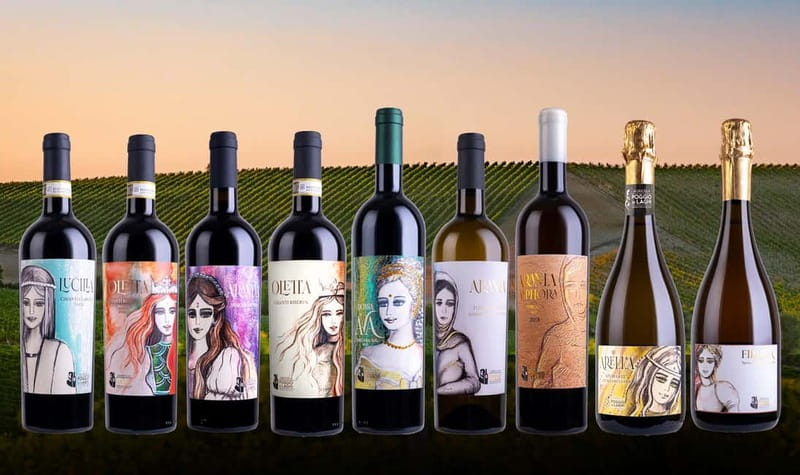
The first wines are Arella, a Spumante Cuvée Extra Dry, and Firmina, a Spumante Rosé Extra Dry. Beginning with sparkling wine gives the tasting a light opening before moving into the more serious red wines.
The extra dry style should appeal if you prefer a wine with some softness rather than a very dry, austere finish. The rosé adds color and a different fruit profile, while the white sparkling wine gives you a useful point of comparison.
Your guide explains what you are tasting and how the wine fits into the estate’s story. The labels are connected to Donna Ava and her seven handmaidens, women described as figures of virtue and spirit. That theme gives the bottles more personality than a list of grape names alone.
I would pay attention here to the contrast between the two sparkling wines. Try each before eating, then taste again with the salami and cheese. Food changes the wine, and this is one of the practical benefits of the format.
Four reds, from Chianti to Super Tuscan
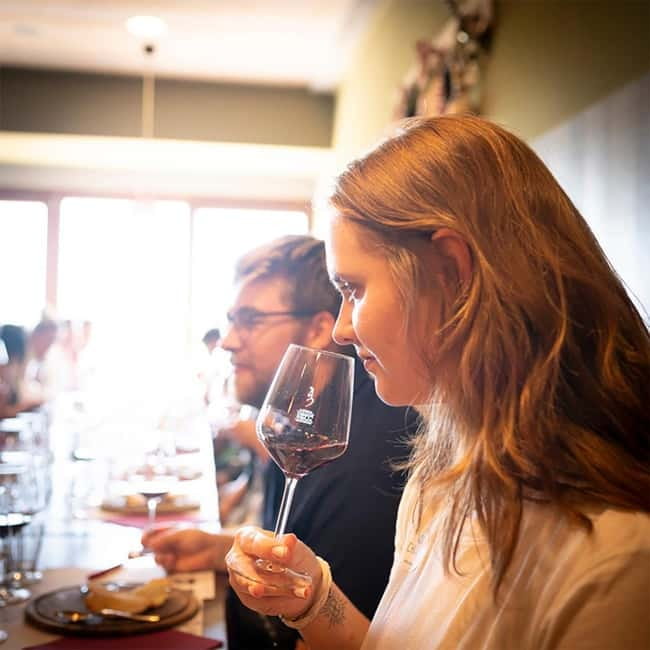
The red wine portion is the heart of the tasting. The flight includes Oletta, a Chianti Riserva DOCG, Lucilla, a Chianti Classico DOCG, Aranda, a Super Tuscan IGT, and DonnaAva, a Toscana Rosso IGT.
You also taste Nina, a Chianti Classico Riserva DOCG. The activity description refers to six wines, including two sparkling and four reds, while the full product list names several red labels. The selection presented can therefore include a broader set of estate wines, with the exact pour order or final lineup best confirmed when you book.
The Chianti and Chianti Classico wines give you a chance to compare neighboring designations and styles. A Riserva label generally signals a more developed wine, while the Super Tuscan and Toscana Rosso selections show how the estate works outside the classic Chianti framework. Your guide provides the context, so you are not left trying to decode Italian wine categories by yourself.
The tasting also includes Arania, an IGT Bianco Toscana, in the listed collection. Since the included wine breakdown specifically describes two sparkling and four red wines, do not assume the white wine is part of every standard pour. It is better treated as part of the estate’s wider collection rather than a guaranteed seventh wine.
This is a good tasting for someone who wants more than one familiar Chianti. You get a sense of the range, from sparkling wine to structured red, and you can ask how the wines differ in style, classification, and food pairing.
Tuscan food makes the wine easier to understand
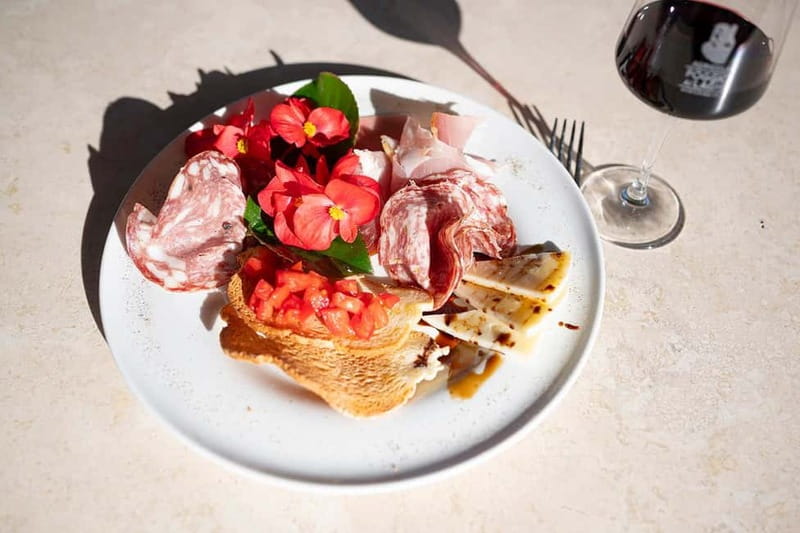
The food is not a decorative plate placed beside the wine. It is an important part of the experience. You receive Tuscan salami, finocchiona, Tuscan prosciutto, pecorino cheese, bruschetta with fresh tomato and basil, and crisp toasted bread with extra virgin olive oil.
Finocchiona, with its fennel seasoning, is especially useful in a tasting because it shows how herbs and cured meat affect a wine’s flavor. Prosciutto brings salt and richness. Pecorino gives you a firmer, sharper cheese pairing, while tomato bruschetta adds freshness and acidity.
The toasted bread is a simple but effective tool for the oil tasting. Start with the classic extra virgin olive oil before moving to the stronger flavored versions. This lets you notice the difference between balanced oil, white truffle oil, and chili pepper oil without losing the basic olive character.
One practical tip: avoid filling up on the food too early. Taste the wines first, then return to the snacks. The same wine can taste different with salami, cheese, or bruschetta, and the tasting is built around that comparison.
More Wine Cellar Visits around Italy:
- Milan Urban Winery: Taste & Tour at Cantina Urbana
★ 4.7 · 683 reviews - Montepulciano: Wine Tasting and Cellar Tour
★ 4.8 · 545 reviews - Bardolino: Wine tasting at Cantina Valetti
★ 4.6 · 98 reviews - Montepulciano: Historical Cellars Guided Tour & Wine Tasting
★ 4.4 · 83 reviews
Three olive oils with three different personalities
The olive oil portion includes a classic extra virgin olive oil, white truffle olive oil, and chili pepper olive oil. This is a small lineup, but the flavors are deliberately varied.
The classic oil is described as balanced and harmonious. It is the best place to begin because it shows the base product without added flavor. White truffle oil is more aromatic and enveloping, while chili pepper oil brings heat and a stronger finish.
You taste the oils with toasted bread and can also try them with the food. The classic oil may be the most versatile at home, while the truffle and chili versions are more specific. If you are planning to buy a bottle, use the tasting to decide whether you want an everyday oil or something for particular dishes.
This section also adds value for people who do not drink much wine. You can still take part in the oil and vinegar tasting, eat the Tuscan appetizers, and learn how local pantry products fit together.
Balsamic vinegar, including the red onion specialty
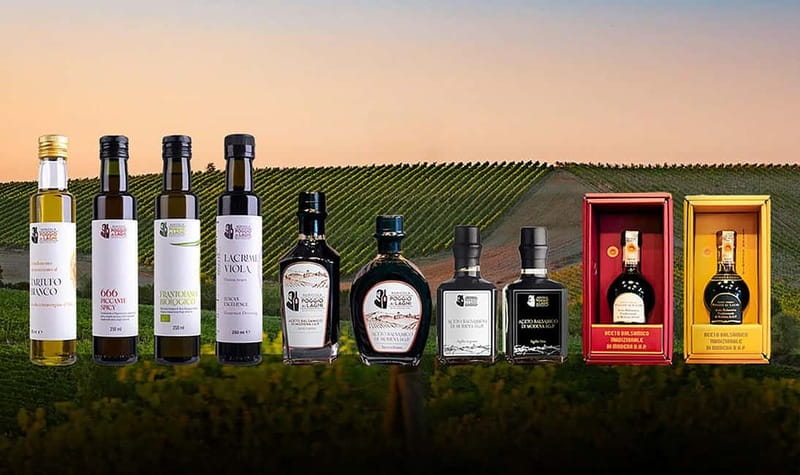
The vinegar tasting includes Gold Selection Balsamic Vinegar of Modena PGI and Lacrime Viola, a red onion balsamic described as a Tuscan specialty. These are not simply condiments placed on the table. They are tasted as part of the pairing.
Modena balsamic brings the familiar sweet and sharp profile associated with the protected regional product. Lacrime Viola offers something less expected, with the red onion adding a distinct savory note.
Try a little vinegar with the bread, cheese, or cured meat rather than tasting it in isolation only. Pecorino is a natural match because its salt and firmness can balance the vinegar’s sweetness and acidity.
The vinegar segment is one of the more unusual features of this activity. Many wine tastings stop at wine and cheese. Here, oil and balsamic give you practical ideas for Tuscan-style meals, and they break up the red wine flight nicely.
Cantuccini and Vin Santo close the experience
The final pairing is cantuccini with Vin Santo dessert wine. This is a classic Tuscan ending and gives the tasting a clear finish after the savory food and red wines.
Cantuccini are firm almond biscuits traditionally served with a sweet dessert wine. The biscuit’s crisp texture makes the Vin Santo pairing feel different from the earlier bread, meat, and cheese combinations.
This last course also slows the pace. By the time you reach dessert, you have tasted wines, oils, and vinegars, and the guide can return to questions about the estate or the products. If you are buying wine or food products afterward, this is a good point to decide which flavors actually suited you.
Art, history, and the Donna Ava story
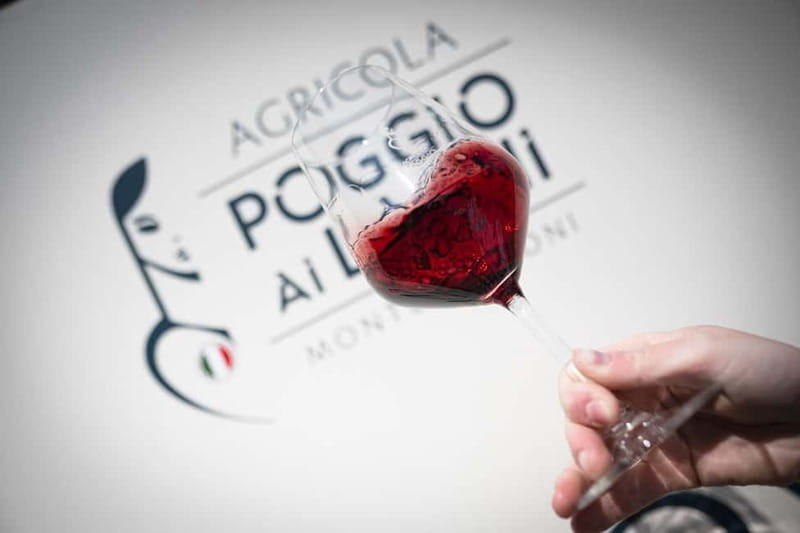
The guide does more than identify each bottle. The presentation includes art and history, along with the story of Donna Ava and her seven handmaidens. Each signature label takes its name and character from one of these women.
That storytelling gives the tasting a human center. You are not only hearing about classifications and production styles. You are also learning why the wines have the names they do and how the estate presents its identity.
The quality of this section depends heavily on your guide. Stefano has been praised for his professionalism, warmth, and ability to explain the products. Valentino has been singled out for explaining both the wines and the traditions surrounding the winery. Bledar has provided the same kind of personal attention in German.
Language support is listed in English, French, Spanish, and German. Still, the experience may run mainly in English or Italian even when you select French, so contact the provider if language is a major concern. That small check could make the difference between following every detail and simply enjoying the food and wine.
What the $58 price includes
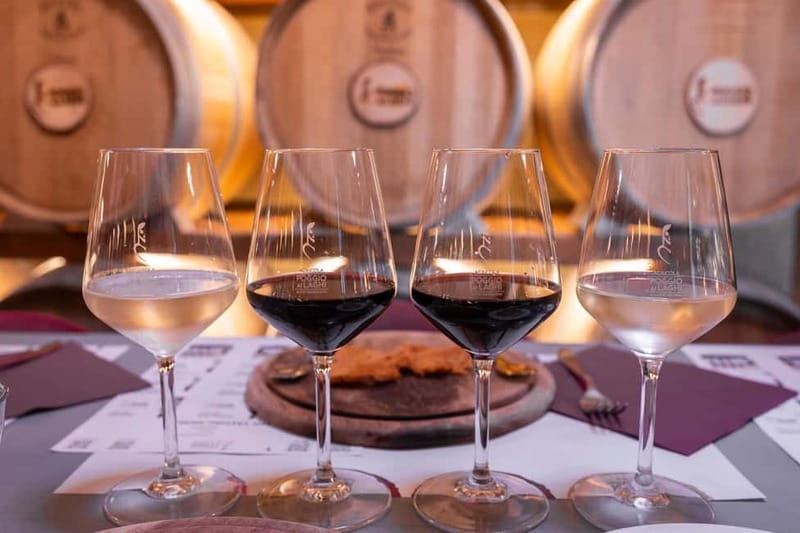
At $58 per person, this is not the cheapest way to taste Tuscan wine. But it includes more than a short wine sample. You receive a 90-minute guided session, six wines according to the included format, three olive oils, two vinegars, a substantial Tuscan appetizer selection, and dessert with Vin Santo.
The food matters when judging the price. Salami, finocchiona, prosciutto, pecorino, bruschetta, and toasted bread make this close to a light meal, especially if you attend around lunchtime or early evening. You are also paying for a private cellar setting and a guide who explains the products rather than handing you a tasting sheet.
The value is strongest for couples, small groups, and anyone who wants a polished introduction to several Tuscan specialties in one sitting. It is less compelling if your main goal is to walk among vines, inspect barrels, or visit the production rooms, since none of those tours is included.
The tasting is also a practical choice if you have limited time in Tuscany. In an hour and a half, you cover sparkling wine, Chianti, Super Tuscan wine, olive oil, balsamic vinegar, local meats, cheese, and dessert wine. That is a lot of regional flavor in a compact visit.
Timing, access, and practical details
The activity lasts 90 minutes, and starting times depend on availability. I would choose a time that fits your meal schedule, since the appetizers are substantial enough to affect your appetite.
A separate entrance is available for the tasting, which can make arrival simpler. Pickup and drop-off are not included, so you need to arrange your own transport to Poggio ai Laghi.
The tasting room is wheelchair accessible. Host or greeter support is available in English, French, Spanish, and German, though the main spoken presentation may still depend on English or Italian.
You can cancel for a full refund up to 24 hours in advance. The reserve-now, pay-later option is useful if your Tuscan plans are still shifting, especially when you are arranging several day trips around the region.
Who should book this tasting
I would choose this experience if you want a comfortable, food-friendly introduction to Tuscan wine without committing to a full winery tour. It suits people who like to ask questions, compare styles, and learn why a product tastes the way it does.
It is also a good fit for mixed groups. Wine enthusiasts get several reds and sparkling wines, while less experienced drinkers can focus on the appetizers, oils, vinegars, and dessert pairing.
Couples looking for a quieter stop will appreciate the private tasting rooms. Groups should benefit from the generous food, although the calm atmosphere may be less suitable if you want a loud, party-style tasting.
I would skip it if your priority is vineyard scenery, cellar production, or a long walk through the estate. Those elements are not included. This is a seated tasting built around products, presentation, and conversation.
Should you book the Poggio ai Laghi tasting?
Book it if you want a well-paced 90-minute tasting with a broad mix of Tuscan flavors and a guide who can explain the story behind the labels. The strongest reasons are the quiet cellar, the complete food pairings, and the chance to taste oils and balsamics alongside the wines.
Before booking, confirm the working language if you need French, Spanish, or German. Also remember that transportation and an estate tour are separate. For $58, the experience offers good value when you treat it as a guided tasting and light meal, not as a full winery visit.
FAQ
How long does the Poggio ai Laghi tasting last?
The tasting lasts 90 minutes.
How much does the experience cost?
The listed price is $58 per person.
How many wines are included?
The included wine tasting features two sparkling wines and four red wines.
Which wines might be included?
The listed wines include Arella Spumante Cuvée Extra Dry, Firmina Spumante Rosé Extra Dry, Oletta Chianti Riserva DOCG, Lucilla Chianti Classico DOCG, Aranda Super Tuscan IGT, DonnaAva Toscana Rosso IGT, and Nina Chianti Classico Riserva DOCG. Arania IGT Bianco Toscana is also part of the estate’s listed collection.
Are olive oils included?
Yes. The tasting includes classic extra virgin olive oil, white truffle olive oil, and chili pepper olive oil.
Which vinegars are included?
You taste Gold Selection Balsamic Vinegar of Modena PGI and Lacrime Viola, a red onion balsamic vinegar.
What food is served?
The appetizers include Tuscan salami, finocchiona, Tuscan prosciutto, pecorino cheese, tomato and basil bruschetta, and toasted bread with extra virgin olive oil. Cantuccini with Vin Santo are served for dessert.
Is a winery or vineyard tour included?
No. The estate, vineyard, and winery tour are not included.
Is transportation included?
No. Pickup and drop-off are not included.
What languages are available?
Host or greeter support is listed in English, French, Spanish, and German. The main presentation may be in English or Italian, so check the language arrangement if this is important to you.
Is the tasting wheelchair accessible?
Yes, the activity is listed as wheelchair accessible.
Can I cancel the booking?
Yes. You can cancel up to 24 hours in advance for a full refund. You can also reserve now and pay later.
Freshly poured around Italy
- Private Flavors of Florence Walking Tour(Food&Wine Included)★ 4.8 · 46 reviews
- Pizza-Making Workshop by night with glass of wine★ 4.9 · 45 reviews
- Pramaggiore: Ornella Bellia Winery Guided Tour & Tasting★ 5.0 · 90 reviews
- Rome: Pompeii Tour with Wine and Lunch by High Speed Train★ 4.8 · 485 reviews
- Polignano a Mare: Street Food Tour with Tastings and Wine★ 4.7 · 154 reviews
- Polignano a Mare: Private Cruise with Champagne★ 4.8 · 66 reviews
- Pizza and Tiramisu Cooking Class with Wine in Milan★ 4.9 · 80 reviews
- Pisa: Cathedral Guided Tour and Tower tickets & wine tasting★ 4.8 · 78 reviews
Chianti Wine Tours, side by side.
Florence: Chianti Wineries Tour with Wine Tasting
Read our review →
San Gimignano, Siena, Monteriggioni, Chianti Day Trip with Lunch & Wine Tasting
Read our review →
Florence: Pisa, Siena, S. Gimignano, Chianti Wine & Lunch
Read our review →
From Florence: San Gimignano, Siena, and Chianti Wine Tour
Read our review →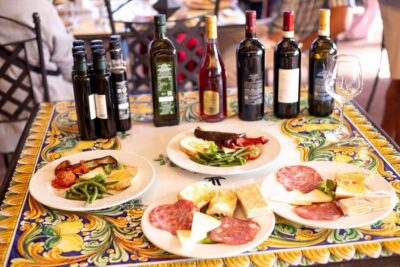
From Florence: Chianti Half-Day Wine Tour with Tasting
Read our review →
Siena, San Gimignano and Chianti Wines Day Tour from Florence
Read our review →
Half day Chianti Vineyard Escape from Florence with Wine Tastings
Read our review →Lists this tasting sits in