
Review · PORTO
Porto: Tile Painting Workshop with Porto Wine – Sé do Porto
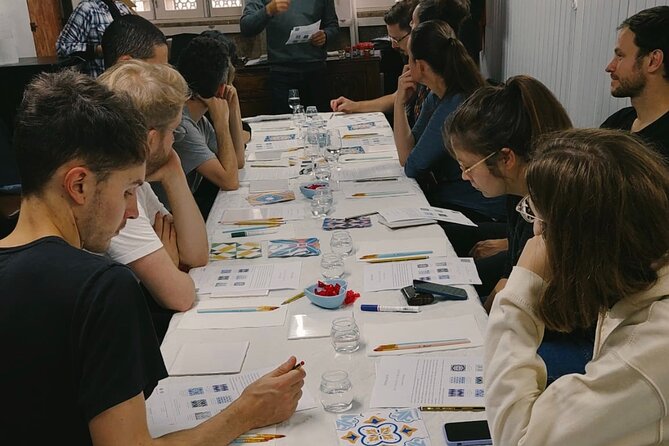
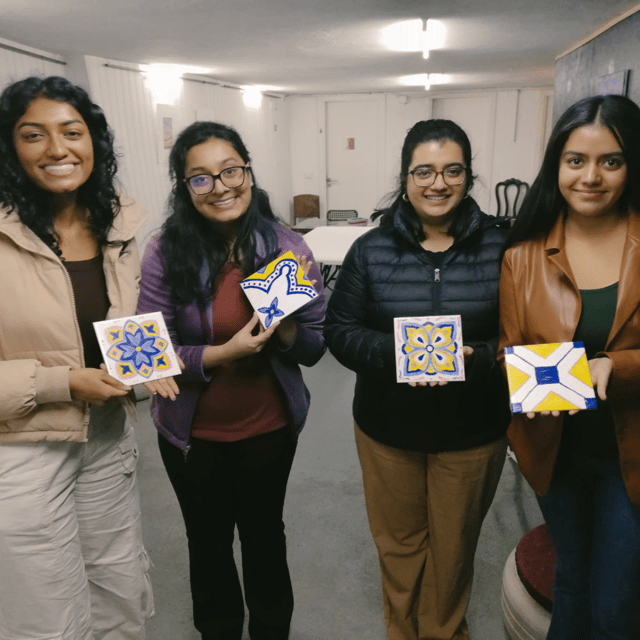
The best part of this Porto tile-painting workshop is that you do not just look at the city’s famous azulejos. You sit down, pick up a brush, and make one. A short talk sets the scene, then artists such as Beatriz, Rita, Francisco, Fernanda, and José guide you through a design that can be copied from Porto patterns or changed to suit your own taste.
I like two things here: the activity gives you a useful cultural connection to the tiled churches and houses you see around Porto, and it produces a small handmade souvenir rather than another shop-bought trinket. Port wine, local-style biscuits, coffee, juice, and water make the two hours feel sociable and unhurried. The main thing to consider is that you paint one tile, not a full set, and collection may require a short wait afterward.
Key points at a glance
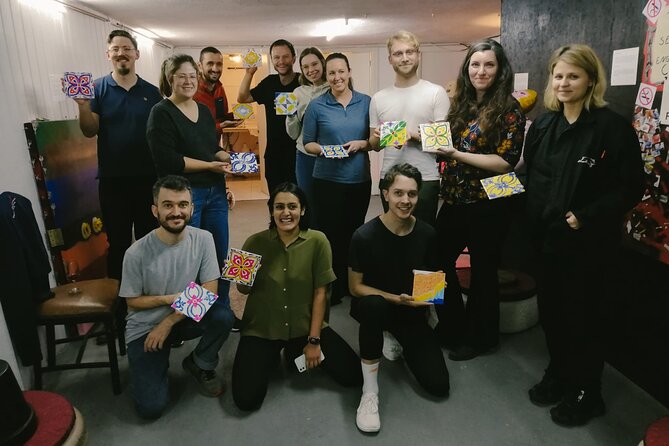
- Paint a real ceramic tile: You receive one white tile and take home your finished piece in a box.
- No art skills required: The instructors explain the technique step by step and help you correct or adjust your design.
- Choose Porto patterns or invent your own: Traditional designs are based on patterns documented from the streets of Porto.
- Learn before you paint: A short introduction covers the origins and cultural role of Portuguese azulejos.
- Port wine comes with the paintbrush: Drinks include Port wine, coffee, water, and juice, plus sweet and savory snacks.
- Allow time for collection: Finished tiles may be ready soon after the session, though some bookings have involved a wait of about an hour.
Why painting a tile makes sense in Porto
Porto is one of Europe’s easiest cities to explore with your eyes pointed upward. Blue-and-white panels cover churches, railway stations, chapels, shopfronts, and ordinary apartment facades. The tiles are not simply decoration. They help tell stories, mark religious spaces, protect walls from damp, and give Porto much of its visual character.
This workshop gives you a simple way to understand what you are seeing. The opening briefing explains the origins of Portuguese azulejos and their lasting place in the culture of Porto and Lisbon. It is not designed as a long academic lecture. You get enough background to make the painting feel connected to the city outside.
I find that timing useful. If you visit a tiled church before the class, you will have a better eye for repeated shapes, borders, color choices, and the patient work involved. If you schedule the workshop first, you can spend the rest of the day spotting patterns with a little more attention.
The session takes place at Domus Arte, an art shop and workshop space near the Sé do Porto area. The setting is part of the experience, with ceramic pieces and locally made art around you. You can browse the shop, but there is no pressure to buy anything.
More wine tours around Porto:
- From Porto: Douro Valley w/ Boat Tour, Wine Tasting & Lunch
★ 4.7 · 19,061 reviews - Complete Douro Valley Wine Tour with Lunch, Wine Tastings and River Cruise
★ 5.0 · 12,920 reviews - Porto: Douro Valley with Winery Lunch, Tastings & Cruise
★ 4.7 · 7,002 reviews
The opening briefing: a short lesson in azulejos
The class begins with an introduction to Portuguese tiles. You learn about their origins and their role in shaping the architectural identity of Portugal, especially in Porto and Lisbon.
The instructors bring a personal art background to this part of the morning or afternoon. Francisco, for example, is also a photographer and artist, while other teachers are trained in tile painting and hands-on instruction. The names may vary by session, but the teaching style is consistent: explain the tradition, show the process, then let you start.
That order matters. You are not handed a brush and left to guess. The briefing gives the patterns some meaning before you reproduce one. It also helps explain why the designs around Porto can look simple at first glance but require care in their lines, balance, and color.
The talk also makes the workshop suitable for people who are not normally interested in crafts. You do not need to arrive with a plan or an art-school background. The goal is to understand the tradition and enjoy making something with your hands.
Choosing a design from Porto
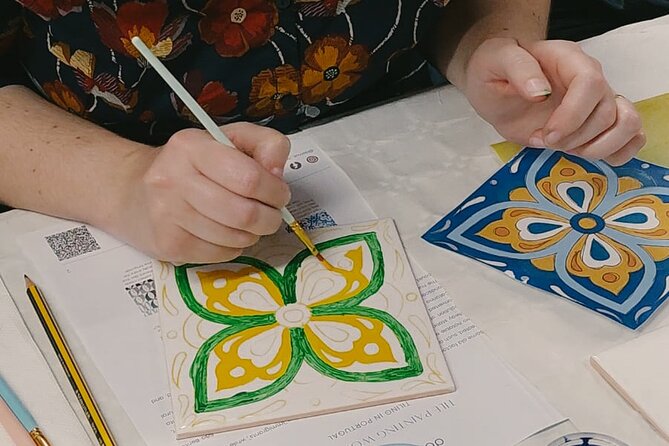
Once the introduction is finished, you receive a white ceramic tile and choose a design. The selection includes traditional patterns taken from examples found on Porto’s streets and documented by the Domus Arte team.
You can copy one of these patterns closely, change the colors, or create an original design. This is a good balance. If you like clear instructions, a traditional pattern gives you a starting point. If you prefer freedom, you can add your own details without being told that there is one correct result.
Several people have found this choice reassuring because it removes the fear of a blank tile. The wide range of patterns means you can select something manageable, even if you rarely paint. You can also adjust the design to your own ability. Simple geometric shapes are easier to control than a detailed scene, and an instructor can suggest ways to simplify an ambitious idea.
I would take a moment before painting to decide how much detail you actually want. Two hours sounds generous, but it passes quickly once you are concentrating on small areas. One tile is a sensible amount for the session. A request to paint several smaller tiles would require more time, so do not expect a full set by the end.
The hands-on painting session
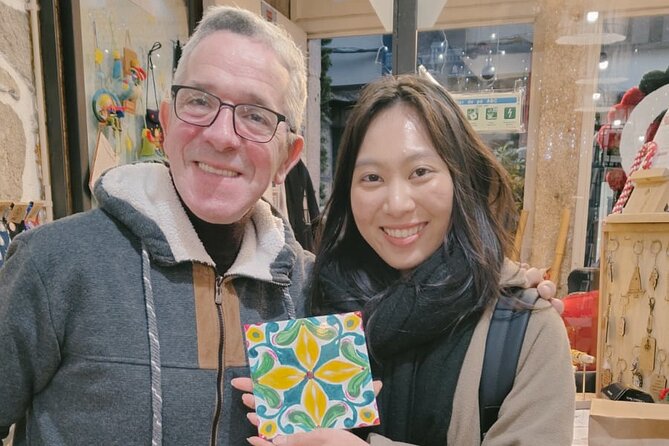
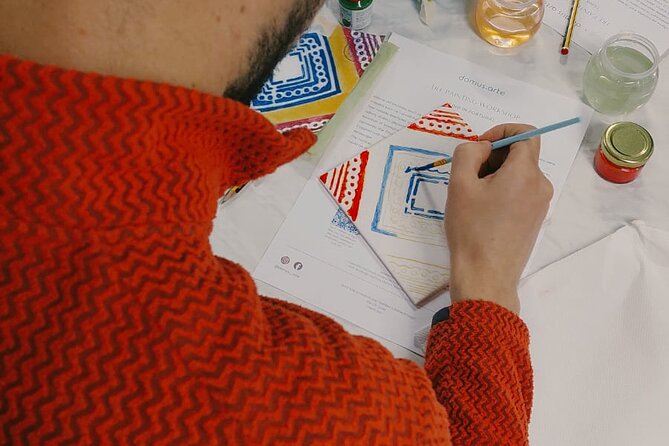
The practical part is relaxed, social, and focused. Your instructor explains the technique, demonstrates what to do, and moves around the room to help individuals or small groups. You can ask for advice as you work, but you are not rushed through every brushstroke.
This personal guidance is one of the strongest reasons to book the class. Beginners receive help with the basic process, while more confident painters can make their own choices. The instructors are described as patient and encouraging, and several named teachers, including Beatriz, Rita, Fernanda, Francisco, and José, have been praised for staying involved throughout the activity.
That support is useful if you are nervous about making a mistake. A tile is a forgiving souvenir because the finished piece is meant to show your hand, not look like a factory product. Small changes in color or line can make the result more personal.
The activity also works well for mixed groups. A family can take part together, a couple can make matching or contrasting designs, and solo visitors can chat with other people at the table. It has also been arranged for birthday celebrations, bachelor and bachelorette groups, team-building events, and casual outings with friends.
Children under three are not permitted, but older children can take part. One instructor, Francisco, was specifically noted for working well with a young child. Still, adults should expect a seated activity that rewards patience and attention. Very young children may find the careful painting slow.
Same vines, another glass to try:
- Porto: Live Fado Show with Glass of Port Wine
★ 4.8 · 6,498 reviews - From Porto: 2 Wine Regions, Farm-to-Table Lunch & Boat
★ 4.9 · 5,724 reviews - Douro Valley: Historical Sites, Wine Experience, Lunch & Cruise
★ 5.0 · 5,133 reviews - Authentic Small Group Douro Wine Tour with Lunch & River Cruise
★ 5.0 · 4,775 reviews
Port wine, coffee, and snacks

The refreshments add a distinctly Portuguese touch without turning the workshop into a tasting tour. You can have Port wine, juice, water, or coffee, along with sweet and savory snacks. Traditional biscuits are often part of the spread.
A small glass of Port while painting is a memorable detail, especially if you book a morning session. It gives the activity a local flavor and creates a natural pause between the history talk and the practical work. If you do not drink alcohol, the juice, coffee, and water mean you are not left out.
The food is a supporting feature, not a meal. I would treat the snacks as something to enjoy while working rather than a replacement for lunch. The real value is the combination of refreshments and conversation. You can talk with the instructor about Porto culture, food, music, and places to visit, or simply concentrate on your tile.
This makes the workshop a useful break from sightseeing. Porto has steep streets and plenty of churches, viewpoints, and museums competing for your attention. Two hours at a table gives your feet a rest while still connecting you with local culture.
How long the tile takes to finish
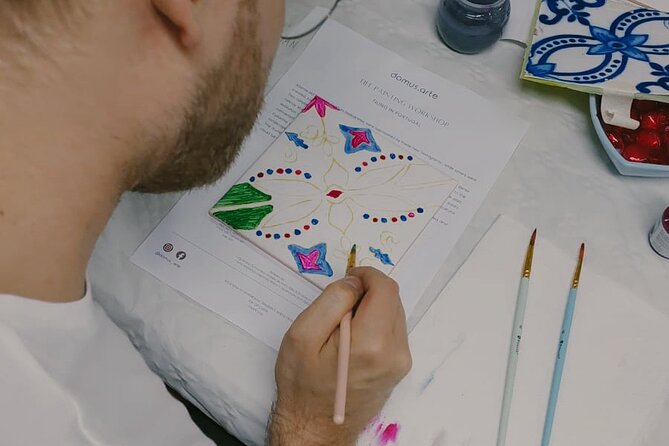
The workshop itself lasts two hours. That includes the briefing, design selection, painting, instruction, and time for drinks and snacks.
Your tile may not be ready to take immediately after you put down the brush. The finished piece needs to be prepared before collection. The timing reported for pickup varies. Some people have collected their tiles about 15 minutes after the session, while another pickup involved a wait of roughly an hour.
That difference matters if you have a bus, train, airport transfer, or another timed booking. Ask the staff when your tile will be ready and leave a practical buffer. If you have free time, the central location makes it easier to fill the gap with nearby sightseeing or shopping. If you are leaving Porto soon after the class, do not assume you can walk out with the tile at once.
The tile is placed in a box for the journey home. That is a small but important inclusion. Ceramic souvenirs can be awkward in a suitcase, and the box gives you basic protection.
Is $41 a fair price?
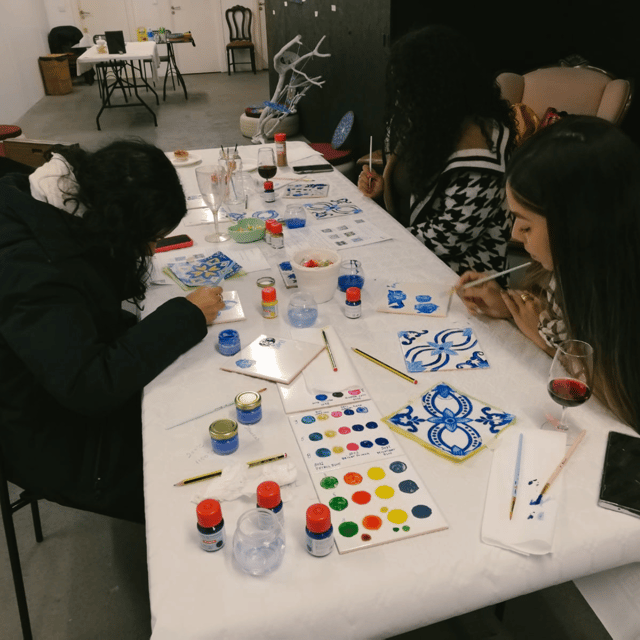
At $41 per person, the workshop is not the cheapest two-hour activity in Porto, but the price covers more than a short craft demonstration. You receive the ceramic tile, all painting supplies, instruction from an experienced artist, the history briefing, drinks, snacks, and boxed collection of your finished work.
The value depends on what you want from a souvenir. If you only want a decorative tile, you can likely buy one more quickly and cheaply. If you want to spend time learning a local art tradition and make something with your own design choices, the price is easier to justify.
I especially like that the tile is not an afterthought. You choose a design, work through it with help, and leave with a piece that records a specific day in Porto. It will not be perfectly uniform, and that is part of the point.
For families, the price also covers an activity that can hold attention longer than a quick shop visit. For solo visitors, it provides an easy way to meet people without the forced structure of a group tour. For couples and friends, the shared process creates a souvenir of the time together.
Who will enjoy this workshop most
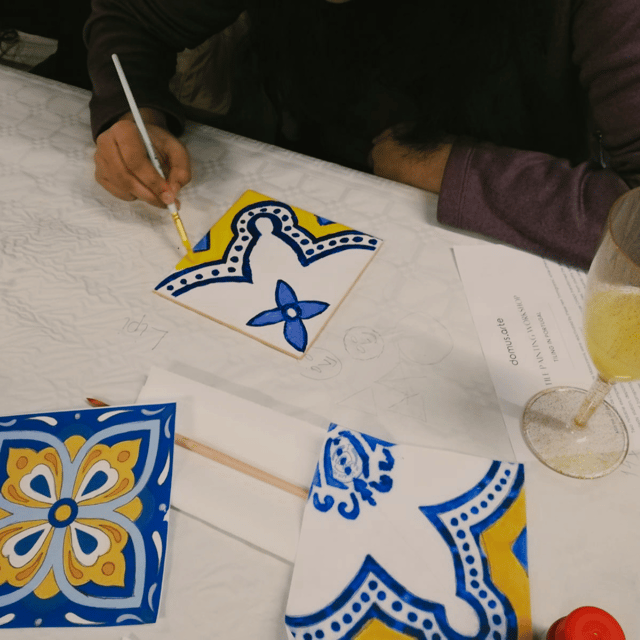
You should consider booking if you want a calm activity with a clear cultural link. It suits people who enjoy crafts, but it also works for anyone looking for a rainy-day plan, a break from walking, or a different kind of Porto experience.
It is particularly good for:
- First-time painters who want step-by-step help
- Families with children over three
- Solo visitors who enjoy meeting people at a shared table
- Couples who want matching or contrasting souvenirs
- Groups marking a birthday or other celebration
- Anyone who likes local food, art, and design
- People who want an indoor activity during poor weather
You may want to skip it if you dislike seated crafts, prefer a fast-paced tour, or need to leave Porto immediately after the class. The workshop is intentionally unhurried. You spend much of the two hours focusing on one object.
The class is taught in English. Domus Arte has a second location that is wheelchair accessible and stroller accessible, but the information provided does not confirm that every session at the Sé do Porto location has those features. If access is important, confirm the exact venue before booking. Pets are allowed, and smoking indoors is not allowed.
Small details that improve the experience
Arrive ready to choose a design, but do not worry about bringing supplies. Paints and other materials are included. Wear something you can relax in, although no special clothing is listed as required.
If you are a beginner, ask for help early rather than waiting until you have covered half the tile. The teachers are there to guide you, and a quick suggestion can save time. You can also ask about changing colors or simplifying a pattern before you begin.
If you are traveling alone, sit near other participants and let the conversation develop naturally. The workshop encourages social contact, but you can also keep to yourself and paint quietly. Both approaches fit the setting.
Plan the collection of your tile as part of the day. A short wait is possible, and a longer wait of about an hour has also occurred. This is not a problem if you schedule the class between other activities, but it can be awkward before a fixed departure.
Free cancellation up to 24 hours before the activity and a reserve-now, pay-later option make it easier to fit the session into a changing Porto itinerary. Starting times depend on availability.
Should you book the Domus Arte tile workshop?
I would book this if you want a souvenir with a story and two quiet hours away from the usual sightseeing route. The strongest features are the patient instruction, the link to Porto’s street tiles, the freedom to copy or create, and the simple pleasure of painting with a glass of Port nearby.
The main limitations are modest: you make one tile, collection can take extra time, and the activity will not suit someone who wants constant movement. For most people, those are fair trade-offs at $41, especially with the drinks, snacks, materials, instruction, and boxed tile included.
Book it during the middle of a sightseeing day, not immediately before a train or bus. Choose a traditional pattern if you want an easy start, and leave room to add your own color choices. You do not need to be artistic. You only need two hours, a little patience, and the willingness to let a small painted square become your Porto keepsake.
FAQ
How long does the Porto tile-painting workshop last?
The activity lasts two hours, including the azulejo history briefing, design selection, painting instruction, refreshments, and time to work on your tile.
What is included in the $41 price?
The price includes an instructor, one ceramic tile, the history briefing, technical guidance, all painting materials, Port wine, coffee, water, juice, sweet and savory snacks, and a box for taking your tile home.
Do I need previous painting experience?
No. The workshop is designed for complete beginners, and the instructors provide guidance throughout the painting process.
Can I create my own tile design?
Yes. You can copy one of the traditional patterns selected from Porto examples, change the colors, or create your own original design.
Is the workshop suitable for children?
Children under three are not allowed. Older children can take part, and the activity is described as suitable for families.
Which language is the workshop taught in?
The instructor language is English.
Can I drink something besides Port wine?
Yes. The available drinks include Port wine, juice, water, and coffee.
Will my tile be ready immediately after the class?
Not always. Some tiles have been ready about 15 minutes after finishing, while other collections have required a wait of about an hour. Ask the staff about the expected timing and allow extra time if you have a scheduled departure.
Can I cancel or pay later?
You can cancel up to 24 hours in advance for a full refund. A reserve-now, pay-later option is also available.
Freshly poured around Porto
- Porto Wine Tasting Experience with Portuguese Tapas Plate★ 4.7 · 356 reviews
- Porto: Taylor’s Port Cellar Tour & WOW The Wine Experience★ 4.5 · 136 reviews
- Porto: The Wine Experience, Best Wine Museum in the World★ 4.7 · 621 reviews
- Porto: Tile Painting Workshop with Tea and Port Wine★ 4.9 · 66 reviews
- Porto: Self-Guided Bike and Boat Tour with Port Wine Tasting★ 4.7 · 52 reviews
- Porto: Douro River Boat Tour with Wine Tasting★ 4.9 · 167 reviews
- Porto: Sunset Walking Tour with Port Wine and Views★ 4.6 · 95 reviews
- Porto: Douro River Cruise w/ Portuguese Wines & Local Host★ 4.9 · 166 reviews
Porto Wine Tours, side by side.

From Porto: Douro Valley w/ Boat Tour, Wine Tasting & Lunch
Read our review →
Complete Douro Valley Wine Tour with Lunch, Wine Tastings and River Cruise
Read our review →
Porto: Douro Valley with Winery Lunch, Tastings & Cruise
Read our review →
Porto: Live Fado Show with Glass of Port Wine
Read our review →
From Porto: 2 Wine Regions, Farm-to-Table Lunch & Boat
Read our review →
Douro Valley: Historical Sites, Wine Experience, Lunch & Cruise
Read our review →
Authentic Small Group Douro Wine Tour with Lunch & River Cruise
Read our review →
Porto: Bridges Cruise & Sunset & Port Wine Cellar Option
Read our review →Lists this tasting sits in