
Review · GREECE
Paros: Greek Cooking Class with Meal and Wine
Paros has plenty of good places to eat, but this four-hour class lets you see how a Greek meal comes together. At Parea Cuisine, Iro and George guide you through island cheeses, olive oil, souma, fresh produce, and familiar dishes such as tzatziki, keftedakia, moussaka, and Greek salad. The class is tied closely to local farming and family cooking, not just restaurant technique.
I like the generous, meal-sized format, and I like that the ingredients connect directly to Paros. You taste the olive oil before cooking, learn about the Mediterranean diet, and then sit down to eat what you helped prepare. The main drawback is practical: transportation is not included, and the class is only available by appointment with at least two people.
Key points
- A full four-hour food experience: This is a hands-on class followed by a substantial multi-course meal, not a quick demonstration.
- Hosted by Iro and George: Their teaching mixes cooking skills with stories about Greek food, farming, nutrition, and island life.
- Local ingredients take center stage: Expect Paros cheese, homemade olives, island olive oil, souma, seasonal vegetables, and family-made wine.
- Your main dish varies: Depending on the season and the day, you may prepare stuffed vegetables, moussaka, pasticcio, or fresh fish.
- Come hungry: The portions are generous, with appetizers, a main dish, dessert, and wine included.
- Plan ahead: Classes require an appointment, a minimum of two participants, and allergy information at least 24 hours before arrival.
A four-hour meal built around Paros ingredients
The most appealing part of this cooking class is its sense of place. You are not simply shown how to make a generic Greek salad and sent on your way. The food is tied to Paros, its farmers, its produce, and the habits of a Greek family kitchen.
The class takes place at Parea Cuisine, associated with Iro and George’s traditional restaurant work and their family cooking. The atmosphere is described as warm and informal, with the kitchen serving as both classroom and dining room. That matters because Greek cooking is less about exact measurements than it is about knowing the ingredients, judging texture, and understanding how separate dishes fit together.
Iro leads the instruction in English and Greek. Her approach includes practical cooking skills, knife work, food preparation, and background on nutrition and the Mediterranean diet. You also hear about the history of Greek dishes and the role of farming on Paros. George helps host the class, making this feel more like a shared meal than a formal school session.
The class is designed for adults and older teenagers. Children under 14 are not permitted, and the setting is not suitable for wheelchair users. A minimum of two participants is required, while larger groups can be arranged by request.
More wine tours around Greece:
- Santorini: Top Sights Day Trip, Wine Tasting, & Oia Sunset
★ 4.6 · 2,492 reviews - Santorini Wine Adventure with 12 Wine Tastings, Tapas and Sunset
★ 5.0 · 1,715 reviews - Tour and Wine Tasting in Mykonian Land
★ 5.0 · 1,357 reviews
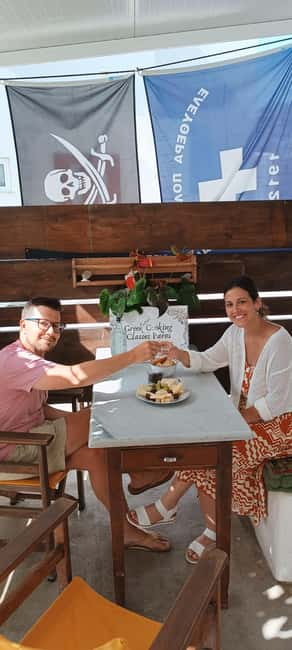
Start with olive oil, cheese, olives, and souma
Before you start chopping, the class begins with a tasting of local products. This is a smart opening because it gives you a better sense of what makes island cooking different from the Greek food you may find abroad.
The olive oil tasting helps you notice flavor rather than treating oil as a background ingredient. You may already use olive oil at home, but tasting it on its own gives you a clearer idea of its peppery, grassy, or mild qualities. The class connects the oil to the food that follows, especially salads, dips, and cooked vegetables.
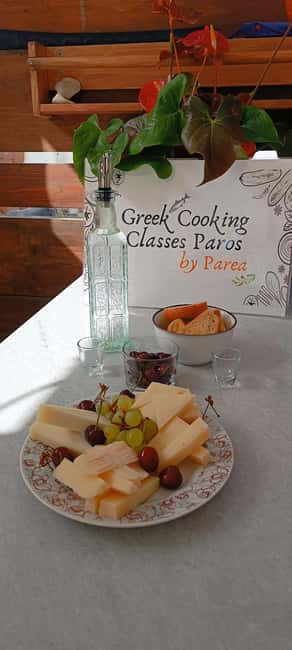
The cheese platter includes several local types made by farmers on the island. The selection can vary, but the point is to show how much variety Greek cheese offers beyond the familiar feta found in supermarket tubs. One participant specifically enjoyed a six-month Gouda, which is a useful reminder that Paros cheese production is not limited to one style.
You also taste local homemade olives and souma. Souma is a traditional spirit produced at a local distillery, and it gives the opening tasting a distinctly Parian touch. Drink carefully, especially if you are planning to enjoy the homemade wine later in the meal.
This first stage is not merely a snack. It sets up the class’s main idea: good Greek food starts with good ingredients, and the ingredients deserve attention before they go into a recipe.
Prepare classic appetizers by hand
The cooking portion begins with small dishes that form the backbone of a Greek meal. You learn to make tzatziki, keftedakia, and traditional Greek salad.
Tzatziki is familiar to many people, but preparing it in a Greek kitchen helps you understand the balance between yogurt, cucumber, garlic, herbs, and seasoning. The same is true of keftedakia, small Greek meatballs that depend on texture and seasoning as much as on the meat itself.
The Greek salad provides a simpler counterpoint. It lets the quality of the vegetables, olives, cheese, and olive oil do most of the work. This is where the local produce matters most. The class uses fresh ingredients from Paros, including vegetables grown by the family or supplied through local farming connections.
I like this mix of dishes because it keeps the class practical. You learn recipes you can recreate at home, but you also learn why the dishes taste the way they do. The preparation is hands-on, so you are not sitting at a table watching someone else work for four hours.
The class may also include zucchini balls or other small vegetable dishes. One combination described by a participant included zucchini balls, tzatziki, Greek salad, moussaka, and halva. The precise menu can change, so treat the listed dishes as possibilities rather than a fixed promise.
Choose a traditional main dish
The main course is the heart of the class. Your group chooses from fresh seasonal stuffed vegetables, moussaka, pasticcio, or the fresh fish of the day.
Stuffed vegetables may include tomatoes, peppers, zucchini, or aubergine. These dishes show the Greek habit of turning vegetables into a full meal, with fillings and seasoning that change with the season. If you cook stuffed vegetables, expect the produce itself to play a leading role.
Moussaka is the choice for anyone who wants to learn one of Greece’s best-known comfort foods. It takes more preparation than a quick stovetop dish, which makes it useful to study in a class setting. You can see how the layers are assembled and how the dish fits into a larger meal.
Pasticcio offers another baked option, with pasta and a savory filling. Fresh fish of the day provides a lighter alternative, though the exact fish depends on what is available. This seasonal choice is a good reason to ask about the menu when booking if you have a strong preference.
The recipes are not presented as isolated technical exercises. Iro also explains food traditions, farming, and the Mediterranean diet. That wider context helps you understand why vegetables, olive oil, grains, cheese, and simple seasoning appear so often in Greek home cooking.
Same vines, another glass to try:
- Santorini Wine Stories: Sunset Tour with Tasting & Dinner
★ 5.0 · 1,285 reviews - Athens: Classic Cooking Class with Market Visit and Wine
★ 5.0 · 1,101 reviews - Athens: Food Market Visit and Cooking Class with Wine
★ 4.9 · 1,087 reviews - Athens: Swimming Cruise with Lunch, Wine & Live DJ on Board
★ 4.6 · 1,085 reviews
Sit down to a generous meal with homemade wine
Once the food is ready, you eat together. This is a proper meal, not a small tasting after the class. The spread includes the appetizers, the main dish, dessert, and homemade local wine.
The wine comes from Iro’s family farm, according to the information provided about the experience. It is served as part of the meal, giving you another direct connection to local production. As with souma, drink at your own pace. Four hours of tastings, cooking, and wine can add up.
Dessert is either Greek halva or baklava. Both provide a sweet finish, but they have different textures and styles. Halva is a good choice if you prefer something simpler, while baklava offers the familiar combination of pastry, nuts, and syrup.
Come very hungry. The portions are repeatedly described as generous, and the meal includes far more than the main dish. You may want to skip a large breakfast or lunch, though do not arrive faint with hunger if you are sensitive to alcohol or long cooking sessions.
The shared meal is also where the class’s social side becomes most apparent. You cook alongside other participants, then sit down together. The setting is designed to make people feel at home, and the hosts are attentive if someone is unwell or needs an adjustment during the class.
What makes this class different from a standard cooking lesson
Many cooking classes focus on a recipe card and a finished plate. This one places more weight on the relationship between food, family, and local production.
You learn about farming culture on Paros, the island’s food traditions, and the health ideas behind the Mediterranean diet. You also handle ingredients that are connected to the hosts’ own food supply, including vegetables, olive oil, cheese, olives, and wine.
That farm-to-table element is useful, but it should be understood in the right way. This is not advertised as a farm tour, and transportation to a farm is not included. The value comes from learning where the ingredients fit into local cooking and hearing how the hosts support Paros farmers and producers.
The instruction also goes beyond cooking steps. You may pick up knife skills, preparation habits, and small tips that help Greek dishes taste more balanced. The goal is not to turn you into a professional chef. It is to give you methods you can use in your own kitchen.
I particularly like that the class can suit people with different levels of experience. Beginners get direct guidance, while people who already cook Greek food can still learn new techniques and the reasoning behind them. Even someone of Greek heritage found the class useful for learning new ideas about cooking and food traditions.
Is $160 a fair price?
At $160 per person, this is not a cheap meal, but it is more than a restaurant lunch. The price covers four hours of instruction, olive oil tasting, cheese, olives, souma, several appetizers, a main dish, dessert, and homemade wine.
If you compare it with the cost of a good meal in Paros, the value improves because you are also paying for teaching and personal attention. You leave with recipes and techniques, rather than only a full stomach. The meal itself is substantial enough that it replaces one major dining outing.
The price makes less sense if you only want a short food tasting or a quick lesson. It also may not suit someone who dislikes group activities, alcohol, or long shared meals. You should also budget for getting to Parea Cuisine, since transportation is not included.
For food-focused visitors, I consider the price reasonable because the class combines eating, learning, and local contact in one half-day. It is especially good value if you want an activity that feels connected to Paros rather than interchangeable with a cooking class in any Greek city.
Who should book this Paros cooking class?
This is a strong choice for couples, friends, and families with older children. The minimum booking is two people, and the hands-on format gives you something to do together beyond sightseeing and beach time.
It suits anyone curious about Greek food, including experienced home cooks. The class covers popular dishes, but it also explains ingredients, farming, nutrition, and food traditions. You can take the recipes home and use them after your holiday.
It is less suitable for children under 14, wheelchair users, people who need included transportation, or anyone with serious food allergies who has not given advance notice. Allergies must be reported at least 24 hours before the class.
The schedule is appointment-based, so this is not a drop-in activity. Check the available starting time and build the class into your Paros plans with enough time for the full four-hour session.
Booking and cancellation details
You can reserve the class and pay later, which helps if you are still arranging your island schedule. Free cancellation is available up to 24 hours in advance for a full refund.
The class is offered in English and Greek. Larger groups can be arranged by request, but you should contact the provider in advance rather than assume a large party can be accommodated on a normal booking.
Should you book it?
Book this class if you want a long, food-centered afternoon with real participation and a generous meal. I would choose it for a first visit to Paros when I wanted to understand the island through its produce, cooking habits, and family food culture.
The strongest reasons to go are the local ingredients, the range of dishes, and Iro and George’s warm teaching style. The main cautions are the price, the lack of included transportation, the adult-focused format, and the need to reserve ahead.
Come hungry, tell the hosts about allergies at least a day early, and allow the full four hours. If you want a quick cooking demonstration, choose something shorter. If you want to cook, eat, learn, and leave with recipes you can use at home, this is one of Paros’s most worthwhile food activities.
FAQ
Where does the Greek cooking class take place?
The meeting point is Parea Cuisine in Paros. The cooking is connected with the hosts’ family kitchen and traditional restaurant work.
How long does the cooking class last?
The class lasts four hours. Check availability for the possible starting times.
What food and drink are included?
The class includes an olive oil tasting, a cheese platter, local homemade olives, souma, Greek appetizers, one traditional Greek main dish, dessert, and homemade local wine.
What main dishes might I prepare?
Depending on the season and availability, you may prepare stuffed tomatoes, peppers, zucchini, or aubergine, as well as moussaka, pasticcio, or the fresh fish of the day.
Can children join the class?
Children under 14 are not permitted. The activity is intended for older participants.
What should I do about allergies or dietary concerns?
Tell the provider about allergies at least 24 hours before the class. Classes are arranged by appointment with a minimum of 24 hours’ notice.
Freshly poured around Greece
- Private Group Visit to Akrotiri & 3 Wineries with Tastings★ 4.2 · 42 reviews
- Paros: Wine tasting at Local Winery★ 4.9 · 91 reviews
- Paros: Sunset Boat Trip with Soft Drinks and Local Wine★ 4.9 · 31 reviews
- Naxos: Naxos Town Food Tour with Tastings and Wine★ 4.9 · 266 reviews
- Naxos: Wine and Mythology Sunset Tour★ 4.8 · 99 reviews
- Mykonos: Wine Tasting at a Mykonian Farm★ 4.6 · 79 reviews
- Mykonos: Cooking Class with Food and Wine★ 4.9 · 282 reviews
- Milos Island: Kostantakis Winery Wine Tasting Experience★ 4.8 · 236 reviews
Greece Wine Tours, side by side.

Santorini: Top Sights Day Trip, Wine Tasting, & Oia Sunset
Read our review →
Santorini Wine Adventure with 12 Wine Tastings, Tapas and Sunset
Read our review →
Santorini Wine Stories: Sunset Tour with Tasting & Dinner
Read our review →
Athens: Classic Cooking Class with Market Visit and Wine
Read our review →
Athens: Swimming Cruise with Lunch, Wine & Live DJ on Board
Read our review →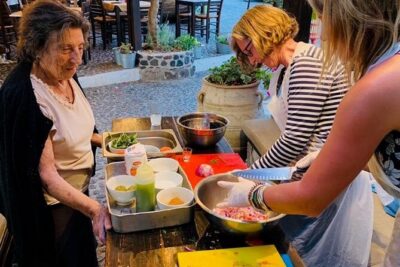
Greek Cuisine Cooking Class in Santorini with Recipes and Wine
Read our review →
Santorini: Small-Group Sunset Wine Tour with Santo Winery
Read our review →Lists this tasting sits in