
Review · PARIS
Paris: French Wine and Cheese Guided Tasting
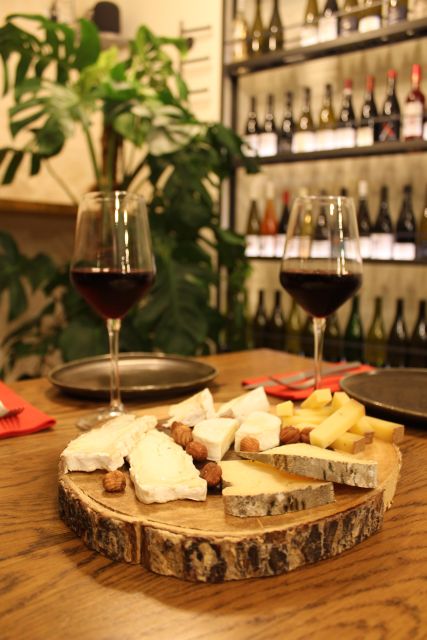
Paris knows how to pair wine and cheese, but this tasting goes beyond a plate and a few pours. At L’Oeno’Vice, Simon explains how French regions, grapes, climate, and food shape a wine, then puts those ideas to work with five wines and five cheeses.
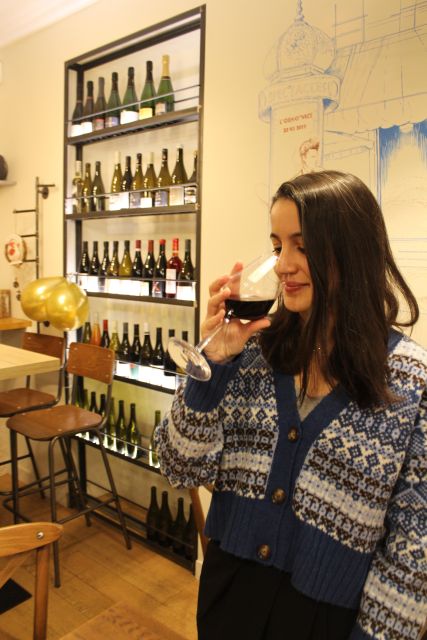
I like the small group, capped at eight, and the practical teaching. Simon adjusts his explanations to the room, uses perfume samples to train your nose, and shares Champagne from his family’s vineyard. The main consideration is simple: at $70, this is a structured tasting rather than a full meal, and it is not suitable for anyone under 18 or for pregnant women.
Key points to know before booking
- Five glasses with five cheese pairings: Taste two whites, two reds, and one Champagne, with a different cheese for each wine.
- Simon teaches, not just pours: You learn how to look, smell, and taste wine, then apply the method at restaurants.
- Perfume samples make aroma practice clear: Compare wine scents with familiar smells instead of guessing at obscure tasting terms.
- A family Champagne adds a personal touch: The final pour includes the chance to taste Simon’s family’s Champagne.
- Eight people is the maximum: The small room leaves space for questions and conversation.
- Two hours, $70 per person: This is good value if you want instruction as well as alcohol, but less so if you only want a casual drink.
Starting at L’Oeno’Vice with Simon
You meet Simon at his wine bar, L’Oeno’Vice, and begin with an introduction to wine. This is not a rushed tasting where bottles appear before anyone explains them. The opening gives you a basic map of French wine, including major regions, grape types, climate, and place.
That foundation matters. French labels can feel cryptic if you are used to wines named mainly by grape. Simon helps connect the name on the bottle with its area of origin and the conditions that influence the wine in your glass.
His teaching style is aimed at mixed experience levels. If you can already discuss wine, you still have room to ask detailed questions. If you normally order the second-cheapest bottle and hope for the best, the lesson starts at a comfortable level.
The atmosphere is relaxed rather than formal. Simon is described as funny, patient, and good at drawing people into the discussion. That helps because wine language can quickly become stiff or intimidating. Here, you are encouraged to comment, ask questions, and compare impressions with the rest of the group.
More Wine and Cheese Tastings in France
- Private Montmartre Food Tour with Wine, Cheese & Pastries
★ 5.0 · 1,027 reviews - Paris: Wine and Cheese Lunch
★ 4.9 · 596 reviews - Cheese & Wine Tasting in Montmartre with Local Cheesemonger
★ 5.0 · 470 reviews
The three-step tasting method
The tasting itself follows the classic order: look, smell, and taste. First, you examine the color. This gives you a first clue about the wine, although it is only the beginning.
Next comes the nose. Simon uses perfume samples to help you identify scents. This is a smart teaching tool because perfume gives you a familiar reference point. Instead of being told that a wine smells of something you cannot identify, you can compare it with a scent placed right in front of you.
Then you taste. The point is not to find the one perfect adjective. You are learning to notice how a wine feels, what flavors appear, and how the cheese changes your impression of it.
This method is useful well beyond the two-hour session. At a restaurant, you may not get a lesson before ordering. Knowing how to slow down, smell the wine, and taste it with your food gives you a better chance of choosing something you will actually enjoy.
Two whites, two reds, and a family Champagne

The wine sequence includes two white wines, two red wines, and one Champagne. The progression gives you several points of comparison instead of focusing on a single style.
With the whites, you can pay attention to differences in freshness, body, aroma, and how each one handles cheese. The reds let you compare structure and intensity, then see how those qualities work with a different type of cheese.
The final Champagne is especially personal. Simon’s family is connected to a vineyard, and the tasting includes the opportunity to try his family’s Champagne. That link gives the last glass more character than a generic celebratory pour.
The portions are intended for proper tasting, not just a symbolic sip. You receive enough wine to assess it with the cheese, though this is still a tasting rather than an evening of unlimited drinking. Five glasses over two hours can add up, so plan your later schedule with a clear head in mind.
You will also have bread and water according to the experience details shared by attendees. Still, do not treat the session as dinner. The cheese makes it filling for some people, but food and drinks beyond the listed tasting are not included.
Five cheeses and why pairing matters
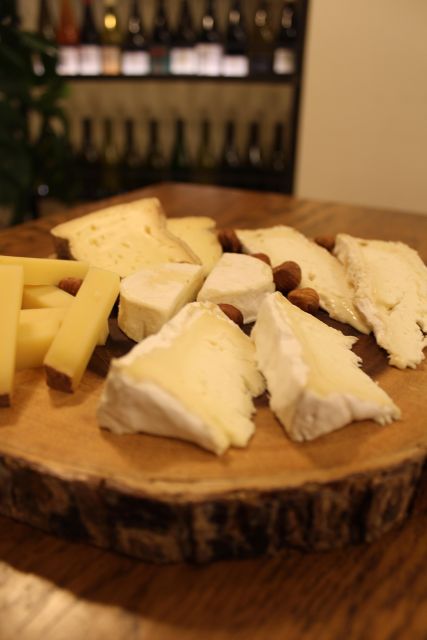
Each wine comes with a different cheese. This is where the session becomes more useful than a basic wine lecture.
A wine can taste quite different when you eat it with food. A cheese may soften a wine, make its fruit seem brighter, bring out saltiness, or make an overly strong pairing feel unbalanced. Simon explains why certain combinations work instead of simply telling you that they do.
The lesson can change the way you order at home. You learn to think about intensity, texture, acidity, and the character of the food on your plate. Those ideas apply to much more than French cheese. They can guide choices for meals in Paris, a supermarket picnic, or dinner with friends.
This is also a comfortable activity for someone who does not think of themselves as a wine drinker. Several participants entered with little interest or limited experience and still found the pairing method approachable. If you are joining a partner who loves wine, you will not be expected to arrive with technical vocabulary.
The five cheeses also keep the tasting active. You are not listening to a long talk before reaching the enjoyable part. Each pairing gives you something new to smell, taste, and discuss.
More Wine and Cheese Tastings in Paris:
- French Wine, Champagne And Cheese Tasting Paris SECRET WINE DOOR
★ 5.0 · 464 reviews - Paris: Wine and Cheese Tasting with a Chef Sommelier
★ 4.7 · 277 reviews - Paris: Wine and Cheese Tasting
★ 4.6 · 91 reviews - Paris: Cheese and Wine Class in a 17th Century Cellar
★ 4.8 · 91 reviews
French regions, grapes, and place
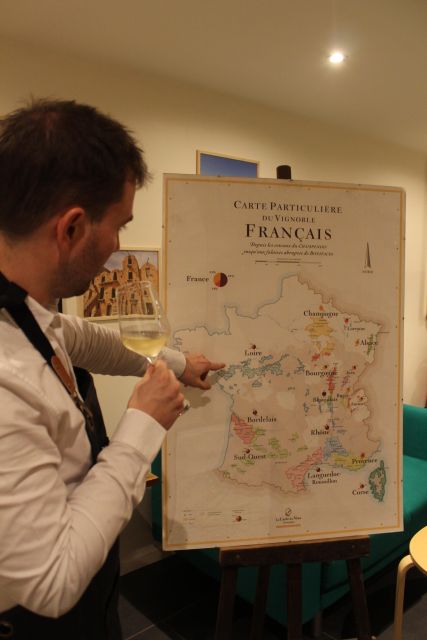
Simon uses maps or other visual material to explain French wine regions. The geography is not there as decoration. It shows why the same broad grape types can taste different from one area to another.
Climate matters. So does the soil and the location of the vineyard. Simon connects those factors with what you detect in the glass, helping you understand why two wines made from similar grapes do not necessarily taste alike.
The historical side of the lesson adds context without turning the tasting into a lecture. You learn how wine developed in France and why regional identity remains so important to French bottles.
This is one of the strongest reasons to choose a guided tasting instead of simply buying five wines at a shop. A bottle on a shelf cannot answer your questions. Simon can explain what you are tasting, why it was selected, and how to use the information later.
The session also looks beyond France at points. The main focus is French wine, but the discussion can help you understand wine from other countries too. The basic ideas of grape, climate, place, tasting, and food pairing travel well.
A small group that leaves room for questions
The group is limited to eight people. That number is large enough to create a social mood but small enough for direct conversation.
A smaller group matters here because the activity depends on discussion. You may want to ask why one cheese works with a red wine, or what to look for when ordering Champagne. With eight people or fewer, you are less likely to disappear into the back of a presentation.
The format also encourages you to compare your reactions with other people. One person may notice a scent immediately while another tastes something different. That variety is part of the fun, and it shows that wine tasting is not an exam with one correct answer.
The atmosphere is described as welcoming and interactive, with guessing games around the perfume samples. Simon also makes an effort to connect examples to the countries represented in the group. That can make the teaching feel personal rather than generic.
If you prefer to sit quietly and drink without conversation, this may not be your best pick. The value comes partly from the exchange with Simon and the other people at the table.
Is $70 good value?
At $70 per person, the price includes two hours with a wine expert, five wine pours, five cheeses, and the lesson itself. That is fair value for a small-group activity in Paris, especially if you want to leave with skills rather than just a pleasant memory.
The comparison is important. You could buy wine and cheese for less at a shop, but you would not get the regional explanation, guided tasting method, perfume exercise, or live help with pairings. The price is paying for instruction and access to a local wine bar owner as much as for the food and drink.
It is less attractive if your goal is a full meal. The cheese tasting is substantial enough to make the session satisfying, but it is not presented as lunch or dinner. You may want to plan another meal afterward.
You should also factor in the alcohol. Five glasses across two hours is a serious tasting for some people. Eat beforehand if needed, drink the water provided, and avoid booking a demanding activity immediately afterward.
The strongest value comes for people who want to make better choices later. If this session helps you understand a French label, order a bottle with confidence, or pair cheese and wine at home, the $70 can pay off throughout the rest of your trip.
Who will enjoy this tasting most?
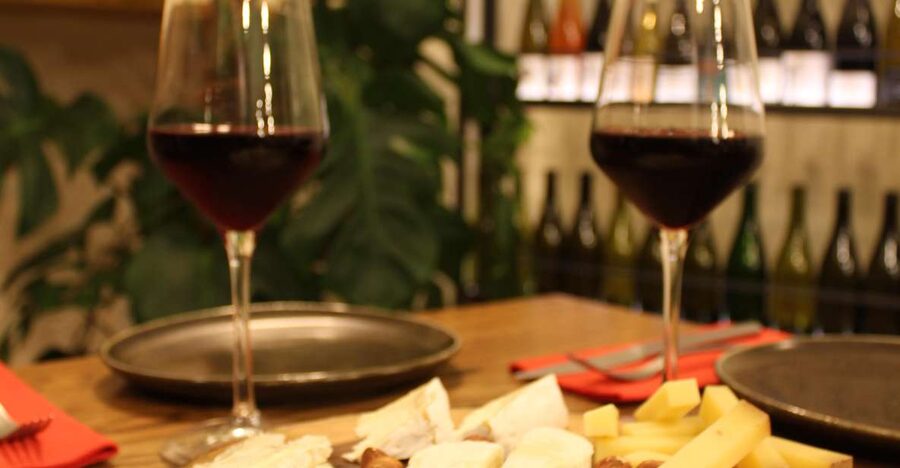
I would choose this for:
- Couples where one person loves wine and the other is still learning
- First-time wine tasters who want plain explanations
- Experienced wine drinkers who enjoy regional detail and food pairing
- People seeking a relaxed indoor activity in Paris
- Visitors who prefer a small group to a large food tour
- Anyone curious about how Champagne and French wine connect to family production
It is also a good choice if you have done tastings before but still find wine labels confusing. One long-term wine drinker found Simon’s explanation of global grape varieties, regional differences, and food interaction especially useful. That suggests the class has enough substance for more than beginners.
I would look elsewhere if you want a full meal, a vineyard visit, or a broad tour of Paris. This experience stays in the wine bar and concentrates on tasting and instruction. It also excludes people under 18 and pregnant women.
The languages are English and French. The venue is wheelchair accessible, which makes the activity easier to consider for many people, though you should still confirm any personal access needs when booking.
How to get the most from the two hours
Come ready to smell and talk, not just sip. The perfume exercise works best when you give yourself time to notice the scent before Simon identifies it.
Do not worry about having the right answer. Wine tasting is partly about comparison. If you smell something different from the person beside you, that is useful information, not a failure.
Pay close attention when the cheese is added. Taste the wine alone first, then try it with the cheese. The change is the practical lesson, and it will help you remember the pairing better than a list of French regions.
Ask Simon about bottles you may want to buy in Paris. His aim is to help you choose wine in restaurants, and the small group leaves room for personal questions. Several people became interested in finding the wines they had tasted after the session.
If you enjoy the bar atmosphere, you may want to ask about staying for another drink after the presentation. The activity itself lasts two hours, and additional food or drinks are not included, so consider any extra time and spending separately.
Booking details worth knowing
The meeting point is L’Oeno’Vice. The activity lasts two hours, and starting times depend on availability.
You can cancel up to 24 hours before the experience for a full refund. You can also reserve now and pay later, which helps if your Paris schedule is still changing.
Because the group maximum is eight, popular times may be limited. I would book ahead if the tasting is important to your plans, especially if you want a particular date.
The experience provider is L’Oeno’Vice, and the guide is Simon. The family Champagne, perfume samples, and food-pairing format make this more specific than a standard bar tasting.
Should you book it?
Book this tasting if you want to understand wine better while enjoying a relaxed Paris evening. Simon’s strength is making technical subjects usable: how to taste, how to spot aromas, how regions affect wine, and how cheese changes the glass in front of you.
At $70, it is a sound choice for a two-hour small-group class with five wines and five cheeses. Just remember that it is not dinner, and the alcohol is enough to require some planning.
For a first wine tasting in Paris, I would choose this over a generic pour-and-snack session. You leave with more than a favorite glass. You leave with a better way to choose wine the next time you sit down at a Parisian table.
FAQ
How long does the French wine and cheese tasting last?
The experience lasts two hours.
Where does the tasting take place?
You meet at L’Oeno’Vice, the wine bar where Simon hosts the tasting.
How many wines are included?
The tasting includes five glasses: two white wines, two red wines, and one Champagne.
How many cheeses are included?
You taste five kinds of cheese, with a different cheese paired with each wine.
Is Champagne included?
Yes. The final pour is Champagne, and you may have the opportunity to taste Champagne from Simon’s family.
What languages are available?
The live guide speaks English and French.
Is the activity suitable for children?
No. The experience is not suitable for children under 18.
Can I cancel for a refund?
Yes. You can cancel up to 24 hours in advance for a full refund. You can also reserve now and pay later.
Freshly poured around Paris
- Private tour of Paris by Night with Champagne★ 4.7 · 323 reviews
- Paris: Wine Tasting Experience with 6 Wines and Cheese Board★ 4.9 · 80 reviews
- Paris: Wine and Cheese Tasting with a Chef Sommelier★ 4.7 · 277 reviews
- Paris: Wine and Cheese Tasting★ 4.6 · 91 reviews
- Paris: Tasting of 3 Wine and 3 Cheese★ 5.0 · 74 reviews
- Paris: The Ultimate Wine and Cheese Tasting in English★ 5.0 · 33 reviews
- Paris: The Ultimate Wine Tour of Montmartre – 7 Guests max★ 5.0 · 28 reviews
- Paris : Scenic Cruise on the Seine River with Champagne★ 4.0 · 81 reviews
Paris Wine Tours, side by side.
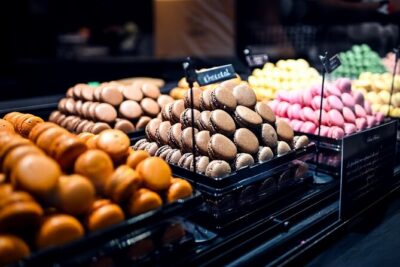
Authentic Parisian Gourmet Food Tour with 10 Local Dishes & Wines
Read our review →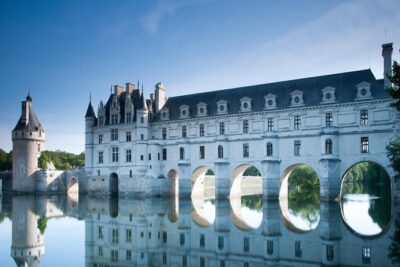
Loire Valley Castles Day Trip from Paris with Complementary Wine
Read our review →
Montmartre Hill French Gourmet Food and Wine Tasting Walking Tour
Read our review →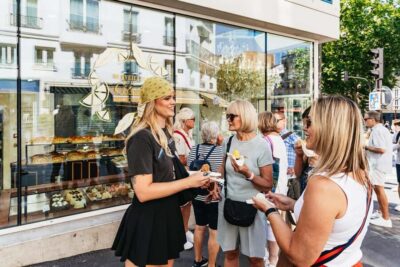
Paris: Montmartre Cheese, Wine & Pastry Guided Walking Tour
Read our review →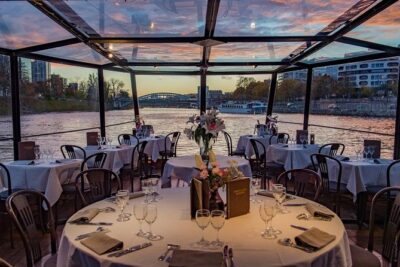
Paris 3-Courses Gourmet Dinner Seine River Cruise with Champagne
Read our review →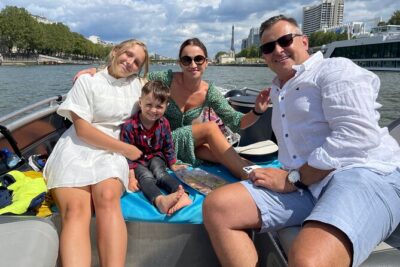
Top Private Cruises in Paris with French Champagne and surprises
Read our review →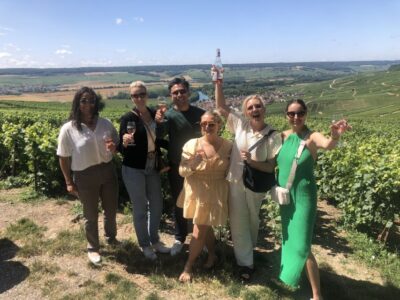
From Paris: Day Trip to Champagne with 8 Tastings & Lunch
Read our review →
Private Montmartre Food Tour with Wine, Cheese & Pastries
Read our review →Lists this tasting sits in