
Review · ITALY
Olive Oil Museum: Extravirgin school – Food & wine tasting
The most interesting part of this one-hour experience is the contrast between modern olive-oil production and Sardinia’s old oil-making traditions. At Olio del Tempio, you’ll see how the mill works, then visit Sa Mola de Su Notariu, where ancient lamps and oil equipment tell a more personal story.
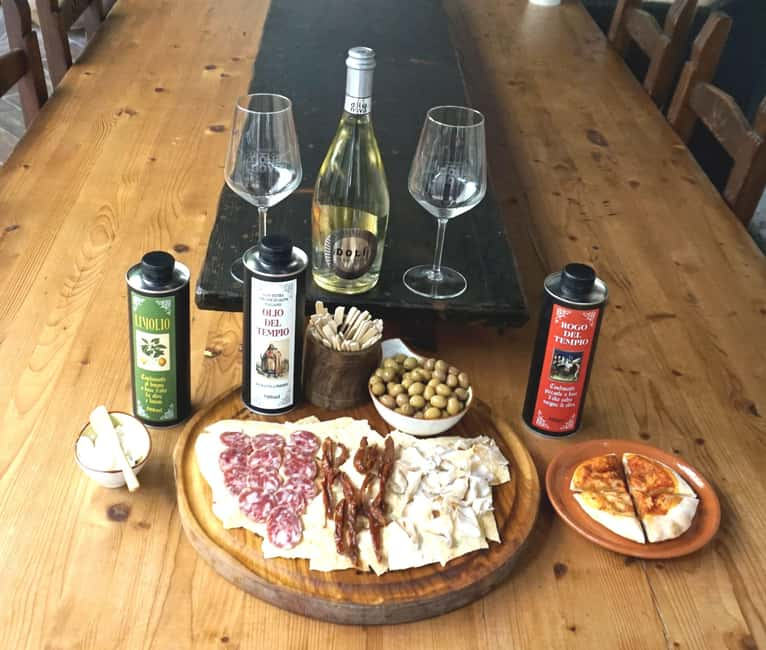
I like the practical tasting lesson, which teaches you to recognize fruitiness, bitterness, and spiciness instead of simply telling you that one bottle is better than another. I also like the generous local plate, with cured meats, carasau bread, natural olives, sparkling wine, and flavored oils made with Sardinian ingredients.
The main drawback is the short length. One hour gives you a lively introduction, but not much time for a slow museum visit or a long conversation about production. You’ll get the most from it if you arrive ready to taste, listen, and shop rather than expecting a full farm visit.
Key points at a glance
- Modern mill and old oil museum: See present-day production, then enter Sa Mola de Su Notariu, including its underground cistern.
- A useful tasting lesson: Learn how fruitiness, bitterness, and spiciness help reveal quality extra virgin olive oil.
- Distinctive flavored oils: Try Limolio with organic olives and lemons, plus Rogo del Tempio, made with nine traditional Sardinian herbs.
- A proper Sardinian snack: Cured meats, carasau bread, olives, regional foods, water, and fresh sparkling wine are included.
- Easy access from Cagliari: Drive to the free parking lot or take bus line 108 from central Cagliari in about 54 minutes.
- A practical purchase opportunity: Guests receive special prices on the mill’s oils, useful if you want to take Sardinian flavors home.
Modern milling meets Sardinian tradition
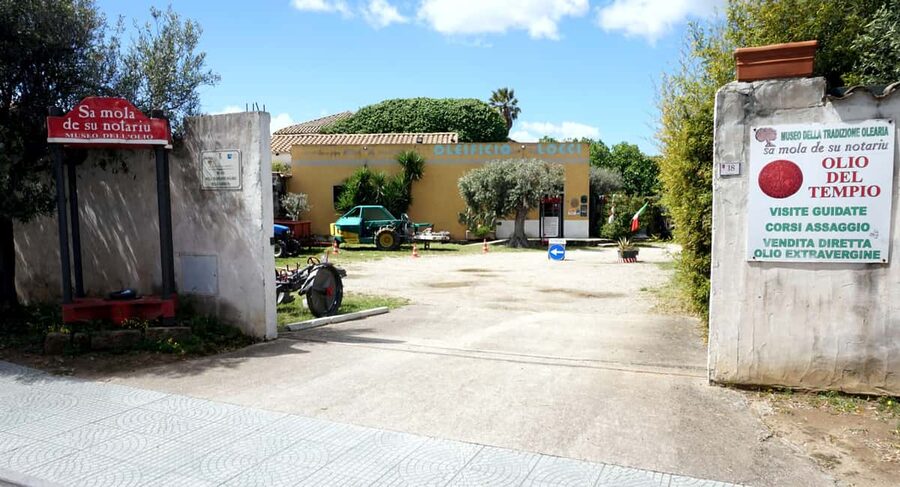
Olio del Tempio gives you two ways to understand olive oil. The first is technical. Video presentations explain harvesting and processing at the modern mill, giving you a clear look at the steps that turn olives into oil.
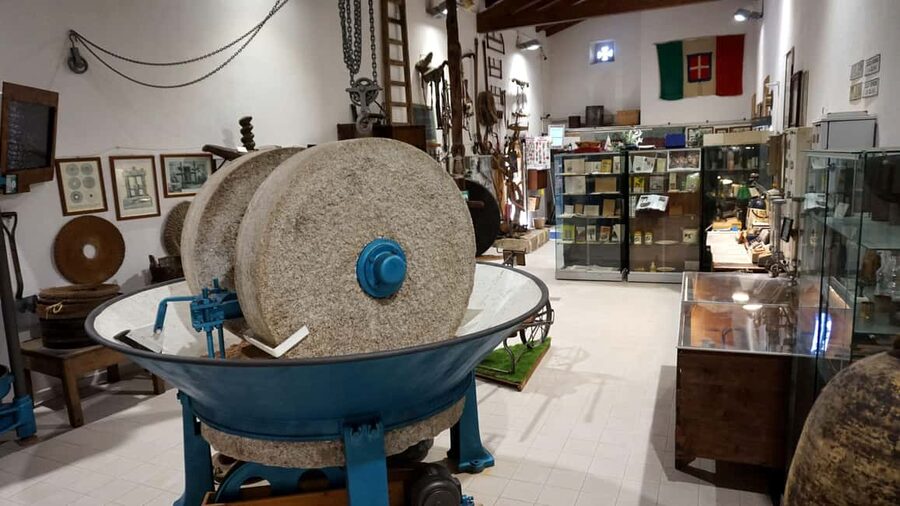
The second is cultural. The museum, called Sa Mola de Su Notariu, shows how central oil once was to ordinary life in Sardinia. Ancient equipment and oil lamps make the subject less abstract. Instead of hearing only about acidity, extraction, and storage, you see the tools connected with the daily use of oil over many generations.
That pairing is the strength of the visit. A modern facility can explain efficiency and quality control, while the museum shows why olive oil mattered beyond the kitchen. It was tied to lighting, food, work, and local custom.
The family’s oil-making tradition reaches back more than 400 years. That does not mean you’ll spend an entire afternoon hearing a family tree, but it gives the visit a genuine local footing. This is not simply a generic food tasting placed in a mill.
More Wine and Olive Oil Tastings in Italy
- Sorrento Farm and Food Experience including Olive Oil, Limoncello, Wine tasting
★ 5.0 · 2,524 reviews - Sorrento: Lemon, Olive Oil and Wine Tasting Tour with Lunch
★ 5.0 · 300 reviews - Alghero: Wine and Olive Oil Tasting at a Local Farm
★ 4.8 · 294 reviews
The 10-minute mill visit
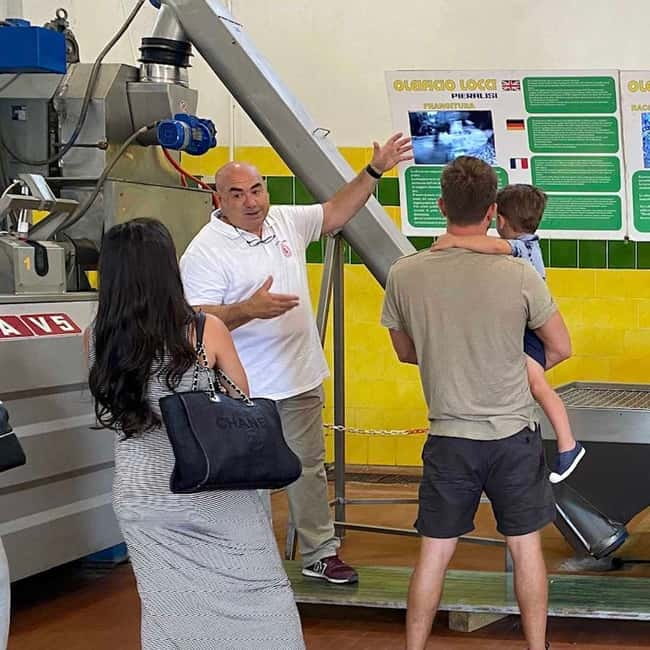
The guided mill portion lasts about 10 minutes, so expect an introduction rather than an extended factory tour. You’ll learn about the modern production process through explanations and video presentations covering the stages from harvest to processing.
This short format works well if you want context before tasting. Oil can seem simple until you consider how quickly olives must be processed, how flavor develops, and how production choices affect the final bottle. The mill presentation gives you enough background to understand why fresh, well-made oil has more character than a bland cooking oil.
You should keep your expectations in check. The supplied schedule allows only a short guided visit, and there is no stated promise that machinery will be operating during your arrival. The value is in seeing the facility and learning the basic process, not in watching a full day of milling.
For food lovers, this section is most useful when you pay attention to the link between production and taste. The lesson that follows makes more sense once you know that olive oil is a fresh agricultural product, not just a shelf item.
Sa Mola de Su Notariu and the underground cistern
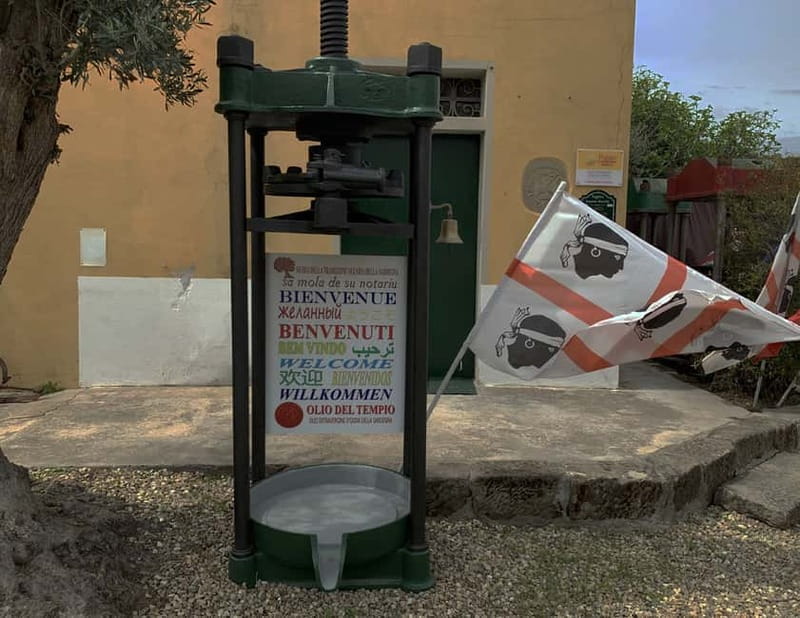
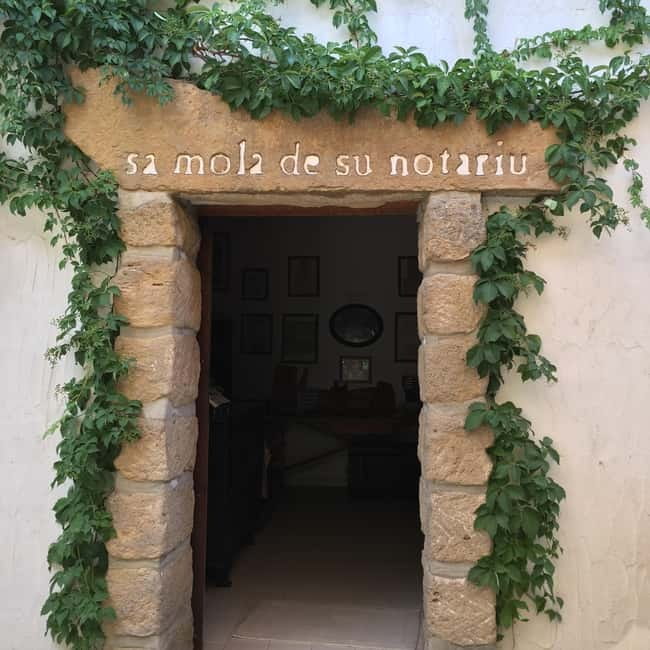
The museum is included in the price, and it adds the sense of place that a standard tasting room often lacks. Sa Mola de Su Notariu contains old lamps and equipment connected with the world of oil through the centuries.
One unusual feature is the chance to descend into the old underground cistern. It is described as a storage place for oil lamps and other artifacts, giving you a glimpse of how oil was kept and used before modern bottling and retail displays.
This part may appeal most to you if you enjoy small museums with specific local stories. It is not presented as a large institution with a long list of galleries. Instead, it focuses tightly on oil and its role in Sardinian life.
The museum also helps explain why the tasting is about more than finding a pleasant flavor. Olive oil has been a practical resource, a source of light, and a part of hospitality. The old objects give weight to those ideas.
Learning to taste extra virgin olive oil
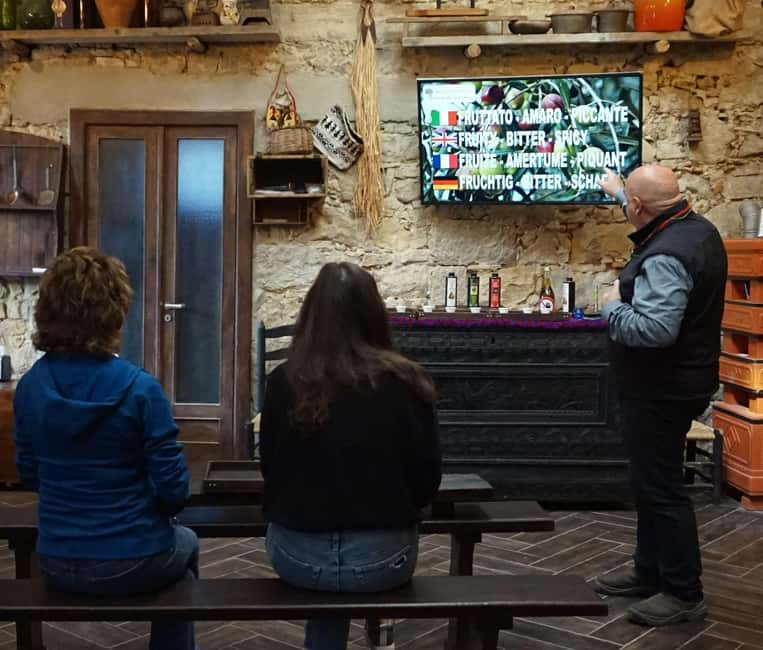
The tasting lesson is the heart of the experience. Francesco Locci leads you through a class on identifying high-quality extra virgin olive oil, using slides and guided sampling.
You’ll pay attention to three main sensations: fruitiness, bitterness, and spiciness. Fruitiness may suggest the character of the olives, while bitterness and a peppery sensation can be signs of a lively, fresh oil rather than flaws. The point is not to memorize technical terms. It is to train your palate so you can make better choices at home.
This is the kind of lesson that can change how you shop. Instead of selecting a bottle only by its label, price, or attractive packaging, you’ll have a simple method for judging what you taste. You may also become more aware of the difference between a mild oil for general cooking and a more forceful oil meant to finish a dish.
The format is active, not just a lecture. You taste the oils as the guide explains what to notice. That matters because olive oil descriptions can sound vague until you compare samples side by side.
The class is also a good reason to choose this experience over a basic food stop. You are not only consuming local products. You are being given a skill that carries on after the visit.
More Wine Tastings in Italy
- Florence: Chianti Wineries Tour with Wine Tasting
★ 4.5 · 10,071 reviews - Small-Group Wine Tasting Experience in the Tuscan Countryside
★ 5.0 · 7,392 reviews - Rome: Tuscany & Montepulciano Day Trip with Lunch & Wine Tasting
★ 4.5 · 5,232 reviews - SMALL-GROUP Wine Safaris: Tuscan Wine Tasting Tours from Florence
★ 5.0 · 5,088 reviews
Limolio, Rogo del Tempio, and the flavor test
Two products add variety to the tasting.
Limolio combines organic olives and lemons. It is suggested for salads and fish, where the citrus note can bring brightness without needing a separate squeeze of lemon. It should interest you if you like flavored oils but still want the base ingredient to remain central.
Rogo del Tempio is the bolder option. It is a spicy oil made with nine traditional Sardinian herbs and is intended for meat or baked dishes. The herbal blend gives you a chance to compare a fresh, citrus-led oil with one built around heat and savory aroma.
These samples make the class more practical. You can think about use as well as quality. A good oil is not automatically the right oil for every dish. Limolio and Rogo del Tempio show how an oil can be chosen to match food.
The experience includes several extra virgin olive oils, not just the flavored versions. That lets you focus first on the basic character of the oil, then see how lemon or herbs alter the result.
Sardinian food with sparkling wine
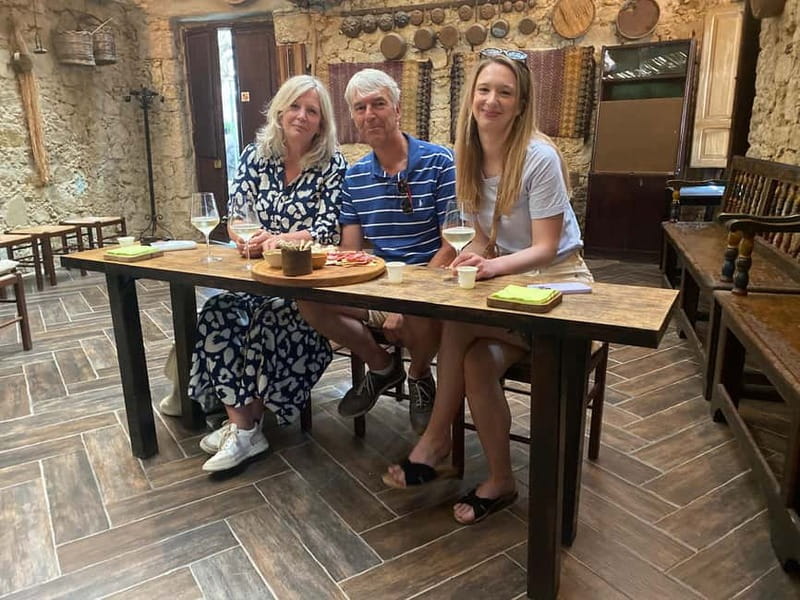
The tasting is served with a platter of cured meats, typical Sardinian foods, natural olives, and carasau bread. Carasau is thin, crisp bread that works especially well with oil because it gives you a clean, dry base for tasting.
Fresh sparkling wine is included, along with water. The wine makes the stop feel social and relaxed, while water helps clear your palate between samples. You’ll also have local snacks and small regional foods that show how the oils function at the table.
I like this approach because the oil is not tasted in isolation the entire time. A spoon or small glass can reveal aroma and texture, but bread, meat, and olives show you how the product behaves with food. You can decide which oils you would actually use at home.
The food offering is substantial for a one-hour activity, but it is still a tasting rather than a full meal. If you arrive hungry, do not assume the platter will replace lunch or dinner. It is better viewed as a generous snack paired with a lesson.
What the $60.35 price gets you
At $60.35 per person, this is not the cheapest way to sample olive oil. Its value depends on how much you want from the visit.
You are paying for several parts in one compact experience: entry to the museum, a guided mill introduction, an oil-quality class, several tastings, Sardinian foods, sparkling wine, and access to special prices on oils. Free parking and Wi-Fi are also included.
The strongest value comes from the lesson. If you simply want a snack and a few samples, the price may feel high for one hour. If you want to understand what you are tasting and take home products with more confidence, the cost is easier to justify.
The guest discount on oils can also affect the final value, especially if you already plan to buy bottles. The products are described as fairly priced for their quality, and the discount is available only to people taking part in the experience.
I would compare this with the cost of a separate museum visit, tasting, and local snack stop. Combining all three saves time and gives the food a clear cultural setting. Still, shoppers should remember that oil purchases are extra.
Getting there from Cagliari
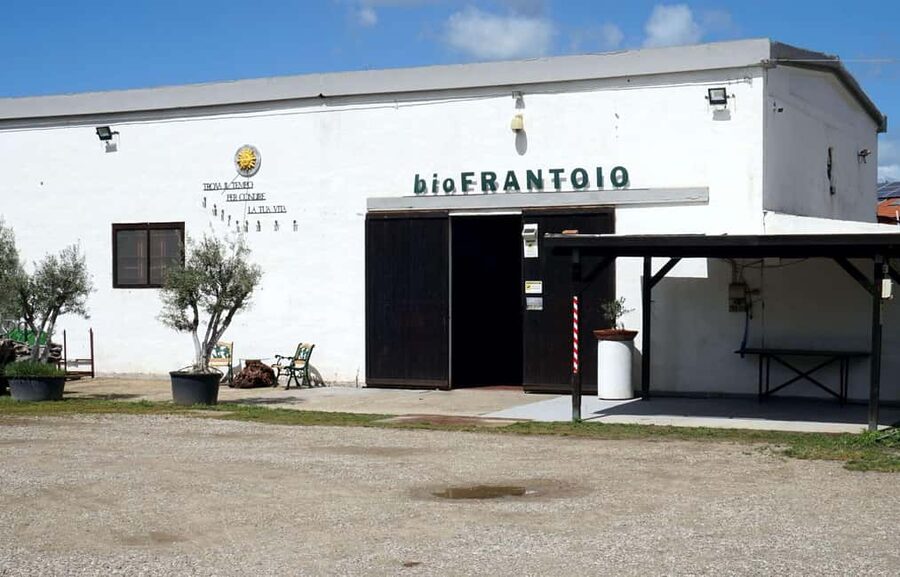
The meeting point is the museum and mill, where you can use the large free parking lot. If you have a car, the arrival is straightforward and the parking removes one common source of hassle.
You can also take bus line 108 from central Cagliari. The ride takes about 54 minutes, so check the bus schedule carefully against the available starting times. Since the activity lasts only one hour, a missed connection could matter more than it would on a longer tour.
The visit ends back at the same meeting point. There is no included transfer, although transfers from southern Sardinia can be arranged as an extra service. The listed price does not cover those rides or anything not specifically included.
The experience is wheelchair accessible. It is also dog-friendly, with a water bowl available for dogs. Those details make the stop more flexible for visitors who are planning around mobility needs or a pet.
Languages, timing, and the guide
The experience is offered in English, French, and Italian. Francesco Locci leads the activity, and the strongest praise focuses on his warm welcome and clear passion for olive oil.
That personal guidance matters here. Tasting depends on explanation, especially when you are learning to separate fruitiness from bitterness and spiciness. A guide who enjoys the subject can make a short class feel more useful and less like a sales pitch.
The full experience lasts one hour. The rough timing breaks down into about 10 minutes for the guided mill visit, 20 minutes for the class and food tasting, and 20 minutes for wine, local snacks, regional foods, and tapas. The remaining time allows for arrival, movement between areas, and the museum visit.
Because the schedule is tight, arrive on time. You will not want to lose the tasting lesson by arriving late, and the museum section is too short for a rushed visit.
Starting times vary, so check availability before building the rest of your day around it. Free cancellation up to 24 hours in advance and reserve-now, pay-later booking make it easier to fit into a changing Sardinia itinerary.
Who will enjoy this experience most?
This is a strong choice for you if you like food with a clear local connection. It suits couples, small groups, solo visitors, and anyone who wants a break from beaches and archaeological sites.
You do not need to be an olive-oil expert. In fact, beginners may get the most from the class because the tasting gives you a simple framework for making sense of unfamiliar flavors.
It is also useful for cooks and food-focused shoppers. The lesson can help you choose an oil for salads, fish, meat, or baked dishes, and the mill shop gives you a chance to buy the oils you have tasted.
Families may appreciate the short length, although the subject will appeal most to adults and older children who can take part in a guided tasting. Dogs are welcome, which is helpful if your day in southern Sardinia includes a pet.
You may want a different activity if you are seeking a long agricultural tour, a full meal, or a broad wine experience. Wine is part of the snack service, but olive oil is clearly the focus.
Should you book the Olio del Tempio visit?
Book it if you want a compact, well-organized introduction to Sardinian olive oil with real food, a museum, and a useful tasting lesson. The mix of the modern mill, the old underground cistern, and the local platter gives the hour more substance than a simple shop visit.
The best reason to go is the chance to learn a skill you can use later. Francesco Locci’s personal guidance, the unusual flavored oils, and the chance to buy products at special prices add to the appeal.
Skip it if your schedule is already packed or if you expect an extended farm tour and a full lunch. At $60.35, the value depends on appreciating the lesson and museum as much as the food.
For most food-focused visitors staying near Cagliari, I would make room for it. Arrive hungry but not expecting a full meal, keep an eye on bus times if you are not driving, and leave space in your luggage for a bottle of Sardinian oil.
FAQ
How long does the olive oil experience last?
The activity lasts one hour. The visit includes a short mill tour, an olive-oil quality class, food tasting, wine, local snacks, and time in the oil museum.
What is included in the tasting?
You receive tastings of extra virgin olive oils, including Limolio and Rogo del Tempio, along with cured meats, Sardinian foods, natural olives, carasau bread, water, and fresh sparkling wine.
Where does the experience start and end?
It starts and ends at Museo dell’olio Sa Mola de Su Notariu, also known as Olio del Tempio. Free parking is available at the museum.
Can I reach the museum by public transportation?
Yes. Bus line 108 runs from central Cagliari and takes about 54 minutes to reach the location.
Is the experience offered in English?
Yes. The live guide can conduct the activity in English, French, or Italian.
Can I cancel or pay later?
You can cancel up to 24 hours in advance for a full refund. The reserve-now, pay-later option lets you book without paying immediately.
More wine museums around Italy
- Porto: Cálem Cellar Tour, Interactive Museum & Wine Tasting
★ 4.5 · 4,113 reviews - Porto: The Wine Experience, Best Wine Museum in the World
★ 4.7 · 621 reviews - Tenerife: Wine Museum Ticket with Local Wines & Food Tasting
★ 4.5 · 393 reviews - Aÿ-Champagne: Pressoria Champagne Museum with Tasting
★ 4.7 · 239 reviews
Freshly poured around Italy
- Private Flavors of Florence Walking Tour(Food&Wine Included)★ 4.8 · 46 reviews
- Pizza-Making Workshop by night with glass of wine★ 4.9 · 45 reviews
- Pramaggiore: Ornella Bellia Winery Guided Tour & Tasting★ 5.0 · 90 reviews
- Rome: Pompeii Tour with Wine and Lunch by High Speed Train★ 4.8 · 485 reviews
- Polignano a Mare: Street Food Tour with Tastings and Wine★ 4.7 · 154 reviews
- Polignano a Mare: Private Cruise with Champagne★ 4.8 · 66 reviews
- Pizza and Tiramisu Cooking Class with Wine in Milan★ 4.9 · 80 reviews
- Pisa: Cathedral Guided Tour and Tower tickets & wine tasting★ 4.8 · 78 reviews
Italy Wine Tours, side by side.

Tuscany Day Trip from Florence: Siena, San Gimignano, Pisa and Lunch at a Winery
Read our review →
Florence: Pasta Cooking Class with Unlimited Wine
Read our review →
Florence: Chianti Wineries Tour with Wine Tasting
Read our review →
Small-Group Wine Tasting Experience in the Tuscan Countryside
Read our review →
Pisa, Siena and San Gimignano Day Trip with Lunch & Wine Pairing
Read our review →
Rome: Tuscany & Montepulciano Day Trip with Lunch & Wine Tasting
Read our review →
SMALL-GROUP Wine Safaris: Tuscan Wine Tasting Tours from Florence
Read our review →
Winner 2025 Florence Sunset Food & Wine Tour by Eating Europe
Read our review →Lists this tasting sits in