
Review · SPAIN
Jerez: Bodegas Álvaro Domecq Guided Tour with Wine Tasting
The most interesting part of this Jerez tour is that it goes beyond a quick sherry pour. You see the old cellars, learn how American oak barrels and the solera and criaderas system shape the wines, and get a look at brandy and vinegar production too. The tasting then makes the lesson practical, glass by glass.
I like the strong sense of place inside this centenary winery, and I like the guides’ clear, personal style. Cristina and Laura are often singled out for making complicated wine methods easy to follow, while Lucia and other bilingual guides have also handled mixed-language groups well. The main consideration is that English and Spanish may be combined, and a large group can make it harder to hear every explanation.
Key points at a glance
- A 90-minute tour in central Jerez: You visit Bodegas Álvaro Domecq from a meeting point near Calle San Luis and the Puro Arte flamenco tablao.
- More than sherry: The route covers sherry, brandy, vermouth, and Jerez vinegar, including the production and ageing methods behind each.
- A proper tasting at the end: Expect representative Álvaro Domecq wines, with options that may include several sherries, vermouth, and brandy.
- A family and local story: The tour links the winery to Álvaro Domecq and his reputation as a horseback bullfighter.
- Small-group advantages, with one caveat: Smaller groups can feel personal, but mixed English and Spanish tours may be less smooth when numbers rise.
- Optional food pairing: An Iberian products dish can be added, with enough food for roughly two to four people.
Why Álvaro Domecq is a good introduction to Jerez wine
Jerez can be confusing at first. Fino, Oloroso, Amontillado, Palo Cortado, Cream, and Pedro Ximénez are not simply different labels on the same drink. They reflect different grapes, ageing conditions, and cellar methods.
This visit gives you a useful framework. Instead of tasting first and trying to remember the names later, you learn how the wines are made and then taste examples while the information is fresh.
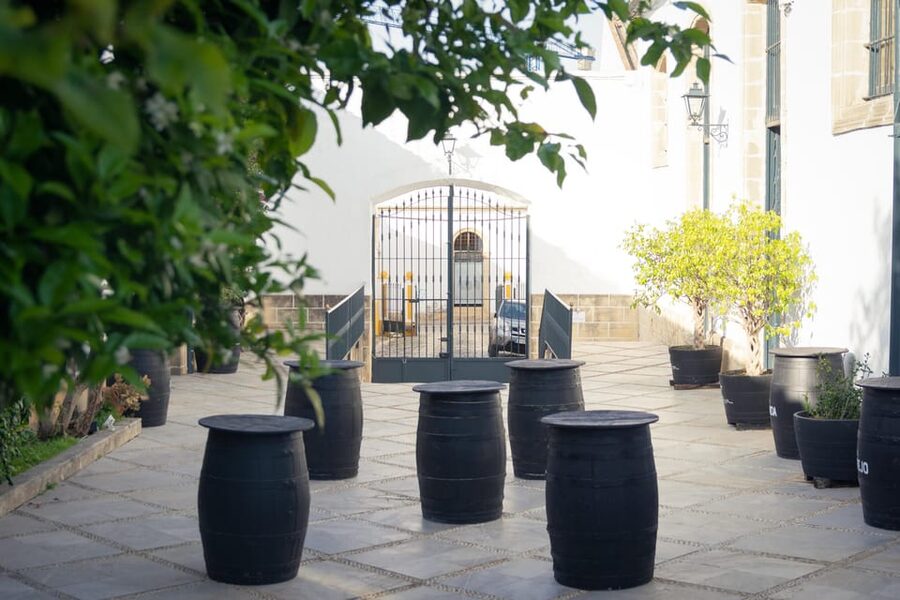
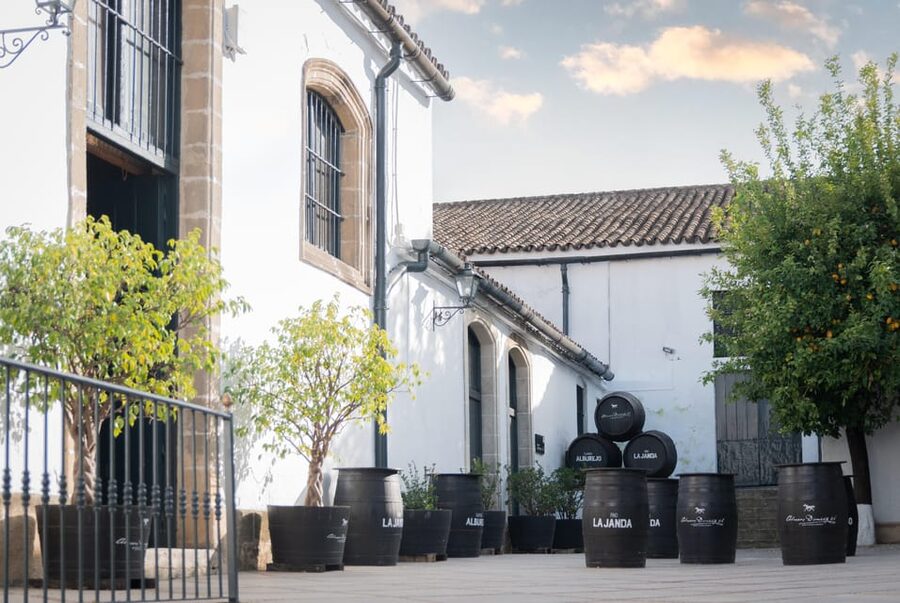
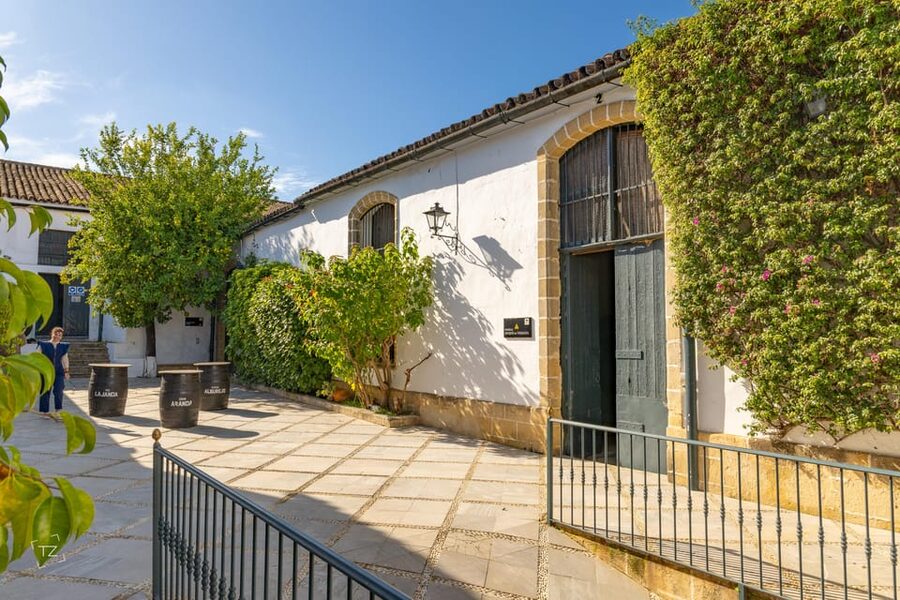
Bodegas Álvaro Domecq occupies a historic place in the town center. The winery dates to the 18th century, and the tour presents its old-world setting as part of the experience. You are not visiting a modern tasting room detached from production. You move through working cellar spaces where barrels, ageing, and storage are central to the story.
That makes the tour especially helpful if you are new to sherry. You do not need to arrive with a trained palate or a favorite style. The guide explains the basics before asking you to compare the wines.
More Wine Tastings in Spain
- Montserrat & Cogwheel Train, Gourmet Wine Tasting & Tapas/Lunch
★ 5.0 · 6,290 reviews - Madrid Tapas & Wine Tasting Walking Tour – Small Group Local Bars
★ 5.0 · 3,644 reviews - Toledo Tour & Vineyard Walk with Wine Tasting from Madrid
★ 5.0 · 2,546 reviews
Finding the meeting point near Calle San Luis
The listed starting area is Calle San Luis, with the specific meeting point described as a small passage on Calle Madre de Dios beside the Puro Arte flamenco tablao. You need to ring the bell when you arrive.
This is worth taking seriously. A winery tour is not the kind of activity where you want to wander around looking for a large modern entrance five minutes before the start. Save the meeting instructions, allow a little extra time, and look for the passage and the tablao rather than relying only on the winery name.
The tour returns to the same general area after the visit. Since the bodega is in central Jerez, this works well as part of a day spent exploring the old town. One useful detail from the experience is that the railway station is considered easy to reach from the venue, making the tour practical for a day visit to Jerez.
The activity lasts about an hour and a half. That is long enough for a proper explanation and tasting, but short enough to fit around lunch, flamenco, or another visit.
Inside the old cellars: what you actually see
The tour begins with the winery’s story and the Álvaro Domecq family connection. Álvaro Domecq is presented not only as a name on a bottle, but as a local figure associated with horseback bullfighting and Jerez culture.
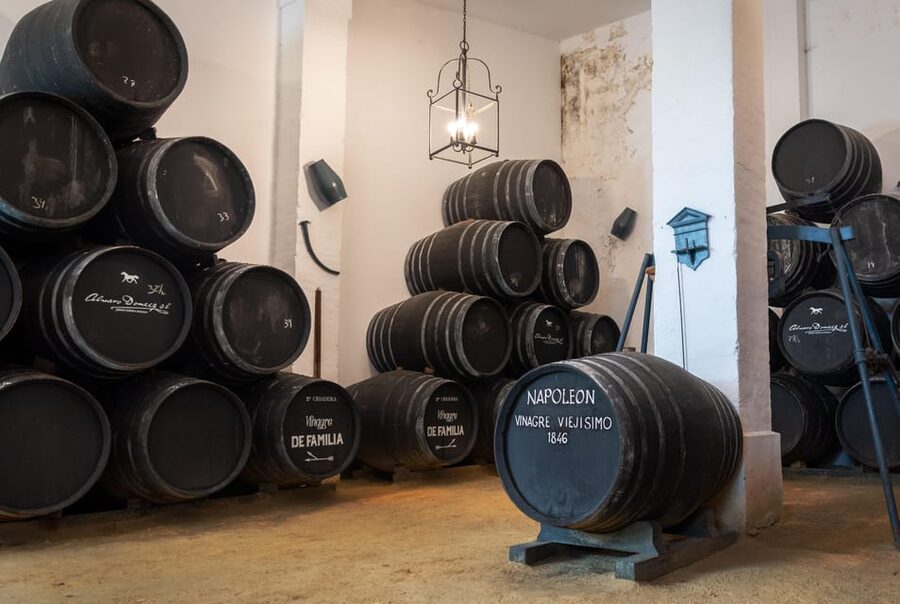
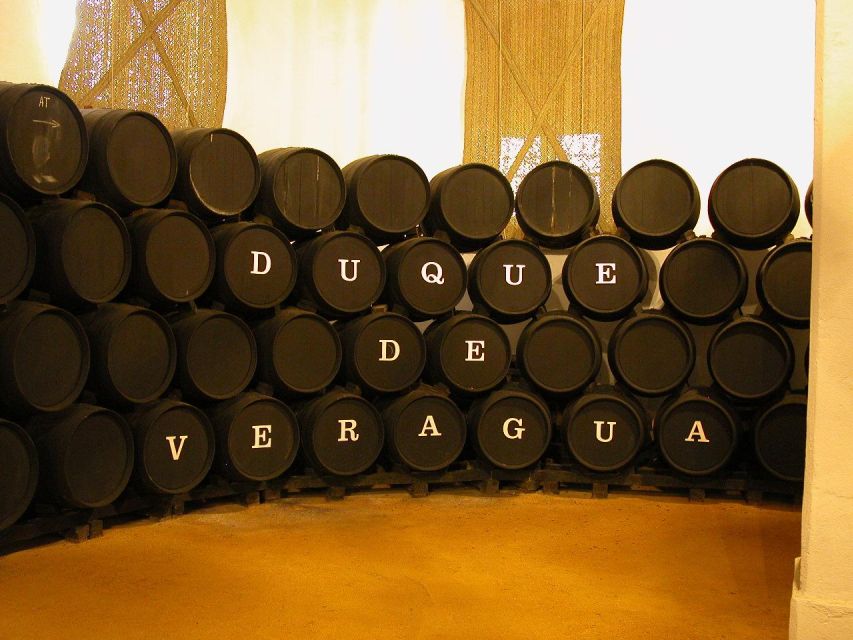
From there, the guide explains how the winery makes and ages its wines. The key method is the solera and criaderas system, in which wines of different ages are held in layers of barrels and blended over time. The point is consistency, but the method also gives the cellar its distinctive rhythm: old wine is drawn from the lowest level, and younger wine moves down through the system.
You see this process in the Duque de Veragua Cellar. This is one of the more useful stops because the system can sound abstract when explained only at a tasting table. Seeing the barrels arranged for ageing gives you something concrete to remember.
The barrels are traditional American oak. Their role is part of the explanation, as is the way the wines mature in the cellar. The visit focuses on craft and method rather than on industrial scale, which is one reason the bodega feels different from a major commercial wine attraction.
The Oloroso cellar includes an audiovisual presentation. It adds context without requiring the guide to explain every part of the production process from scratch. If your tour includes a mixed-language group, pay attention to where you sit for the video. English subtitles may be easier to read from the front rows.
From brandy to vinegar, the tour widens its scope
A strong feature of this visit is its range. You are not shown only the bottles most visitors already associate with Jerez.
The brandy section explains how the spirit is made and aged. Products include Solera Gran Reserva Duque de Veragua and Solera Reserva Veragua. If you usually think of Jerez as a sherry destination only, this part helps show how broad the region’s cellar traditions are.
The Fino Wines Cellar turns attention to grape varieties and the land that supplies them. The guide connects those details to the flavor and character of Jerez wines. This is a good moment to ask questions, especially if you want to understand why Fino tastes so different from Oloroso or Pedro Ximénez.
The Vinegar Cellar is another unusual stop. The winery produces Jerez vinegar, including Vinagre Reserva de Familia and Vinagre Gran Reserva 1730. The tour describes Jerez vinegar as the only vinegar in the world with a Designation of Origin, a point that gives this part of the visit real interest for cooks and food lovers.
Vermouth is also part of the wider tasting picture. Several visitors have especially liked the vermouth, even when they did not normally drink sherry. Ask about it in the tasting room if it is not automatically included in your selection.
Same vines, another glass to try:
- Montserrat Half-Day Tour with Tapas and Gourmet Wines
★ 5.0 · 7,359 reviews - Barcelona Tapas and Wine Experience Small-Group Walking Tour
★ 5.0 · 5,804 reviews - Barcelona: Montserrat, Cogwheel, Black Madonna & Winery Tour
★ 4.8 · 5,633 reviews - Montserrat with Black Madonna & Medieval Winery with Tapas/Lunch
★ 5.0 · 5,209 reviews
The wines you may taste at the end
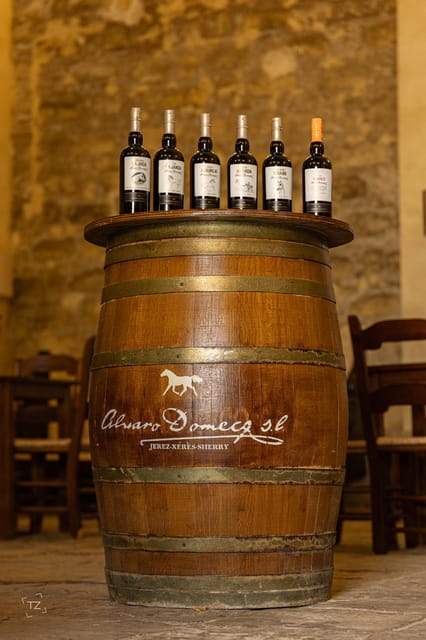
The tasting is the payoff, but it works best because the cellar tour gives each glass some context. The named Álvaro Domecq wines include:
- Fino La Janda
- Oloroso Alburejo
- Aranda Cream
- Pedro Ximénez Viña 98
These styles give you a broad sweep. Fino is the lighter, drier reference point. Oloroso offers a fuller style. Cream moves toward sweetness, while Pedro Ximénez is intensely sweet and dense.
The winery also produces V.O.R.S. wines aged for more than 30 years. The named examples are Amontillado 1730, Palo Cortado 1730, and Oloroso 1730. These are the bottles to watch for if you already appreciate sherry or want to understand how long ageing changes the drink.
The exact number of pours can vary by tasting option. Some experiences include three or four sherries and vermouth, while a larger five-sherry or V.O.R.S. selection may be available at an added cost. Confirm what your chosen booking includes rather than assuming every named bottle will appear.
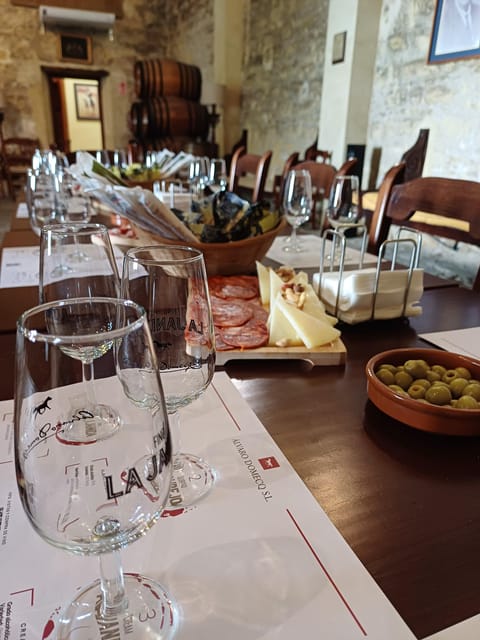
Several details make the tasting more useful than a rushed sample. The portions are described as generous, and the pace allows you to sit with the wines rather than swallow them and move on. Notes about the different sherry styles help you compare them, which is far more useful than tasting one isolated glass.
Brandy may also be included. If you prefer spirits to fortified wine, this gives the visit a second reason to book.
How the guides shape the experience
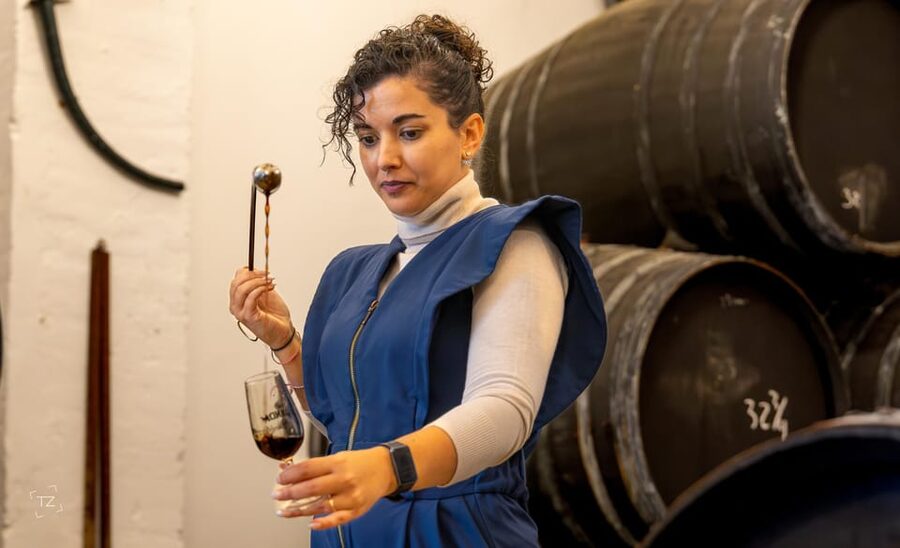
The strongest part of the tour is the human explanation. Cristina is repeatedly described as friendly, enthusiastic, and clear. Laura is also praised for making the tour special and for explaining sherry production fluently in English and Spanish. Other guides, including Lucia, have provided attentive help to smaller English-speaking groups.
That matters because sherry production has a lot of new vocabulary. A guide who can explain the barrel system in plain language makes the visit much more enjoyable than a formal speech packed with technical terms.
The language setup deserves a practical warning. Tours are offered in English and Spanish, but both languages may be used during one session. In a small group, the guide can give extra attention to English speakers. In a large mixed group, English explanations may take longer or feel less complete.
One English-language booking was less satisfying because too much of the tour was delivered in Spanish. Another group found the guide handled both languages well. The likely difference is group size and the balance of languages on the day.
If precise English instruction is important to you, ask about the language arrangement when booking. If you are comfortable with some bilingual explanation, the guides appear well prepared to switch between languages.
Is the $26 price good value?
At about $26 per person, this is a fair price for a central Jerez winery tour lasting 90 minutes with wine tastings included. You are paying for more than a flight of sherry. The price covers the cellar visit, production explanation, family background, and tasting across several product types.
The value improves if you are curious about how sherry is made. A simple bar tasting might cost less, but it would not show you the solera system, ageing cellars, brandy areas, or vinegar production.
The value is less clear if you dislike fortified wines or want to watch every stage of bottling and distilling. One visit did not include those parts, so you should not expect a full factory tour. This is mainly a heritage bodega visit and tasting.
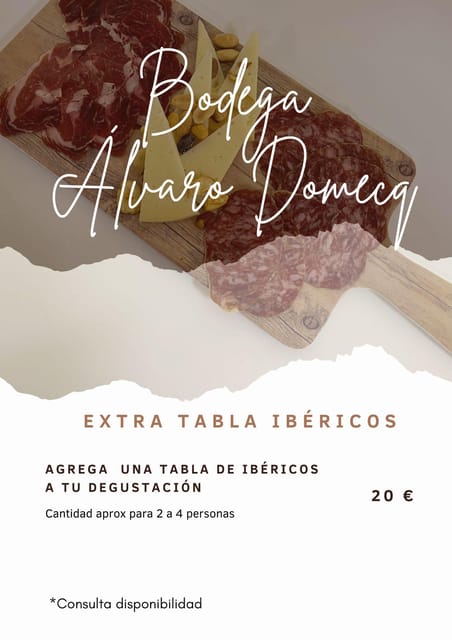
An Iberian products dish can be added separately. The quantity is intended for about two to four people. That can turn the visit into a light meal, but it is not included in the base price, so check the total before booking.
A more serious tasting option, such as a V.O.R.S. selection, may also cost extra. For a first visit, the standard tasting is probably enough. For someone already interested in old sherry, paying more for the very aged wines could make sense.
Who will enjoy this tour most?
I would choose this experience if you want a compact introduction to Jerez’s wine culture without spending half a day in a huge commercial winery. It suits couples, curious food lovers, and anyone who wants a clear explanation before tasting.
It is also a good fit for people who think they do not like sherry. The range is wide enough to show that a dry Fino, a full Oloroso, a sweet Pedro Ximénez, and a cream-style wine can feel like very different drinks.
Brandy and vinegar make the tour useful for people who are not focused only on wine. Cooks may be particularly interested in the vinegar cellar, while spirit drinkers can pay attention to the Duque de Veragua brandies.
I would be more cautious if you need a strictly English-only tour, dislike guided tastings, or want to see every production stage in operation. The 90-minute format gives you a well-shaped introduction, not an exhaustive technical tour.
A few practical ways to get more from the visit
Read the meeting instructions carefully. The small passage beside Puro Arte and the need to ring the bell are easy details to miss.
Arrive ready to listen before the tasting begins. The wines make more sense once you understand the barrels and ageing system.
If you are in a large group, stay near the guide and sit toward the front for the audiovisual presentation. English subtitles may be difficult to read from the back.
Ask about vermouth and brandy. They are part of the bodega’s wider work and may be the surprise favorites of the afternoon.
Consider the food add-on if you want to continue eating afterward. The nearby flamenco venue has also been used by visitors for lunch and a performance, but the food option and flamenco arrangements should be confirmed separately.
The shop at the end is practical rather than an afterthought. You can buy Álvaro Domecq wines, brandies, vinegar, and local products, which makes it easier to take home something you actually tasted.
Should you book Bodegas Álvaro Domecq?
Yes, if you want a friendly, informative introduction to sherry in a historic Jerez setting. The strongest reasons are the range of products, the clear explanations from guides such as Cristina and Laura, and the chance to compare several styles after seeing how they age.
Book with realistic expectations. The tour may use both English and Spanish, larger groups can reduce personal attention, and bottling or distilling may not be part of what you see. If those limits are acceptable, $26 buys a useful slice of Jerez culture, not just a few drinks at a counter.
FAQ
How long does the Bodegas Álvaro Domecq tour last?
The guided winery visit and tasting last about 1.5 hours.
What languages are available?
The tour is offered in English and Spanish. A session may combine both languages, especially when the group includes speakers of both.
Where is the meeting point?
Meet at a passage on Calle Madre de Dios, beside the Puro Arte flamenco tablao, near the Calle San Luis starting area. You need to ring the bell.
What is included in the price?
The price includes the winery tour in central Jerez and wine tastings.
Is food included?
No. You can select an extra Iberian products dish, with a quantity intended for about two to four people.
Which products are covered during the visit?
The tour covers sherry wines, brandy, vermouth, and Jerez vinegar. It also explains the solera and criaderas ageing system.
What wines may be included in the tasting?
Named wines include Fino La Janda, Oloroso Alburejo, Aranda Cream, and Pedro Ximénez Viña 98. V.O.R.S. options include Amontillado 1730, Palo Cortado 1730, and Oloroso 1730. The exact tasting selection can vary.
Can I cancel the booking?
You can cancel up to 24 hours in advance for a full refund. A reserve-now, pay-later option is also available.
Freshly poured around Spain
- Private Bandama Caldera Volcano, Botanic Garden & Old Town★ 4.5 · 53 reviews
- Malaga: PREMIUM TAPAS TOUR Paella, Tapas, Winery & Flamenco★ 4.6 · 82 reviews
- Premium Tour: Winery 7 Tastings + Guadalest Castle | Small group★ 5.0 · 40 reviews
- PREMIUM TAPAS TOUR: Paella, Market Tastings, and Winery★ 4.7 · 27 reviews
- Pottery Workshop and Wine – Barcelona★ 4.7 · 138 reviews
- Picasso Museum and Walking Tour Plus Wine Tasting Upgrade★ 4.3 · 111 reviews
- Mallorca: Premium Wine Experience, Tasting and Fine Foods★ 4.8 · 79 reviews
- Palma Tour with Wine and Tapas Tasting★ 3.9 · 52 reviews
Spain Wine Tours, side by side.

Montserrat Half-Day Tour with Tapas and Gourmet Wines
Read our review →
Montserrat & Cogwheel Train, Gourmet Wine Tasting & Tapas/Lunch
Read our review →
Barcelona Tapas and Wine Experience Small-Group Walking Tour
Read our review →
Barcelona: Montserrat, Cogwheel, Black Madonna & Winery Tour
Read our review →
Montserrat with Black Madonna & Medieval Winery with Tapas/Lunch
Read our review →
Barcelona: Tapas Walking Tour with Food, Wine, and History
Read our review →
Madrid Tapas & Wine Tasting Walking Tour – Small Group Local Bars
Read our review →
Sevilla Food Tour: Tapas, Wine, History & Traditions
Read our review →Lists this tasting sits in