Review · ITALY
Genoa: Pesto Masterclass with Tasting and Wine
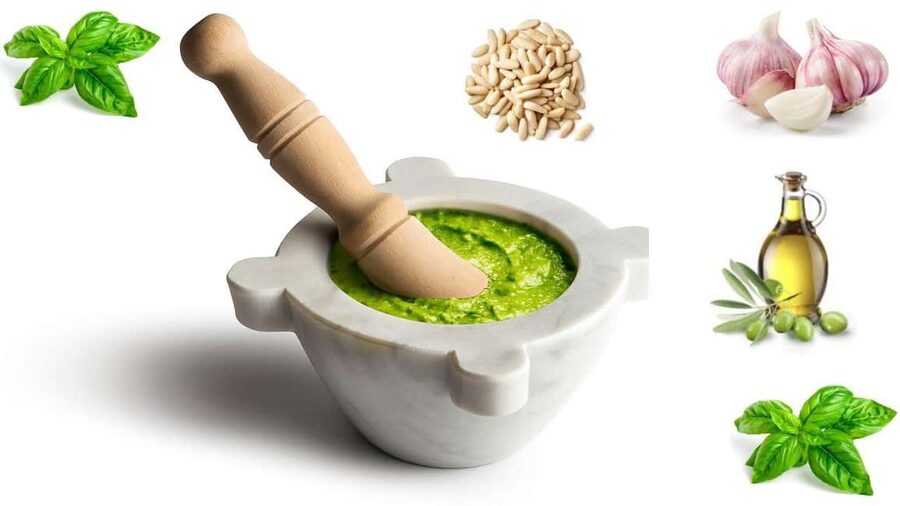
Making pesto by hand in a Carrara marble mortar is the heart of this Genoa experience. You grind basil, pine nuts, garlic, cheese, and olive oil with a wooden pestle, then eat the pesto with trofie pasta and local wine. I like the small group size and the way the class connects the recipe to Ligurian producers and family traditions. I also like that you leave with a 90-gram jar of pesto, not just a recipe card.
The main consideration is the price, $92 per person. That is a fair spend for a two-and-a-half-hour food experience with lunch, wine, instruction, equipment, and a take-home gift, but it is more than a quick cooking demonstration. The listed age restrictions also appear unusually strict, so families should confirm the minimum age before booking.
Key points at a glance
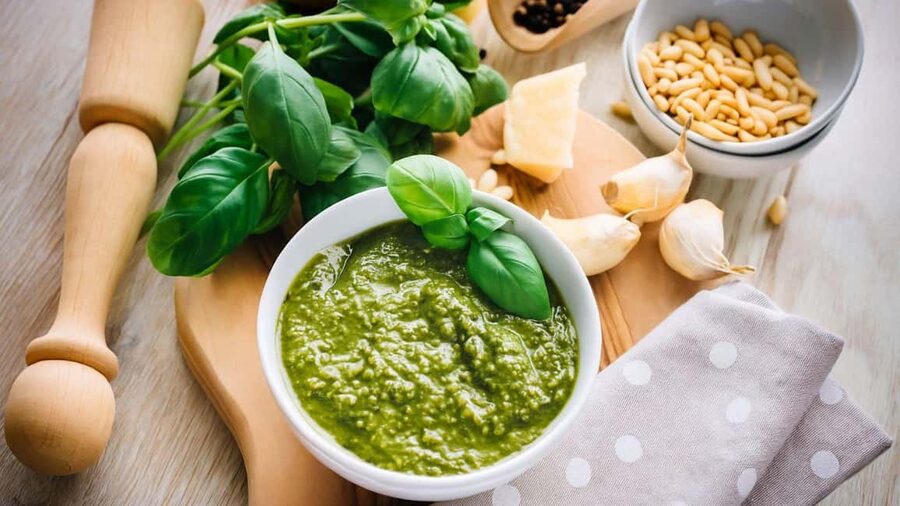
- Traditional tools: You make pesto in a Carrara marble mortar with a wooden pestle, rather than using an electric blender.
- A real lunch included: Your finished pesto is served with trofie pasta, alongside a glass of Ciliegiolo del Tigullio.
- Central Genoa setting: The class takes place at BioTigullio5Terre on Via di Ravecca, about 100 meters from Columbus’s House.
- Small class size: A maximum of six participants gives you room to work and ask questions.
- Family food knowledge: Barbara, Gaia, and the team explain the recipe, the region, and the local people behind the ingredients.
- A useful souvenir: You receive a free 90-gram jar of long-life Genoese pesto and can buy a mortar in the shop.
Why this pesto class feels properly Genoese
Pesto is often treated as a quick green sauce. In Liguria, it has a clear identity. The traditional version uses basil from the region, pine nuts, garlic, Parmesan, pecorino, and extra virgin olive oil. The method matters too. A mortar lets you crush the ingredients gradually, helping create the creamy texture that several participants found memorable.
At BioTigullio5Terre, you do not simply watch someone make pesto. You prepare your own batch, using a marble mortar and wooden pestle supplied for the class. You will be shown how to handle each ingredient and how the sauce changes as the basil, nuts, cheese, and oil come together.
I like this format because it gives you something useful to take home beyond a pleasant meal. You learn the hand movements, the order of the ingredients, and the feel of a properly made pesto. You also get a chance to ask about the ingredients instead of trying to copy a recipe from a printed page.
The class is held in a typical shop in Genoa’s historic center. That matters. You are not in a polished cooking school separated from daily life. The shop is a working food business, with people coming in and out, local products on display, and the practical feel of a family operation.
More wine tours around Italy:
- Tuscany Day Trip from Florence: Siena, San Gimignano, Pisa and Lunch at a Winery
★ 5.0 · 21,634 reviews - Florence: Pasta Cooking Class with Unlimited Wine
★ 4.9 · 10,285 reviews - Florence: Chianti Wineries Tour with Wine Tasting
★ 4.5 · 10,071 reviews
Finding Via di Ravecca 51/r
The meeting point is inside the BioTigullio5Terre shop at Via di Ravecca 51/r. Look for the large wooden sign outside. The shop is about 100 meters from the House of Columbus, so it is easy to pair with a walk through this part of central Genoa.
Give yourself a little time to find the door. Genoa’s old center has narrow streets and close-set buildings, and the address includes the local red-number style, written as 51/r. You do not need to bring cooking equipment. Aprons and all class materials are supplied.
Comfortable clothes make sense. Pesto is not a messy industrial job, but you will be handling oil, basil, cheese, and a wooden pestle for a good part of the session.
The two-and-a-half-hour class, step by step
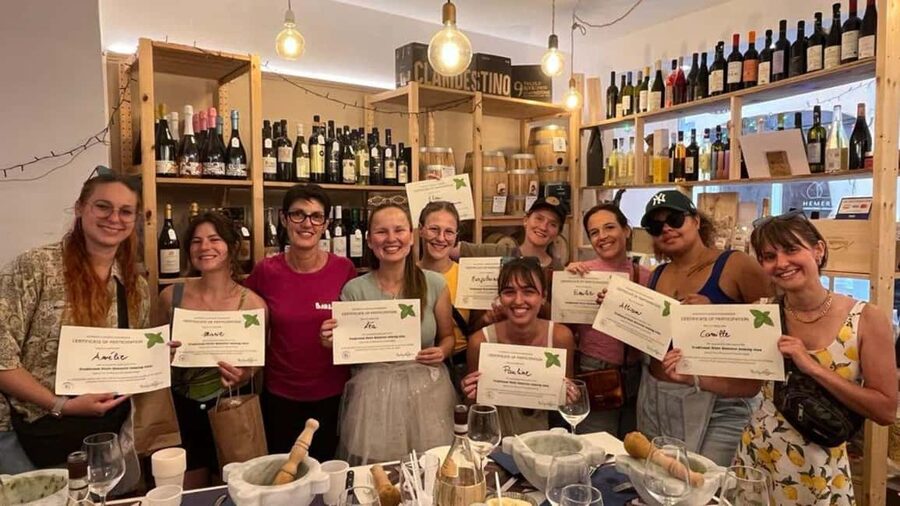
1. Meet the family workshop team
The class begins at the BioTigullio5Terre shop, where your instructor introduces the recipe and the ingredients. The teaching is available in Italian, English, and French.
Barbara has led many of the sessions described in the supplied information, and Gaia has also been praised for her friendly teaching style. Both guides explain the food clearly while adding stories about Liguria and the family business.
One especially useful feature is the attention to where the ingredients come from. You may see a map showing the origins of the basil and other products. The lesson is not only about making a sauce. It also explains the local producers and the family project that supports them.
Same vines, another glass to try:
- Small-Group Wine Tasting Experience in the Tuscan Countryside
★ 5.0 · 7,392 reviews - Florence: Pasta & Tiramisu Cooking Class with Unlimited Wine
★ 4.9 · 6,708 reviews - Florence: Pasta Cooking Class with Unlimited Wine
★ 5.0 · 6,413 reviews - Pisa, Siena and San Gimignano Day Trip with Lunch & Wine Pairing
★ 4.5 · 6,006 reviews
2. Grind the pesto in marble
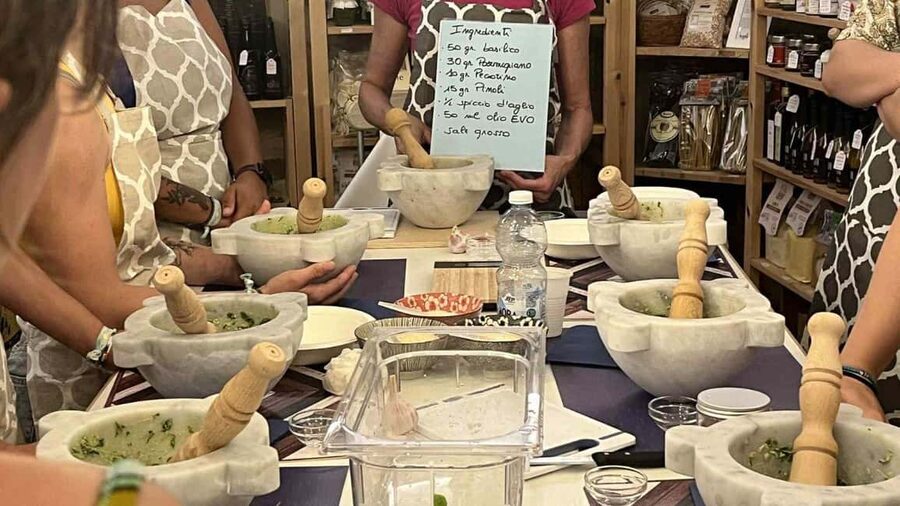
Each participant gets a mortar, pestle, ingredients, and an apron. You work with PDO basil, Parmesan, pecorino, pine nuts, garlic, and extra virgin olive oil.
The marble mortar is not just decoration. Its weight keeps it steady while you work, and its rough interior helps break down the basil and nuts. The wooden pestle gives you control, though it also requires more effort than pressing a button on a food processor.
You do not need prior cooking skills. The instructor takes you through the process step by step, so this suits someone who has never made pesto as well as someone who has prepared it before. If you already make pesto at home, pay close attention to the texture and the order of the ingredients. The class focuses on the creamy consistency associated with traditional Genoese pesto.
This is the most hands-on part of the experience, and it is also the part that takes patience. Crushing ingredients by hand is slower than blending them. That is part of the lesson, not a flaw, but anyone looking for a fast demonstration may find the pace more involved than expected.
3. Eat trofie with your own pesto
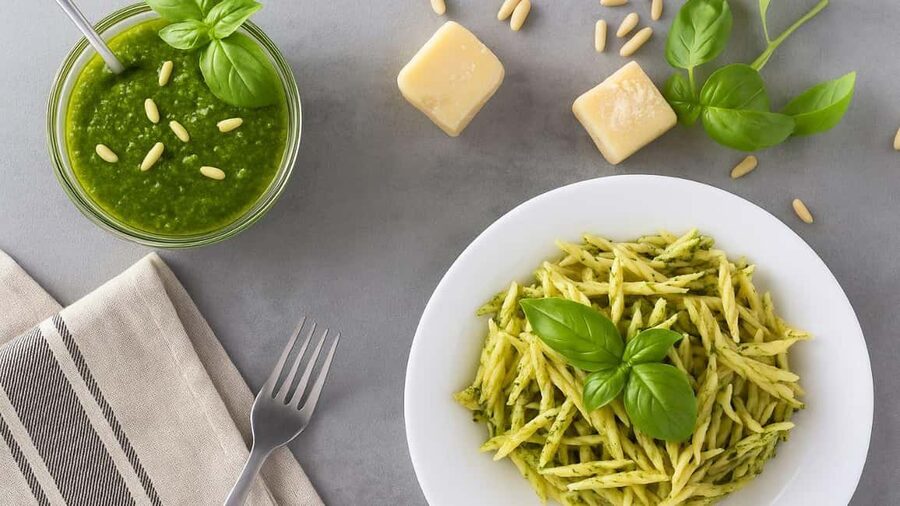
After the preparation, your pesto is served with trofie, the short, twisted pasta closely associated with Liguria. The shape holds the sauce well, so you can taste the texture you created rather than sampling it from a spoon.
This meal gives the class a clear payoff. You are not merely making pesto to take home. You sit down and eat it as part of a simple Ligurian lunch.
A glass of Ciliegiolo del Tigullio is included. The experience information also names Vermentino and Pigato among the local wines that may be used. Extra drinks are not included, so budget separately if you want more than the provided serving.
I like this final tasting because it turns the lesson into a complete regional food experience. The ingredients are simple, but their quality and handling matter. Fresh basil, good oil, cheese, and the right pasta make the difference.
4. Take home the 90-gram jar
At the end, you receive a free 90-gram jar of long-life Genoese pesto made with local ingredients. It is a practical souvenir, especially if you want to compare the jarred version with the pesto you prepared yourself.
The shop also sells other products, and you can buy a marble mortar if you want to repeat the method at home. That purchase is optional and not part of the $92 price.
Check your own transport and food-import rules before carrying the jar home. The supplied information confirms that the jar is provided, but it does not give details about airline packing or customs regulations.
What makes the small group useful
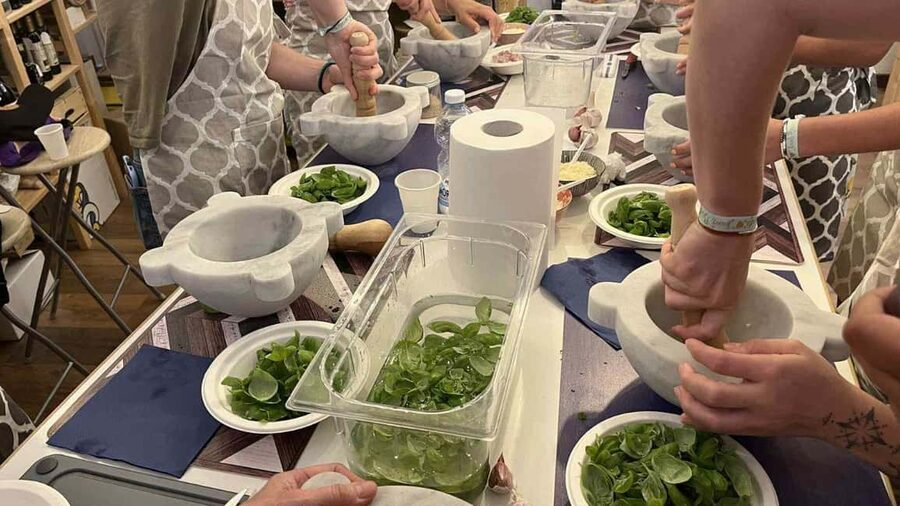
The class is limited to six participants. That is a strong advantage for a hands-on lesson. You have enough room to work at your own mortar, and the instructor can correct your technique or answer questions without trying to manage a large crowd.
A small group also makes the food stories easier to follow. The class includes information about basil, cheese, wine, and local producers, so you can ask for more detail if a particular ingredient catches your interest.
The tradeoff is that small classes can feel more personal and less anonymous. If you prefer to watch quietly from the back, this format may ask more of you. The point is to prepare the pesto yourself, so expect to participate rather than simply observe.
Is $92 a good value?
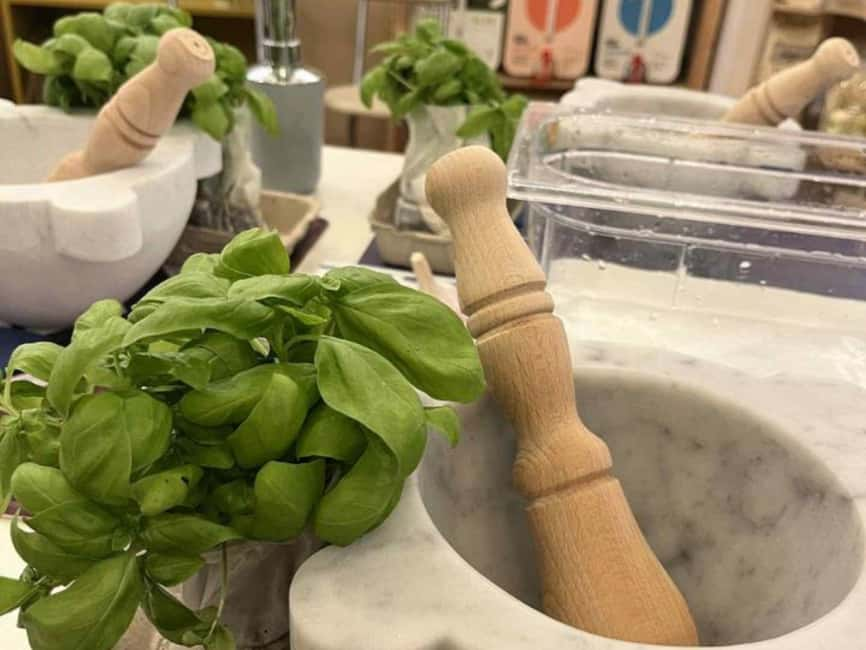
At $92 per person, this is not a bargain meal. It is priced as a food lesson, tasting, wine experience, and souvenir in one package.
The value improves if you care about the method. You receive two-and-a-half hours of instruction, use of the mortar and pestle, all ingredients, an apron, trofie with your pesto, a glass of local wine, and a 90-gram jar to take home. You also get access to family stories and information about Ligurian producers.
If you only want to taste pesto, you can do that for much less in Genoa. If you want to understand why traditional pesto is made by hand and leave with a skill you can repeat, the price is easier to justify.
The class is also convenient for a short Genoa visit. Because it takes place near Columbus’s House, you can fit it into a day exploring the historic center without arranging transport outside the city.
Who should book this experience?
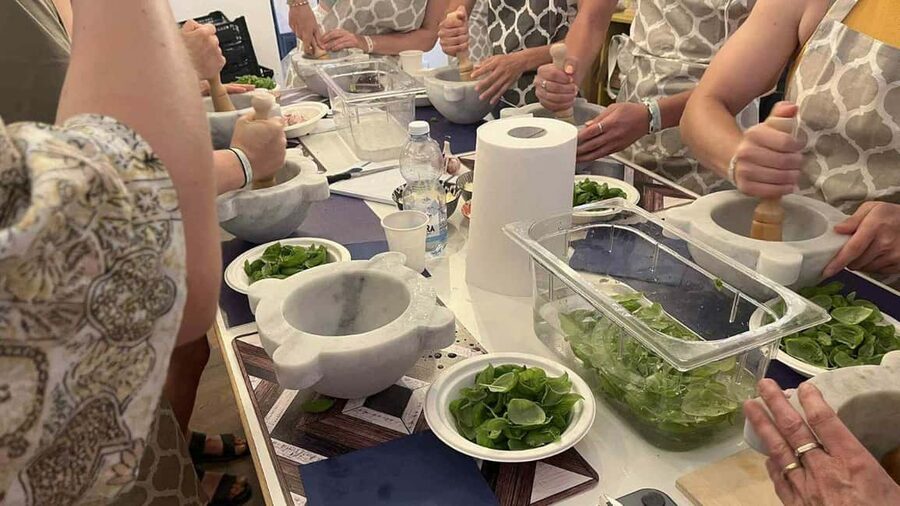
I would recommend this class to anyone who plans meals around local food and wants more than a restaurant tasting. It suits couples, friends, solo visitors, and small groups who enjoy doing something practical together.
It is especially useful for:
- People who have never made pesto and want clear guidance
- Home cooks who want to compare machine-made pesto with the traditional mortar method
- Visitors interested in Ligurian ingredients and small producers
- Anyone looking for an indoor activity in central Genoa
- Food lovers who appreciate a meal tied directly to the preparation
The experience does not require cooking skills. You should still be comfortable standing or working with your hands for part of the session, and you should wear clothes you do not mind wearing in a food workshop.
The listed information says the activity is not suitable for children under 16, with several repeated age entries ranging from under 2 to under 16. Since those details conflict, families should confirm the exact age rule before paying.
Allergies and dietary questions
The recipe includes basil, pine nuts, Parmesan, pecorino, garlic, and olive oil. Cheese and nuts are central to the preparation, not minor extras.
Tell the provider about food allergies when you book. The available information does not promise substitutions or a separate allergy-friendly recipe, so ask before confirming if you cannot eat any of the standard ingredients.
The class is not presented as a vegan, dairy-free, or nut-free workshop. You should not assume that adaptations are possible unless the provider confirms them.
Booking and timing details
The experience lasts 2.5 hours, with starting times depending on availability. Italian, English, and French are offered.
You can cancel up to 24 hours before the activity for a full refund. The reserve-now, pay-later option lets you hold a place without paying immediately, which is handy if your Genoa schedule is still shifting.
Transport to and from Via di Ravecca is not included. Since the meeting point is in the center, the practical plan is to make your own way there on foot or by local transport and arrive with time to identify the wooden sign.
Should you book the Genoa pesto masterclass?
Book it if you want to work with your hands, eat a simple Ligurian meal, and learn why traditional pesto is more than basil blended with oil. The small group, central location, local wine, and take-home jar make the package useful for a first visit to Genoa.
Skip it if you only want a quick tasting, dislike cooking activities, or feel that $92 is too much for a pasta meal and a lesson. Also confirm the age rule and allergy arrangements before booking.
For most food-focused visitors, this is a well-shaped half-day activity: practical, local, and easy to fit around sightseeing. The best reason to choose it is not the free jar. It is the chance to make pesto slowly, with the same basic tools and ingredients that give this Ligurian specialty its character.
FAQ
Where does the pesto class take place?
It takes place inside the BioTigullio5Terre shop at Via di Ravecca 51/r in Genoa. The shop is about 100 meters from the House of Columbus.
How long does the activity last?
The class lasts 2.5 hours.
How much does the experience cost?
The listed price is $92 per person.
What languages are available?
The instructor can teach in Italian, English, or French.
How many people are in the group?
The class is limited to six participants.
Do I need cooking experience?
No. The activity is designed for people with no cooking skills as well as those who have made pesto before.
What ingredients are used?
You use PDO basil, Parmesan cheese, pecorino cheese, pine nuts, garlic, and extra virgin olive oil.
What food and drink are included?
You eat trofie with the pesto you prepare, and a glass of Ciliegiolo del Tigullio is included. The experience also lists Vermentino and Pigato as local wines that may be served.
Do I receive anything to take home?
Yes. You receive a free 90-gram jar of long-life Genoese pesto made with local ingredients. You can also buy a mortar in the shop.
Are children allowed to join?
The supplied information lists the activity as unsuitable for children under 16, although the age entries are repeated with different lower ages. Confirm the exact minimum age with the provider before booking.
Freshly poured around Italy
- Private Flavors of Florence Walking Tour(Food&Wine Included)★ 4.8 · 46 reviews
- Pizza-Making Workshop by night with glass of wine★ 4.9 · 45 reviews
- Pramaggiore: Ornella Bellia Winery Guided Tour & Tasting★ 5.0 · 90 reviews
- Rome: Pompeii Tour with Wine and Lunch by High Speed Train★ 4.8 · 485 reviews
- Polignano a Mare: Street Food Tour with Tastings and Wine★ 4.7 · 154 reviews
- Polignano a Mare: Private Cruise with Champagne★ 4.8 · 66 reviews
- Pizza and Tiramisu Cooking Class with Wine in Milan★ 4.9 · 80 reviews
- Pisa: Cathedral Guided Tour and Tower tickets & wine tasting★ 4.8 · 78 reviews
Italy Wine Tours, side by side.

Tuscany Day Trip from Florence: Siena, San Gimignano, Pisa and Lunch at a Winery
Read our review →
Florence: Pasta Cooking Class with Unlimited Wine
Read our review →
Florence: Chianti Wineries Tour with Wine Tasting
Read our review →
Small-Group Wine Tasting Experience in the Tuscan Countryside
Read our review →
Pisa, Siena and San Gimignano Day Trip with Lunch & Wine Pairing
Read our review →
Rome: Tuscany & Montepulciano Day Trip with Lunch & Wine Tasting
Read our review →
SMALL-GROUP Wine Safaris: Tuscan Wine Tasting Tours from Florence
Read our review →